Assessment of Pediatric Optic Neuritis Visual Acuity Outcomes at 6 Months
- PMID: 33057592
- PMCID: PMC7563662
- DOI: 10.1001/jamaophthalmol.2020.4231
Assessment of Pediatric Optic Neuritis Visual Acuity Outcomes at 6 Months
Abstract
Importance: Optic neuritis (ON) in children is uncommon. There are limited prospective data for visual acuity (VA) outcomes, associated diseases, and neuroimaging findings. Prospective data from a large sample would be useful for counseling families on treatment decisions and prognosis.
Objective: To prospectively study children with a first episode of ON, describe VA after 6 months, and ascertain the network's (Pediatric Eye Disease Investigator Group and Neuro-Ophthalmology Research Disease Investigator Consortium) ability to enroll pediatric patients with ON prospectively.
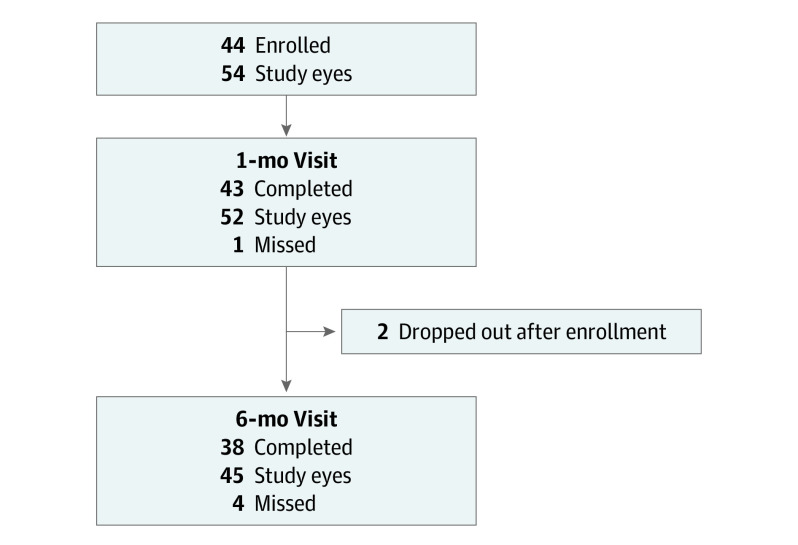
Design, setting, and participants: This nonrandomized cohort study was conducted from September 20, 2016, to July 20, 2018, at 23 sites in the United States and Canada in pediatric ophthalmology or neuro-ophthalmology clinics. A total of 44 children (aged 3-15 years) presented with a first episode of ON (visual loss, pain on eye movements, or both) within 2 weeks of symptom onset and at least 1 of the following in the affected eye: a distance high-contrast VA (HCVA) deficit of at least 0.2 logMAR below age-based norms, diminished color vision, abnormal visual field, or optic disc swelling. Exclusion criteria included preexisting ocular abnormalities or a previous episode of ON.
Main outcomes and measures: Primary outcomes were monocular HCVA and low-contrast VA at 6 months. Secondary outcomes were neuroimaging, associated diagnoses, and antibodies for neuromyelitis optica and myelin oligodendrocyte glycoprotein.
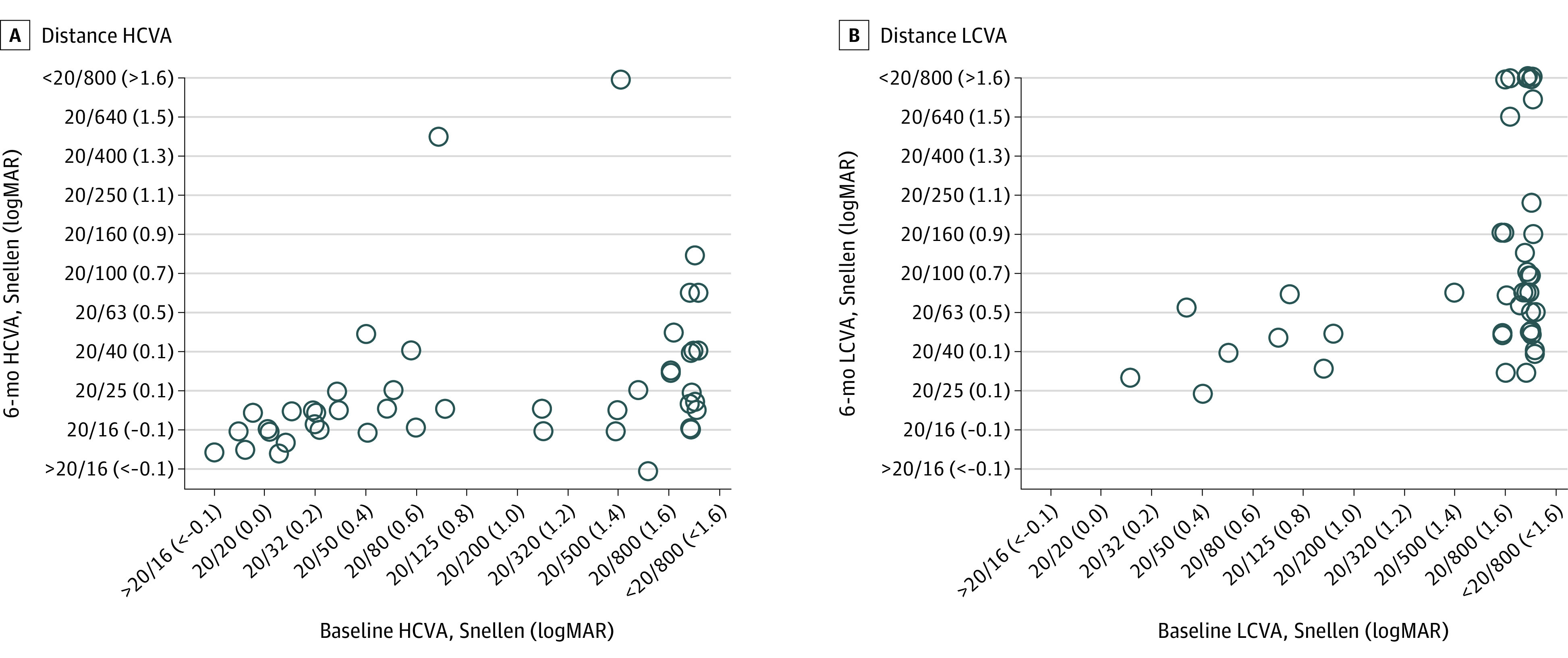
Results: A total of 44 children (mean age [SD], 10.2 [3.5] years; 26 boys [59%]; 23 White individuals [52%]; 54 eyes) were enrolled in the study. Sixteen patients (36%) had bilateral ON. Magnetic resonance imaging revealed white matter lesions in 23 children (52%). Of these children, 8 had myelin oligodendrocyte glycoprotein-associated demyelination (18%), 7 had acute disseminated encephalomyelitis (16%), 5 had multiple sclerosis (11%), and 3 had neuromyelitis optica (7%). The baseline mean HCVA was 0.95 logMAR (20/200), which improved by a mean 0.76 logMAR (95% CI, 0.54-0.99; range, -0.70 to 1.80) to 0.12 logMAR (20/25) at 6 months. The baseline mean distance low-contrast VA was 1.49 logMAR (20/640) and improved by a mean 0.72 logMAR (95% CI, 0.54-0.89; range, -0.20 to 1.50) to 0.73 logMAR (20/100) at 6 months. Baseline HCVA was worse in younger participants (aged <10 years) with associated neurologic autoimmune diagnoses, white matter lesions, and in those of non-White race and non-Hispanic ethnicity. The data did not suggest a statistically significant association between baseline factors and improvement in HCVA.
Conclusions and relevance: The study network did not reach its targeted enrollment of 100 pediatric patients with ON over 2 years. This indicates that future treatment trials may need to use different inclusion criteria or plan a longer enrollment period to account for the rarity of the disease. Despite poor VA at presentation, most children had marked improvement by 6 months. Associated neurologic autoimmune diagnoses were common. These findings can be used to counsel families about the disease.
Conflict of interest statement
Figures
Comment in
-
Pediatric Optic Neuritis-Building Foundations for a Randomized Clinical Trial.JAMA Ophthalmol. 2020 Dec 1;138(12):1262-1263. doi: 10.1001/jamaophthalmol.2020.4250. JAMA Ophthalmol. 2020. PMID: 33057675 No abstract available.
References
-
- Liu GT, Volpe NJ, Galetta SL. Liu, Volpe and Galetta’s Neuro-Ophthalmology: Diagnosis and Management. Elsevier Saunders; 2019.
Publication types
MeSH terms
Substances
LinkOut - more resources
Full Text Sources
Miscellaneous