


Gender-based outcomes of impeller pumps percutaneous ventricular assist devices
- PMID: 33058477
- PMCID: PMC8381270
- DOI: 10.1002/ccd.29222
Gender-based outcomes of impeller pumps percutaneous ventricular assist devices
Abstract
Background: There is paucity of data focusing on females' outcomes after the use of impeller pumps percutaneous ventricular assist devices (IPVADs).
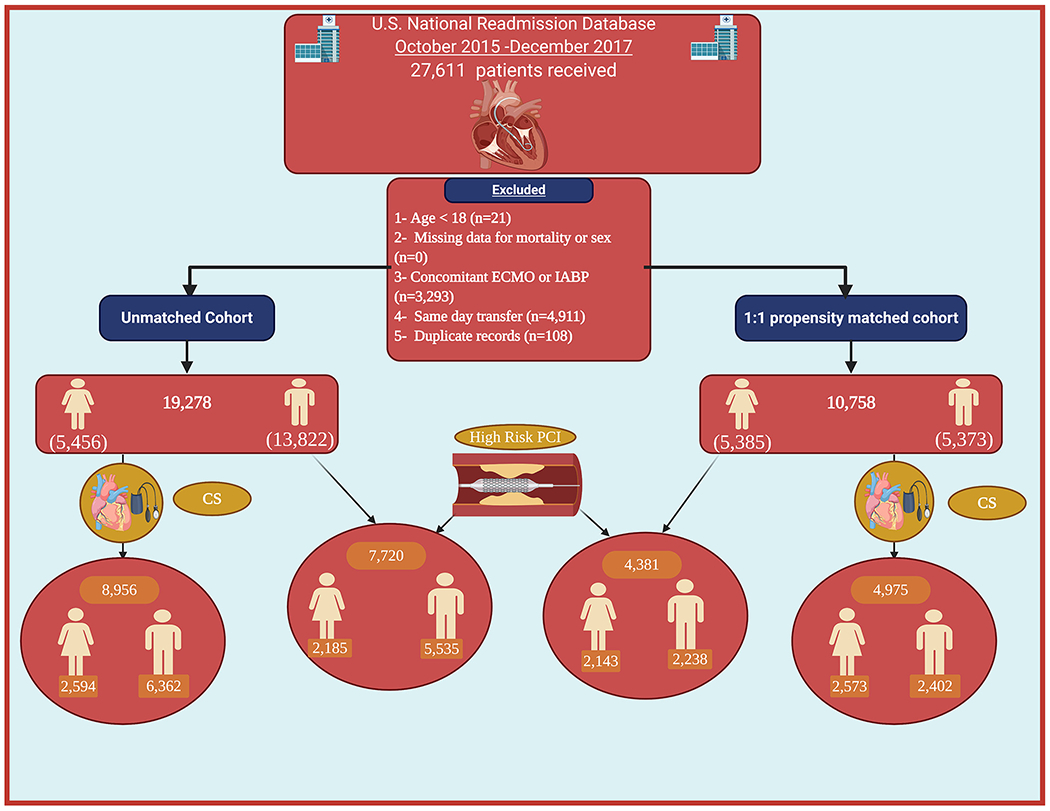
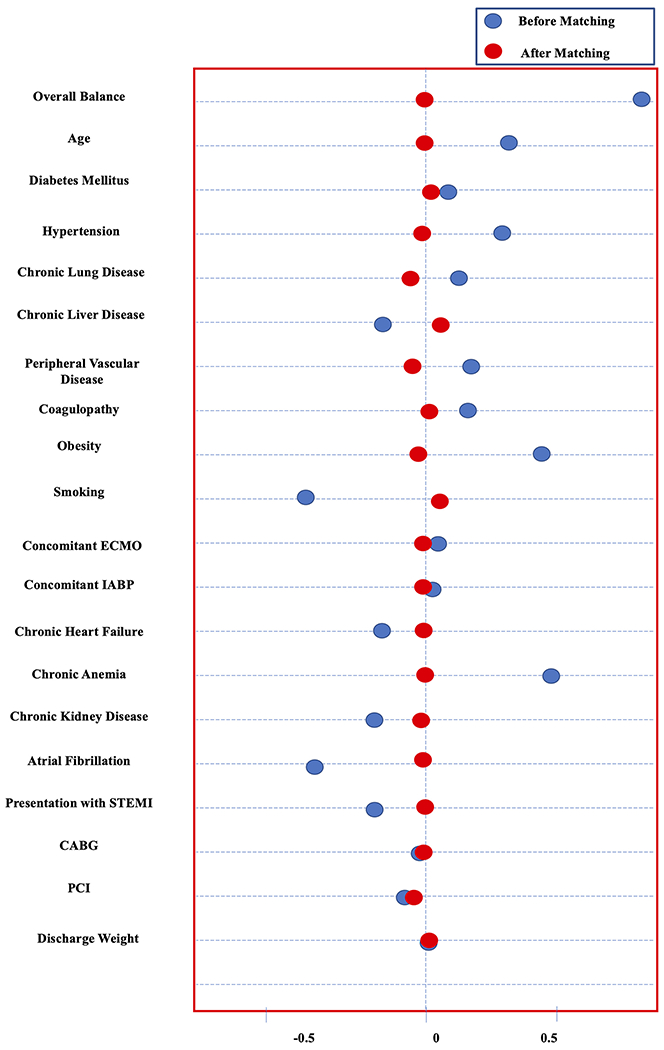
Methods: Patients who received IPVADs during the period of October 1st, 2015-December 31, 2017, were identified from the United States National Readmission Database. A 1:1 propensity score matching was used to compare the outcomes between females and males.
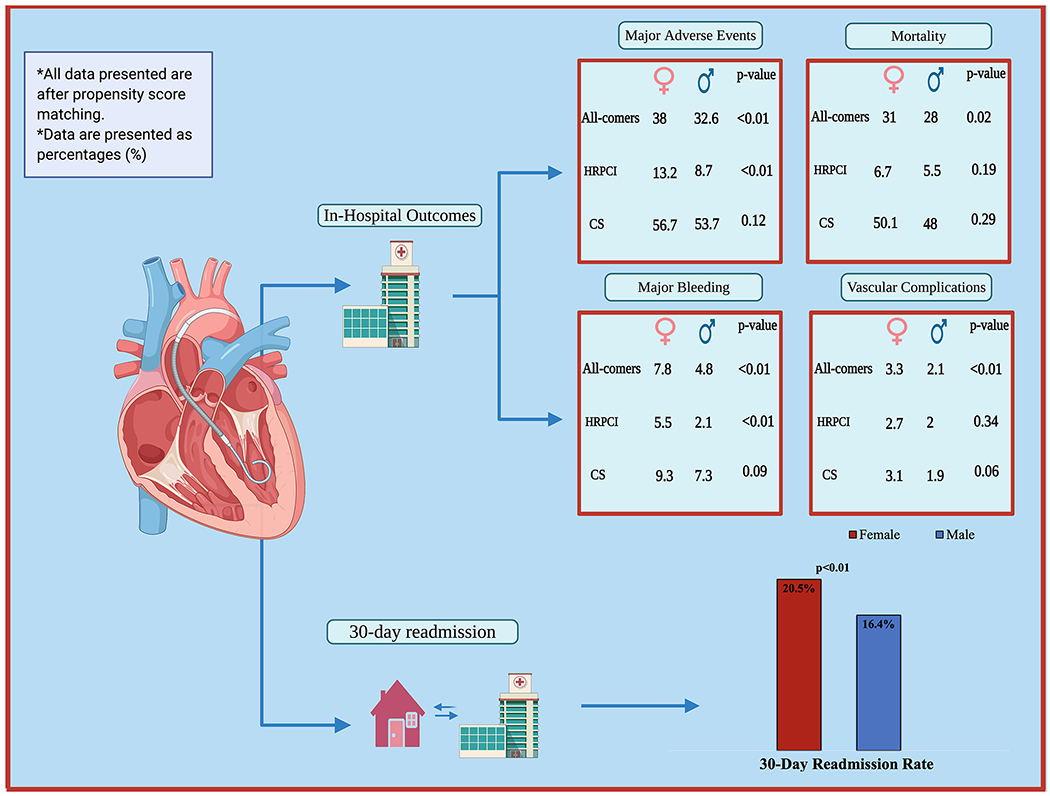
Results: A total of 19,278 (Female = 5,456; Male = 13,822) patients were included in the current analysis. After propensity score matching and among all-comers who were treated with IPVADs, females had higher in-hospital major adverse events (MAEs) (38 vs. 32.6%, p < .01), mortality (31 vs. 28%, p < .01), vascular complications (3.3 vs. 2.1%, p < .01), major bleeding (7.8 vs. 4.8%, p < .01), nonhome discharges (21.6 vs. 16.3%; p < .01), and longer length of stay (7 days [IQR 2-12] vs. 6 days [IQR 2-12], p = .02) with higher 30-day readmission rate compared to males (20.5 vs.16.4%, p < .01). Furthermore, among patients who received the IPVADs for high-risk percutaneous coronary intervention (HRPCI), females continued to have worse MAEs, which was driven by high rates of major bleeding. However, among patients who received IPVADs for cardiogenic shock (CS) the outcomes of females and males were comparable.
Conclusions: Among all-comers who received IPVADs, females suffered higher morbidity and mortality compared to males. Higher morbidity driven mainly by higher rates of major bleeding was seen among females who received IPVADs for the hemodynamic support during HRPCI and comparable outcomes were observed when the IPVADs were used for CS.
Keywords: 30-day readmission; cardiogenic shock; gender disparity; high-risk percutaneous coronary intervention; in-hospital outcomes; percutaneous ventricular assist devices.
© 2021 Wiley Periodicals LLC.
Figures
References
-
- Rihal CS, Naidu SS, Givertz MM, et al. 2015 SCAI/ACC/HFSA/STS clinical expert consensus statement on the use of percutaneous mechanical circulatory support devices in cardiovascular care: endorsed by the American Heart Assocation, the Cardiological Society of India, and Sociedad Latino Americana de Cardiologia Intervencion; affirmation of value by the Canadian Association of Interventional Cardiology-Association Canadienne de Cardiologie d’intervention. J Am Coll Cardiol. 2015;65:e7–e26. - PubMed
-
- Members WC, Levine GN, Bates ER, et al. 2011 ACCF/AHA/SCAI guideline for percutaneous coronary intervention: a report of the American College of Cardiology Foundation/American Heart Association task force on practice guidelines and the Society for Cardiovascular Angiography and Interventions. Circulation. 2011;124:e574–e651. - PubMed
-
- O’Neill WW, Grines C, Schreiber T, et al. Analysis of outcomes for 15,259 US patients with acute myocardial infarction cardiogenic shock (AMICS) supported with the Impella device. Am Heart J. 2018;202:33–38. - PubMed
-
- Basir MB, Kapur NK, Patel K, et al. Improved outcomes associated with the use of shock protocols: updates from the National Cardiogenic Shock Initiative. Catheter Cardiovasc Interv. 2019;93:1173–1183. - PubMed
-
- O’Neill WW, Kleiman NS, Moses J, et al. A prospective, randomized clinical trial of hemodynamic support with Impella 2.5 versus intra-aortic balloon pump in patients undergoing high-risk percutaneous coronary intervention: the PROTECT II study. Circulation. 2012;126:1717–1727. - PubMed
MeSH terms
Grants and funding
LinkOut - more resources
Full Text Sources
