


No evidence of increasing COVID-19 in health care workers after implementation of high flow nasal cannula: A safety evaluation
- PMID: 33059983
- PMCID: PMC7539832
- DOI: 10.1016/j.ajem.2020.09.086
No evidence of increasing COVID-19 in health care workers after implementation of high flow nasal cannula: A safety evaluation
Abstract
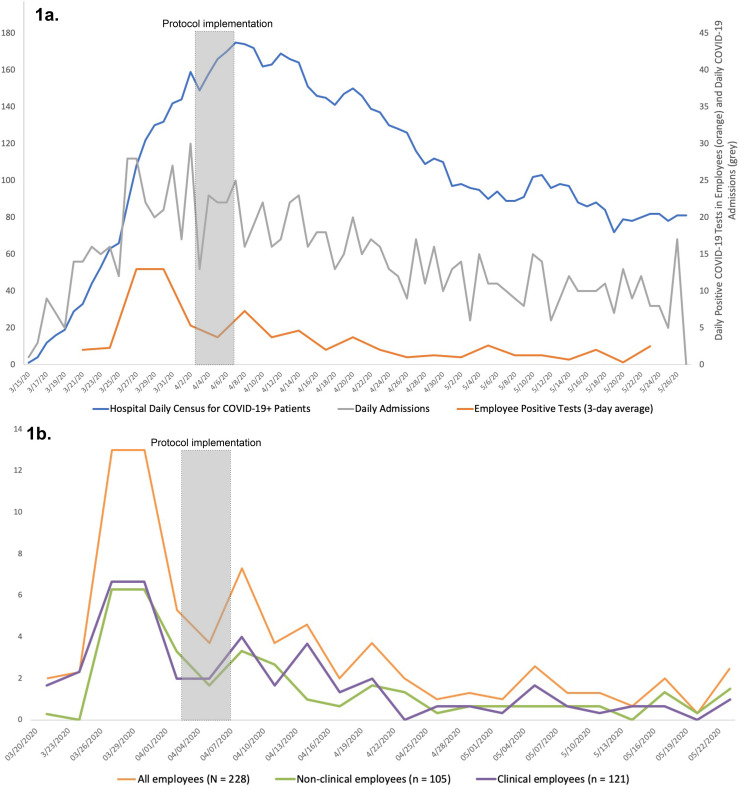
Background: Initial recommendations discouraged high flow nasal cannula (HFNC) in COVID-19 patients, driven by concern for healthcare worker (HCW) exposure. Noting high morbidity and mortality from early invasive mechanical ventilation, we implemented a COVID-19 respiratory protocol employing HFNC in severe COVID-19 and HCW exposed to COVID-19 patients on HFNC wore N95/KN95 masks. Utilization of HFNC increased significantly but questions remained regarding HCW infection rate.
Methods: We performed a retrospective evaluation of employee infections in our healthcare system using the Employee Health Services database and unit records of employees tested between March 15, 2020 and May 23, 2020. We assessed the incidence of infections before and after the implementation of the protocol, stratifying by clinical or non-clinical role as well as inpatient COVID-19 unit.
Results: During the study period, 13.9% (228/1635) of employees tested for COVID-19 were positive. Forty-six percent of infections were in non-clinical staff. After implementation of the respiratory protocol, the proportion of positive tests in clinical staff (41.5%) was not higher than that in non-clinical staff (43.8%). Of the clinicians working in the high-risk COVID-19 unit, there was no increase in infections after protocol implementation compared with clinicians working in COVID-19 units that did not use HFNC.
Conclusion: We found no evidence of increased COVID-19 infections in HCW after the implementation of a respiratory protocol that increased use of HFNC in patients with COVID-19; however, these results are hypothesis generating.
Keywords: COVID-19; Health care worker infections; High flow nasal cannula.
Copyright © 2020 Elsevier Inc. All rights reserved.
Conflict of interest statement
Declaration of Competing Interest None.
Figures
References
-
- Organization WH . 2020. Clinical Management of Severe Acute Respiratory Infection (SARI) When COVID-19 Disease is Suspected; pp. 1–21.
-
- Colla J., Rodos A., Seyller H., Weingart S. Fighting COVID-19 hypoxia with one hand tied behind our back: blanket prohibition of high flow oxygen and non-invasive positive end-expiratory pressure in United States hospitals. Ann Emerg Med [Internet] 2020 doi: 10.1016/j.annemergmed.2020.04.015. Available from: - DOI - PMC - PubMed
-
- Johnson S., Gottlieb D. Breaking news: what’s working for COVID-19 patients in the epicenter. Emerg Med News. 2020;42(5):37–49.
MeSH terms
Grants and funding
LinkOut - more resources
Full Text Sources
Other Literature Sources
Medical
