


Geometry of cusp and root determines aortic valve function
- PMID: 33061186
- PMCID: PMC7525730
- DOI: 10.1007/s12055-019-00813-2
Geometry of cusp and root determines aortic valve function
Abstract
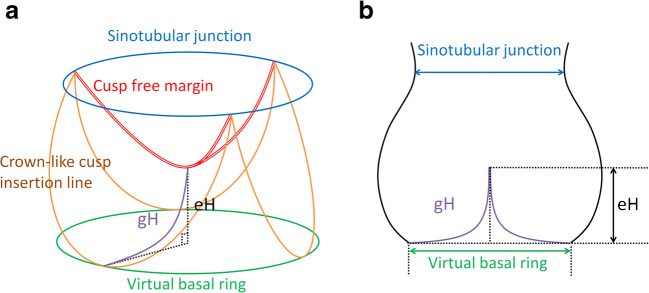
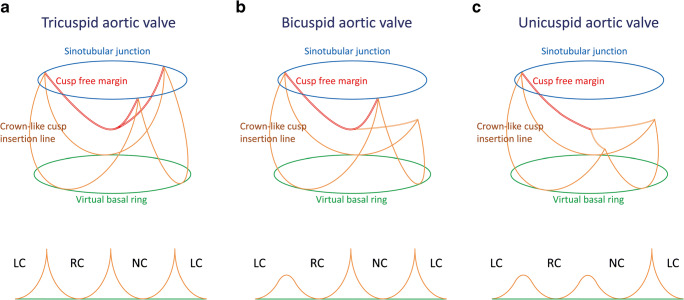
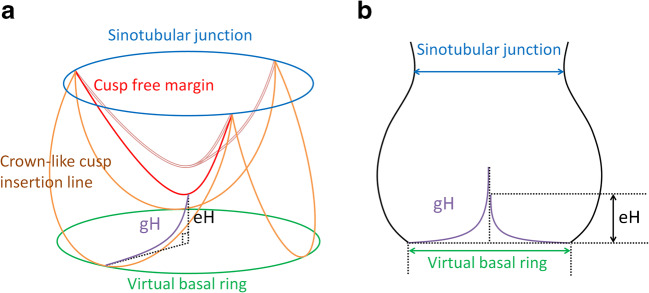
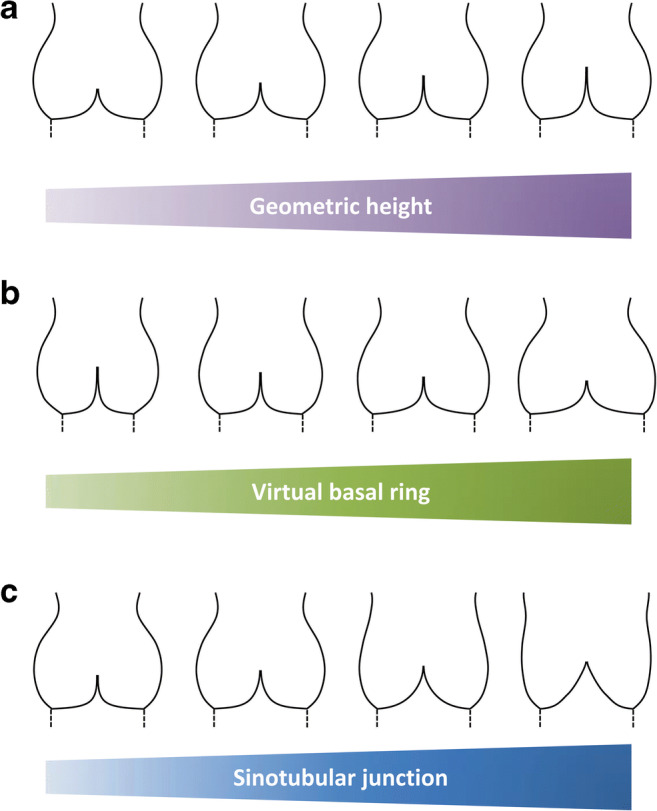
The aortic valve is the functional unit of cusp and root. Various geometrical and functional analyses for the aortic valve unit have been executed to understand normal valve configuration and improve aortic valve repair. Different concepts and procedures have then been proposed for reparative approach, and aortic valve repair is still not standardized like mitral valve repair. It has become apparent, however, that interpretation of the geometry of the aortic cusp and root and its appropriate application to operative strategy lead to creating a functioning aortic valve. Herein, the aortic valve geometry and its clinical implications are reviewed to provide information for the selection of appropriate operative strategies.
Keywords: Aortic valve geometry; Aortic valve repair; Cusp effective height.
© Indian Association of Cardiovascular-Thoracic Surgeons 2019.
Conflict of interest statement
Conflict of interestThe authors declare that they have no conflict of interest.
Figures
References
-
- Taylor WJ, Thrower WB, Black H, Harken DE. The surgical correction of aortic insufficiency by circumclusion. J Thorac Surg. 1958;35:192–205. - PubMed
-
- Carpentier A. Cardiac valve surgery--the "French correction". J Thorac Cardiovasc Surg. 1983;86:323–337. - PubMed
-
- Duran CG. Reconstructive techniques for rheumatic aortic valve disease. J Card Surg. 1988;3:23–28. - PubMed
-
- Cosgrove DM, Rosenkranz ER, Hendren WG, Bartlett JC, Stewart WJ. Valvuloplasty for aortic insufficiency. J Thorac Cardiovasc Surg. 1991;102:571–576. - PubMed
-
- Frater RW. Aortic valve insufficiency due to aortic dilatation: correction by sinus rim adjustment. Circulation. 1986;74:I136–I142. - PubMed
Publication types
LinkOut - more resources
Full Text Sources