


Sun Awareness and Sun Protection Practices
- PMID: 33061512
- PMCID: PMC7532884
- DOI: 10.2147/CCID.S265477
Sun Awareness and Sun Protection Practices
Abstract
Background: The incidence of skin cancer has increased over the past few years, owing to excessive exposure to ultraviolet (UV) radiation. Over the past decade, protection against solar radiation has been highly encouraged in numerous public health education campaigns. The adopted sun protection practices include avoiding exposure to the sun, using protective clothing, and applying sunscreen. The aim of this paper was to analyze the awareness and attitudes towards sun protection practices in some regions of the Arabian Peninsula.
Objective: The main objective of this study is to estimate the level of sun protection practices and determine the factors that have a significant impact on the level of adoption of sun protection practices by residents in the Arabian Peninsula.
Methods: A 35-question self-reporting online questionnaire to evaluate the sun protection measures adopted by the residents was distributed in the Kingdom of Saudi Arabia and Kingdom of Bahrain. The survey was conducted from January 2018 to May 2019, and a total 830 responses were collected for analysis. The data were analyzed using the statistical software SPSS. The chi-squared test and Spearman's correlation were performed to determine the association of the sun protection level with factors concerning the socio-demographic characteristics, sun sensitivity, health-conscious lifestyle, adopted sun protection measures, and general awareness about the UV index, skin cancer, and vitamin D. Logistic regression classification was applied in developing the empirical model to predict the sun protection level of the residents.
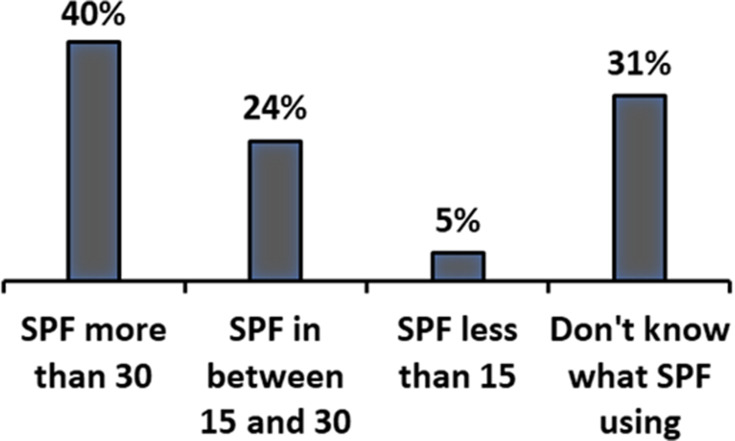
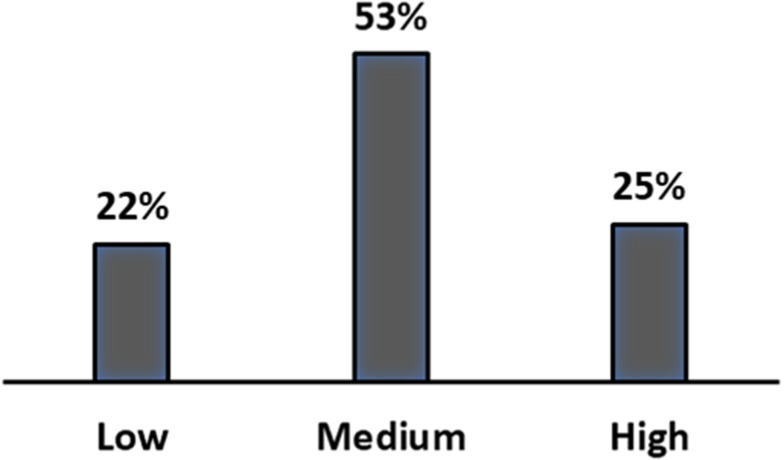
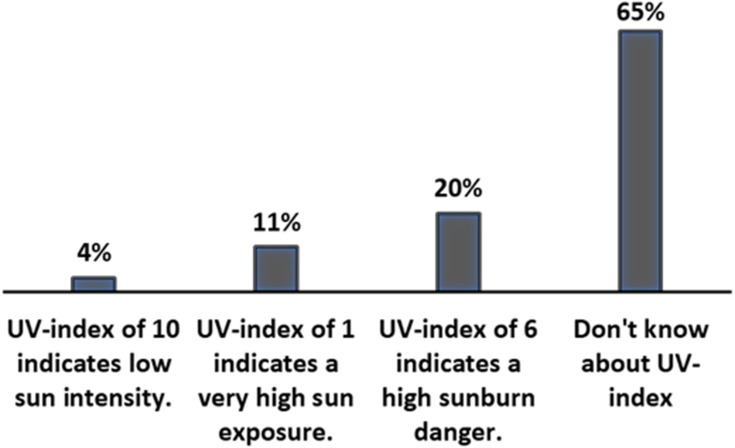
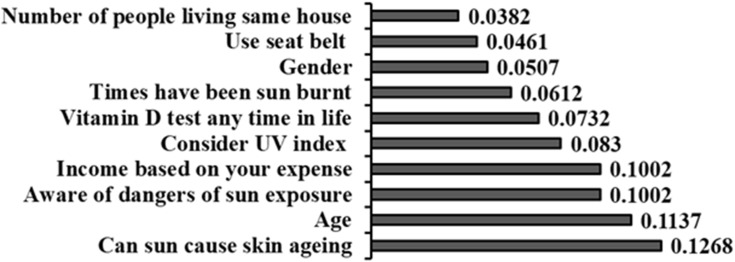
Results: Based on the analysis, only 34% of the total 830 respondents use sunscreen and most of the sunscreen users are female. The three most popular sun protection practices are: 1) avoiding exposure to the sun during peak hours, 2) using protective clothing, and 3) using sunglasses. The results indicate that 22% of respondents use a low level of sun protection, 53% use a medium level of protection, while 25% of respondents use a high level of sun protection. Many of the respondents understand that exposure to the sun can cause skin cancer and skin aging, while 54% of the respondents still believe that a suntan can be healthy if sunburn is avoided. Thirty percent of the participants of this study are aware of the UV index, and only 20% of all respondents know the correct meaning of the UV index. The overall predictive accuracy of the constructed logistic regression model is 67%. Based on the results of the logistic regression model, the five most significant factors of the sun protection level are: 1) perception that the sun can cause skin aging, or not, 2) age, 3) awareness of the dangerous effects of sun exposure, 4) income with respect to expenses, and 5) taking the UV index into consideration during exposure to the sun.
Conclusion: Most of the respondents are aware about sun protection. However, the sun protection level of the residents is still inadequate. An efficient strategy of increasing the awareness of the effective use of sun protection systems must be established based on the significant factors to prevent skin cancer.
Keywords: UV index; skin cancer; sun protection; sunscreen; vitamin D.
© 2020 Sultana.
Conflict of interest statement
The author states that there are no known competing financial interests or personal relationships that could have appeared to influence the work reported in this paper and reports no conflicts of interest for this work.
Figures
References
-
- Seerri L, Keefe M. The adverse effects of the sun on the skin - a review. Malta Med J. 1995;26(vii):26–31.
LinkOut - more resources
Full Text Sources
Miscellaneous
