


ICU Recovery Clinic Attendance, Attrition, and Patient Outcomes: The Impact of Severity of Illness, Gender, and Rurality
- PMID: 33063022
- PMCID: PMC7523871
- DOI: 10.1097/CCE.0000000000000206
ICU Recovery Clinic Attendance, Attrition, and Patient Outcomes: The Impact of Severity of Illness, Gender, and Rurality
Abstract
Objectives: The primary purpose is to characterize patients attending ICU recovery clinic and then describe their trajectory of cognitive and emotional health in 1 year.
Design: Retrospective observational study to assess attendance, attrition, and patient outcomes.
Setting: ICU Recovery Clinic.
Patients: Adult patients recently admitted to ICU for sepsis or acute respiratory failure and who were referred to clinic.
Interventions: None.
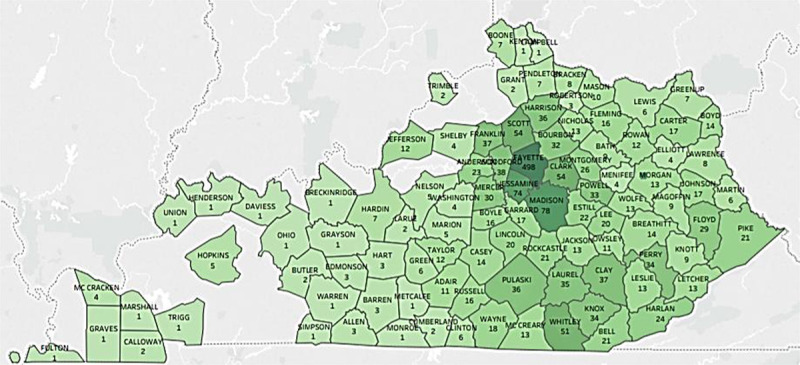
Measurements and main results: Thirty-eight patients (63%) attended ICU recovery clinic with a mean age of 53.2 ± 16 years (range, 20-82 yr), 42% female and mean Sequential Organ Failure Assessment scores at an ICU admission of 9.4 ± 2.9 participated in outcomes. Twelve patients (32%) were lost to follow up and 12 patients (32%) were transferred to different providers before the end of 1 year. Sequential Organ Failure Assessment scores were negatively associated with health-related quality of life at baseline (r = -0.41; p = 0.033; n = 28) and short term (r = -0.40; p = 0.037; n = 27). Male patients had higher Sequential Organ Failure Assessment scores (mean difference = 2.4; t = 2.779; p = 0.008) and longer hospital length of stay (mean difference = 9.3; t = 2.27; p = 0.029). Female patients had higher scores on Hospital Anxiety and Depression Scale (mean difference = 7.2; t = 2.74; p = 0.01) and Impact of Events Scale-Revised (mean difference = 18.9; t = 2.74; p = 0.011) at the initial follow-up visit. Patients never attending clinic were more likely to live further away, have a tracheotomy, and spent longer time in the ICU.
Conclusions: Attendance and attrition in ICU recovery clinic are related to patient factors (living in rural area) and ICU factors. Data suggest different recovery trajectories exist based on gender, severity of illness, and self-reported outcomes.
Keywords: critical illness; follow-up clinic; patient outcomes; postintensive care syndrome; quality of life.
Copyright © 2020 The Authors. Published by Wolters Kluwer Health, Inc. on behalf of the Society of Critical Care Medicine.
Conflict of interest statement
The authors have disclosed that they do not have any potential conflicts of interest.
Figures


References
-
- Barrett ML, Smith MW, Elixhauser A, et al. Utilization of intensive care services, 2011: Statistical Brief #185. 2014. In: Healthcare Cost and Utilization Project (HCUP) Statistical Briefs [Internet]. 2006, Rockville, MD, Agency for Healthcare Research and Quality (US); pp 1–14. Available at: https://www.ncbi.nlm.nih.gov/books/NBK273991/ - PubMed
-
- Wunsch H, Linde-Zwirble WT, Angus DC, et al. The epidemiology of mechanical ventilation use in the United States. Crit Care Med. 2010; 38:1947–1953 - PubMed
-
- Rubens M, Saxena A, Ramamoorthy V, et al. Increasing sepsis rates in the United States: Results from national inpatient sample, 2005 to 2014. J Intensive Care Med. 2020; 35:858–868 - PubMed
-
- Martin GS, Mannino DM, Eaton S, et al. The epidemiology of sepsis in the United States from 1979 through 2000. N Engl J Med. 2003; 348:1546–1554 - PubMed
LinkOut - more resources
Full Text Sources
