Review
. 2020 Oct 16;134(19):2623-2643.
doi: 10.1042/CS20200230.

Neuregulins: protective and reparative growth factors in multiple forms of cardiovascular disease

Affiliations
Review

Neuregulins: protective and reparative growth factors in multiple forms of cardiovascular disease

Andrew Geissler et al. Clin Sci (Lond). .

Abstract

Neuregulins (NRGs) are protein ligands that act through ErbB receptor tyrosine kinases to regulate tissue morphogenesis, plasticity, and adaptive responses to physiologic needs in multiple tissues, including the heart and circulatory system. The role of NRG/ErbB signaling in cardiovascular biology, and how it responds to physiologic and pathologic stresses is a rapidly evolving field. While initial concepts focused on the role that NRG may play in regulating cardiac myocyte responses, including cell survival, growth, adaptation to stress, and proliferation, emerging data support a broader role for NRGs in the regulation of metabolism, inflammation, and fibrosis in response to injury. The constellation of effects modulated by NRGs may account for the findings that two distinct forms of recombinant NRG-1 have beneficial effects on cardiac function in humans with systolic heart failure. NRG-4 has recently emerged as an adipokine with similar potential to regulate cardiovascular responses to inflammation and injury. Beyond systolic heart failure, NRGs appear to have beneficial effects in diastolic heart failure, prevention of atherosclerosis, preventing adverse effects on diabetes on the heart and vasculature, including atherosclerosis, as well as the cardiac dysfunction associated with sepsis. Collectively, this literature supports the further examination of how this developmentally critical signaling system functions and how it might be leveraged to treat cardiovascular disease.

Keywords: epidermal growth factor receptor; growth factors; heart failure; myocardial remodeling.


Conflict of interest statement

The authors declare that there are no competing interests associated with the manuscript.

Figures
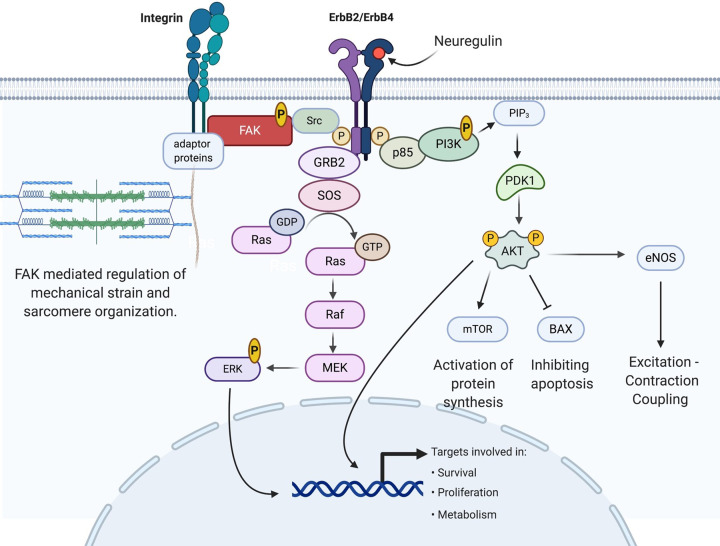
Figure 1
Figure 1. The NRG-1/ErbB signaling pathway in cardiac myocyte
NRG-1 binds ErbB4 and induces dimerization with ErbB2, allowing receptor tyrosine kinase transphosphorylation. Activated ErbB receptors interact with and activate several pathways including RAS/ERK, PI3K/Akt, and Src/FAK [171–174]. Abbreviations: AKT, serine/threonine-specific protein kinase B; BAX, bcl-2-associated x protein; eNOS, endothelial nitric oxide synthase; ERK, extracellular signal-regulated kinase; FAK, focal adhesion kinase; GDP, guanosine diphosphate; GTP, guanosine triphosphate; GRB2, growth factor receptor-bound protein 2; MEK, mitogen-activated ERK kinase; mTOR, mammalian target of rapamycin; PDK1, phosphoinositide-dependent kinase 1; PIP3, phosphotidyl inositol (4,5,6)-triphosphate; PI3K, phosphatidyl inositol-3 kinase; p85, regulatory subunit of PI3K; Raf, proto-oncogene serine/threonine-protein kinase; Ras, Ras proteins, members of a large superfamily of small GTPases; SOS, son of sevenless; Src, proto-oncogene tyrosine-protein kinase.
Figure 2
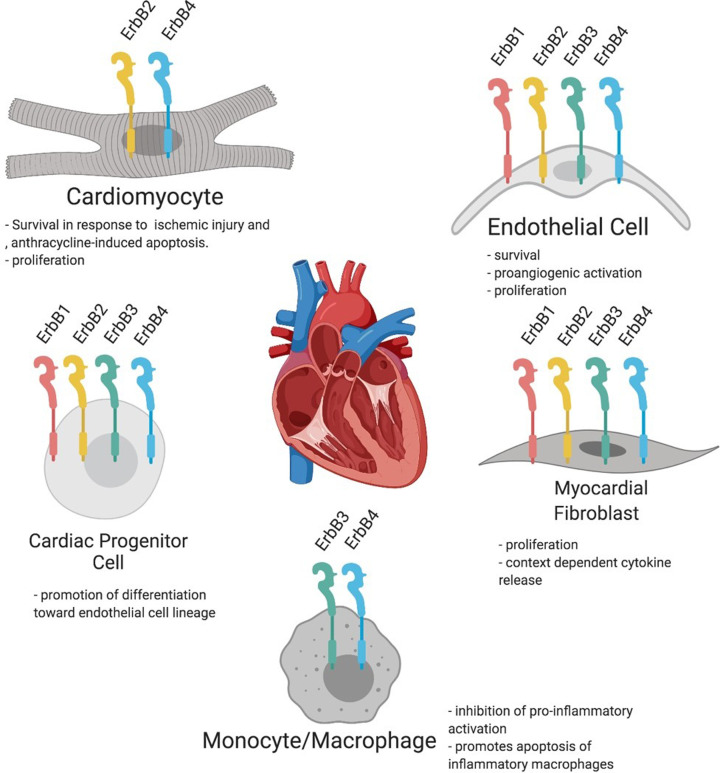
Figure 2. ErbB receptor expression in different subpopulations of cardiac cells
Adult cardiomyocytes express ErbB2 and ErbB4. Expression of all ErbB receptors, including ErbB1, ErbB2, ErbB3, and ErbB4, has been demonstrated on cardiac endothelial cells, fibroblasts, and highly proliferative cells. ErbB3 and ErbB4 are expressed on monocytes and cardiac macrophages. See the text for references.
Figure 3
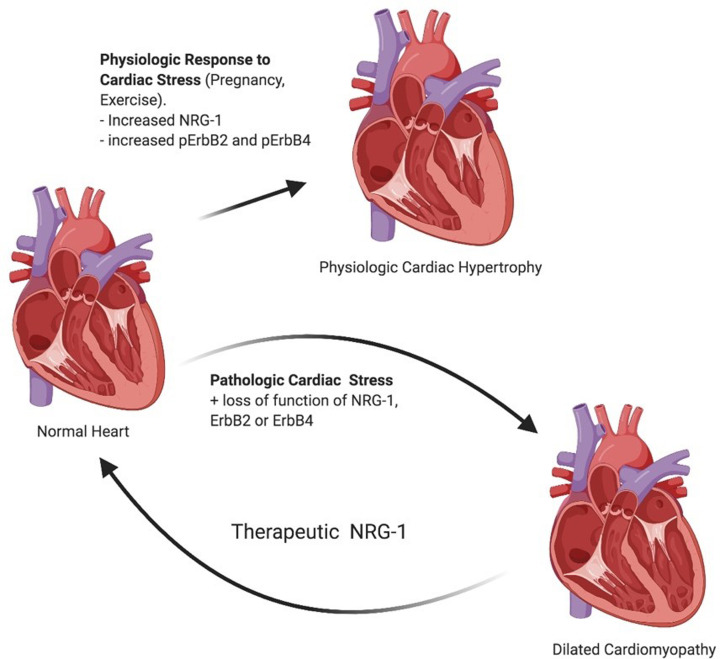
Figure 3. NRG-1 signaling through ErbB2 and ErbB4 regulate growth and survival pathways leading to physiological hypertrophy
The loss of NRG-1, ErbB2, or ErbB4 results in dilated cardiomyopathy under cardiac stress. In vivo studies have suggested that NRG-1 can improve left ventricular ejection fraction in subjects with heart failure with a reduced ejection fraction. *pErbB2 and pErbB4 represent phosphorylated (activated) forms of ErbB receptors.
Figure 4
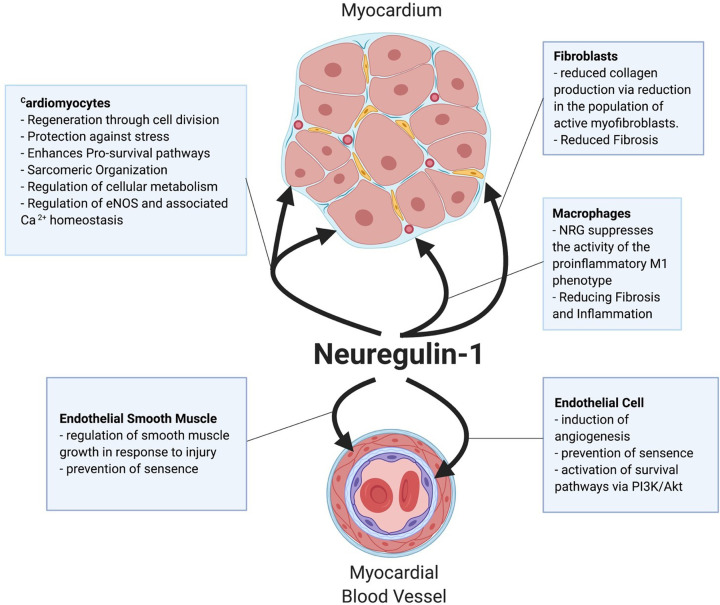
Figure 4. NRG-1 regulates functional responses in different cell types within the myocardium
Heart injury is associated with the proteolytic activation and release of NRG-1 from the surface of cardiac endothelial cells. Active NRG-1 protects cardiomyocytes, reduces pro-fibrotic activation of fibroblasts, promotes survival of endothelial cells, and angiogenesis, and prevents pro-inflammatory activation of immune cells.
Figure 5
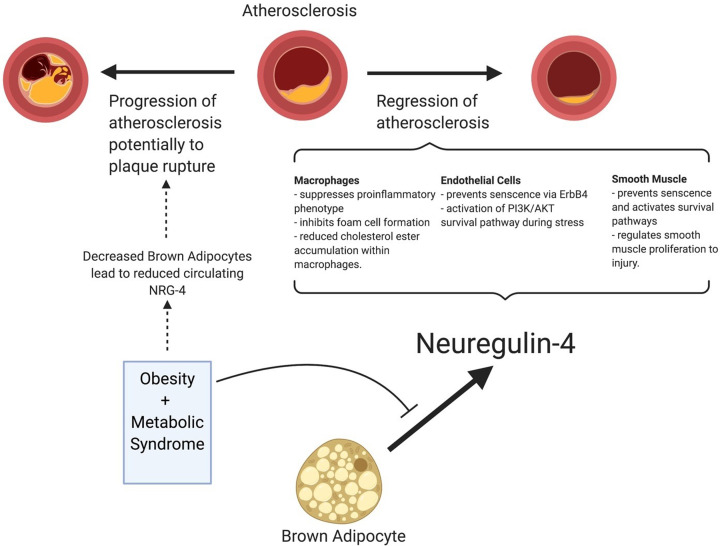
Figure 5. NRG-4 protects against atherosclerosis progression
NRG-4 is released from brown adipose tissue and reduces pro-inflammatory activation of tissue-resident macrophages and their differentiation into foam cells. NRG-4 promotes endothelial cell survival and prevents smooth muscle cell senescence, both of which suppress atherogenesis.
Figure 6
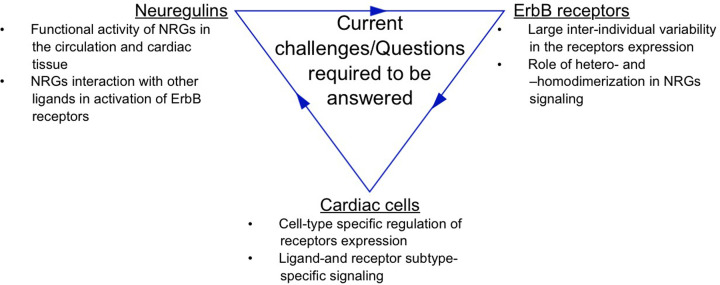
Figure 6. Current challenges and questions
Large inter-individual variability in both NRG’s and ErbB receptors expression, the presence of active and inactive forms of NRG's, and their interaction with different ErbB receptors expressed on a variety of cardiac cells form a complex NRG/Erbb signaling network. A better understanding of cell-type- specific effects mediated by NRG’s in the heart is necessary for the development of cardioprotective therapies.

References

    1. Riese D.J. II, van Raaij T.M., Plowman G.D., Andrews G.C. and Stern D.F. (1995) The cellular response to neuregulins is governed by complex interactions of the erbB receptor family. Mol. Cell. Biol. 15, 5770–5776 10.1128/MCB.15.10.5770 - DOI - PMC - PubMed
    1. Gassmann M., Casagranda F., Orioli D. et al. . (1995) Aberrant neural and cardiac development in mice lacking the ErbB4 neuregulin receptor. Nature 378, 390–394 10.1038/378390a0 - DOI - PubMed
    1. Lee K.F., Simon H., Chen H., Bates B., Hung M.C. and Hauser C. (1995) Requirement for neuregulin receptor erbB2 in neural and cardiac development. Nature 378, 394–398 10.1038/378394a0 - DOI - PubMed
    1. Meyer D. and Birchmeier C. (1995) Multiple essential functions of neuregulin in development. Nature 378, 386–390 10.1038/378386a0 - DOI - PubMed
    1. Burden S. and Yarden Y. (1997) Neuregulins and their receptors: a versatile signaling module in organogenesis and oncogenesis. Neuron 18, 847–855 10.1016/S0896-6273(00)80324-4 - DOI - PubMed

MeSH terms

Substances