


Perceived Need for Psychosocial Support After Aortic Dissection: Cross-Sectional Survey
- PMID: 33064108
- PMCID: PMC7434062
- DOI: 10.2196/15447
Perceived Need for Psychosocial Support After Aortic Dissection: Cross-Sectional Survey
Abstract
Background: The gold standard management of aortic dissection, a life-threatening condition, includes multidisciplinary approaches. Although mental distress following aortic dissection is common, evidence-based psychosocial interventions for aortic dissection survivors are lacking.
Objective: The aim of this study is to identify the perceived psychosocial needs of aortic dissection survivors by surveying patients, their relatives, and health professionals to inform the development of such interventions.
Methods: This study used a cross-sectional survey and collected responses from 41 participants (27 patients with aortic dissection, 8 relatives of patients with aortic dissection, and 6 health professionals) on key topics, types of interventions, best timing, anticipated success, and the intended effects and side effects of psychosocial interventions after aortic dissection.
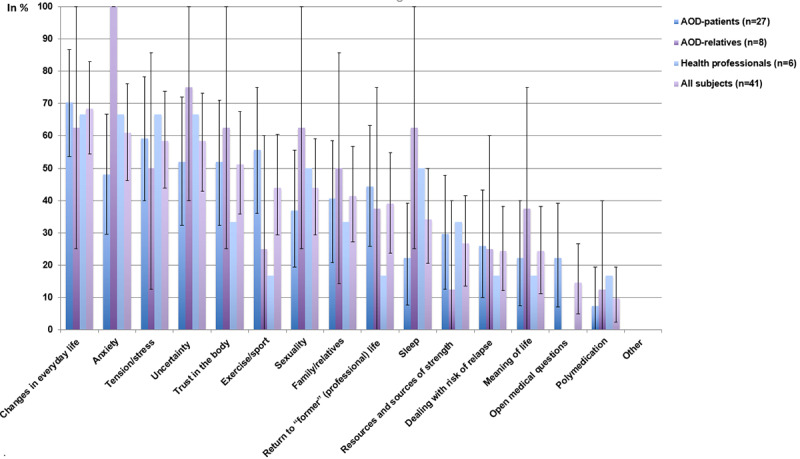
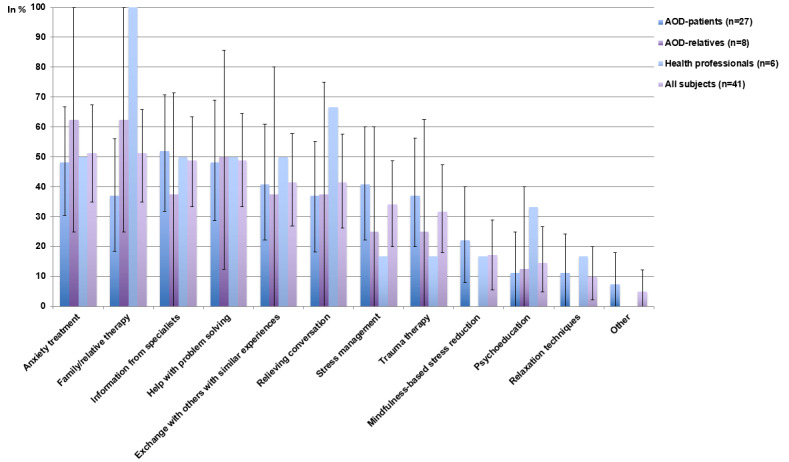
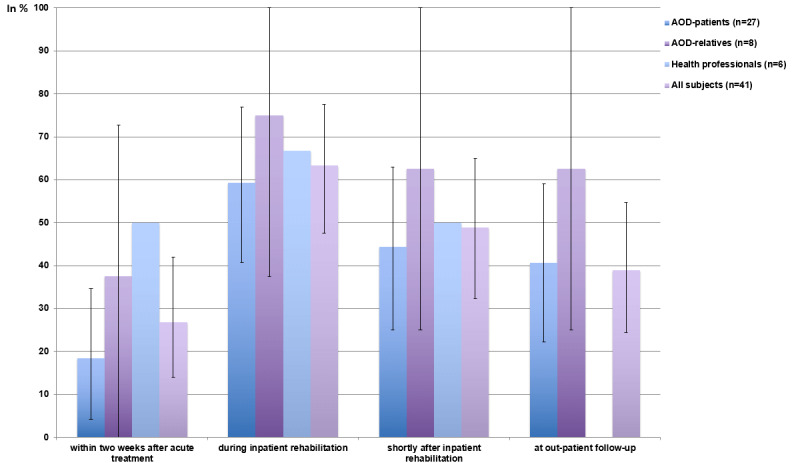
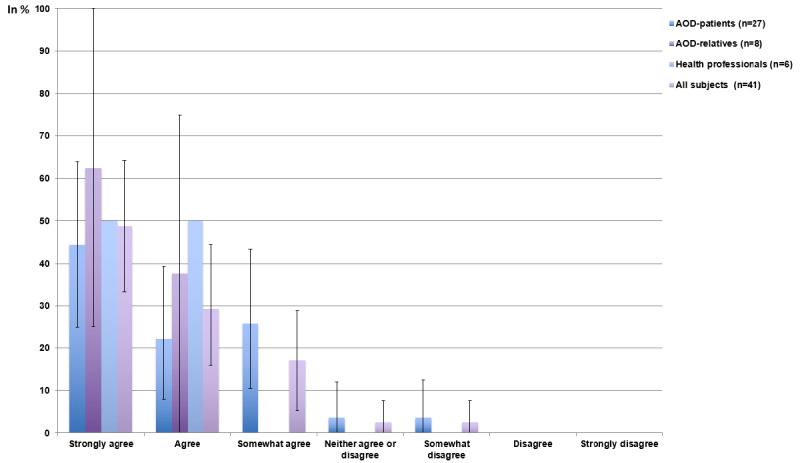
Results: The principal intervention topics were "changes in everyday life" (28/41, 68%, 95% CI 54.5%-82.9%), "anxiety" (25/41, 61%, 95% CI 46.2%-76.2%), "uncertainty" (24/41, 59%, 95% CI 42.9%-73.2%), "tension/distress" (24/41, 59%, 95% CI 43.9%-73.8%), and "trust in the body" (21/41, 51%, 95% CI 35.9%-67.5%). The most commonly indicated intervention types were "family/relative therapy" (21/41, 51%, 95% CI 35%-65.9%) and "anxiety treatment" (21/41, 51%, 95% CI 35%-67.5%). The most recommended intervention timing was "during inpatient rehabilitation" (26/41, 63%, 95% CI 47.6%-77.5%) followed by "shortly after inpatient rehabilitation" (20/41, 49%, 95% CI 32.4%-65%). More than 95% (39/41) of respondents anticipated a benefit from psychosocial interventions following aortic dissection dissection, expecting a probable improvement in 68.6% (95% CI 61.4%-76.2%) of aortic dissection survivors, a worse outcome for 5% (95% CI 2.9%-7.9%), and that 6% (95% CI 1.8%-10.4%) would have negative side effects due to such interventions.
Conclusions: Our findings highlight a substantial need for psychosocial interventions in aortic dissection survivors and indicate that such interventions would be a success. They provide a basis for the development and evaluation of interventions as part of state-of-the-art aortic dissection management.
Keywords: aortic dissection; patient involvement; psychosocial support; psychosomatic; psychotherapy; treatment need.
©Gunther Meinlschmidt, Denis Berdajs, Roger Moser-Starck, Alexander Frick, Sebastian Gross, Ulrich Schurr, Friedrich S Eckstein, Sabina Hunziker, Rainer Schaefert. Originally published in Journal of Participatory Medicine (http://jopm.jmir.org), 06.07.2020.
Conflict of interest statement
Conflicts of Interest: None declared.
Figures
References
-
- Howard DPJ, Banerjee A, Fairhead JF, Perkins J, Silver LE, Rothwell PM, Oxford Vascular Study Population-based study of incidence and outcome of acute aortic dissection and premorbid risk factor control: 10-year results from the Oxford Vascular Study. Circulation. 2013 May 21;127(20):2031–7. doi: 10.1161/CIRCULATIONAHA.112.000483. http://europepmc.org/abstract/MED/23599348 CIRCULATIONAHA.112.000483 - DOI - PMC - PubMed
-
- Gawinecka J, Schönrath F, von Eckardstein A. Acute aortic dissection: pathogenesis, risk factors and diagnosis. Swiss Med Wkly. 2017;147:w14489. doi: 10.4414/smw.2017.14489. http://doi.emh.ch/10.4414/smw.2017.14489 smw-14489 - DOI - DOI - PubMed
LinkOut - more resources
Full Text Sources
Medical
