


Impact of COVID-19 mitigation measures on the incidence of preterm birth: a national quasi-experimental study
- PMID: 33065022
- PMCID: PMC7553867
- DOI: 10.1016/S2468-2667(20)30223-1
Impact of COVID-19 mitigation measures on the incidence of preterm birth: a national quasi-experimental study
Abstract
Background: Preterm birth is the leading cause of child mortality globally, with many survivors experiencing long-term adverse consequences. Preliminary evidence suggests that numbers of preterm births greatly reduced following implementation of policy measures aimed at mitigating the effects of the COVID-19 pandemic. We aimed to study the impact of the COVID-19 mitigation measures implemented in the Netherlands in a stepwise fashion on March 9, March 15, and March 23, 2020, on the incidence of preterm birth.
Methods: We used a national quasi-experimental difference-in-regression-discontinuity approach. We used data from the neonatal dried blood spot screening programme (2010-20) cross-validated against national perinatal registry data. Stratified analyses were done according to gestational age subgroups, and sensitivity analyses were done to assess robustness of the findings. We explored potential effect modification by neighbourhood socioeconomic status, sex, and small-for-gestational-age status.
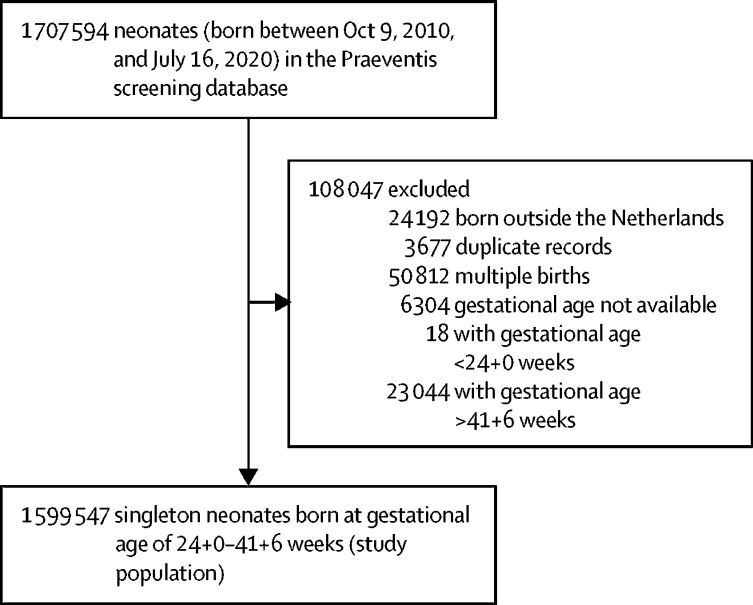
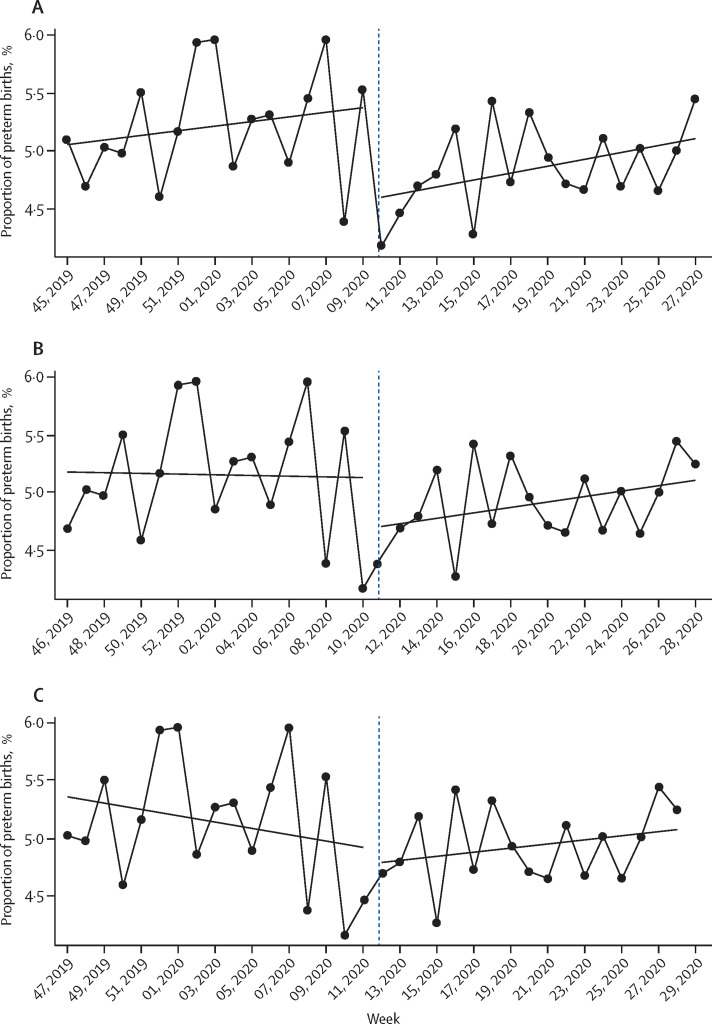
Findings: Data on 1 599 547 singleton neonates were available, including 56 720 births that occurred after implementation of COVID-19 mitigation measures on March 9, 2020. Consistent reductions in the incidence of preterm birth were seen across various time windows surrounding March 9 (± 2 months [n=531 823] odds ratio [OR] 0·77, 95% CI 0·66-0·91, p=0·0026; ± 3 months [n=796 531] OR 0·85, 0·73-0·98, p=0·028; ± 4 months [n=1 066 872] OR 0·84, 0·73-0·97, p=0·023). Decreases in incidence observed following the March 15 measures were of smaller magnitude, but not statistically significant. No changes were observed after March 23. Reductions in the incidence of preterm births after March 9 were consistent across gestational age strata and robust in sensitivity analyses. They appeared confined to neighbourhoods of high socioeconomic status, but effect modification was not statistically significant.
Interpretation: In this national quasi-experimental study, initial implementation of COVID-19 mitigation measures was associated with a substantial reduction in the incidence of preterm births in the following months, in agreement with preliminary observations elsewhere. Integration of comparable data from across the globe is needed to further substantiate these findings and start exploring underlying mechanisms.
Funding: None.
Copyright © 2020 The Author(s). Published by Elsevier Ltd. This is an Open Access article under the CC BY 4.0 license. Published by Elsevier Ltd.. All rights reserved.
Figures
References
-
- Rijksinstituut voor Volksgezondheid en Milieu Patiënt met nieuw coronavirus in Nederland. Rijksinstituut voor Volksgezondheid en Milieu. 2020. https://www.rivm.nl/nieuws/patient-met-nieuw-coronavirus-in-nederland
-
- Rijksoverheid . Rijksoverheid; 2020. Hygiënemaatregelen van belang om verspreiding coronavirus tegen te gaan.https://www.rijksoverheid.nl/actueel/nieuws/2020/03/09/hygienemaatregele...
MeSH terms
LinkOut - more resources
Full Text Sources
