Neurogenic Bladder: Epidemiology, Diagnosis, and Management
- PMID: 33065745
- PMCID: PMC9715349
- DOI: 10.1055/s-0040-1713876
Neurogenic Bladder: Epidemiology, Diagnosis, and Management
Abstract
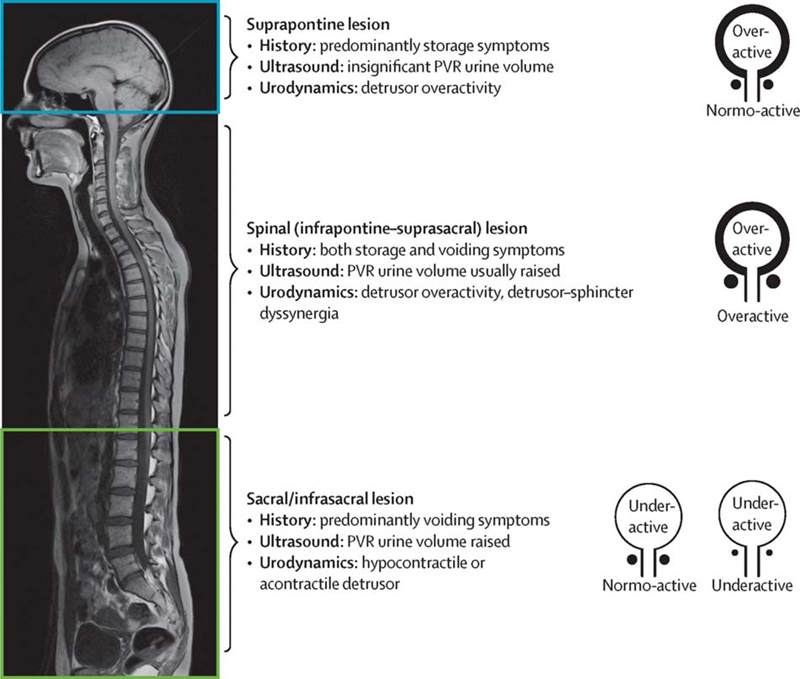
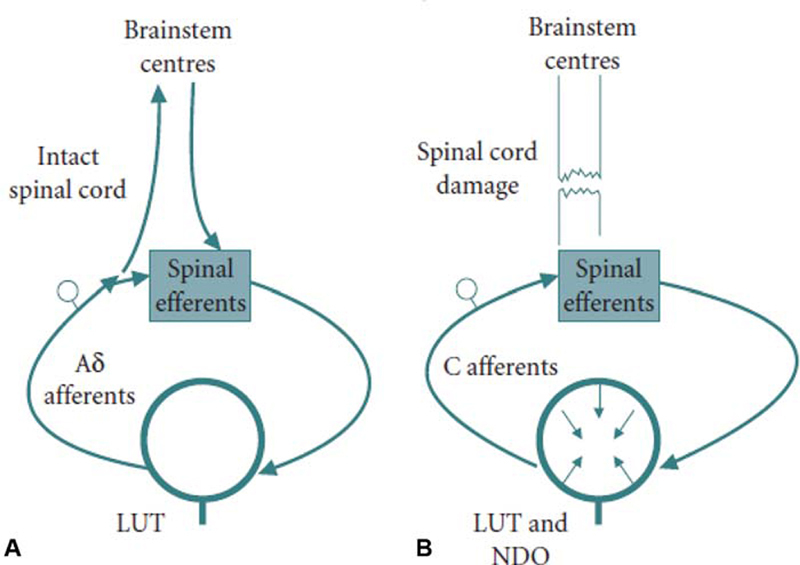
Lower urinary tract dysfunction is a common sequel of neurological disease resulting in symptoms that significantly impacts quality of life. The site of the neurological lesion and its nature influence the pattern of dysfunction. The risk for developing upper urinary tract damage and renal failure is considerably lower in patients with slowly progressive nontraumatic neurological disorders, compared with those with spinal cord injury or spina bifida. This acknowledged difference in morbidity is considered when developing appropriate management algorithms. The preliminary evaluation consists of history taking, and a bladder diary and may be supplemented by tests such as uroflowmetry, post-void residual measurement, renal ultrasound, (video-)urodynamics, neurophysiology, and urethrocystoscopy, depending on the clinical indications. Incomplete bladder emptying is most often managed by intermittent catheterization, and storage dysfunction is managed by antimuscarinic medications. Intra-detrusor injections of onabotulinumtoxinA have revolutionized the management of neurogenic detrusor overactivity. Neuromodulation offers promise for managing both storage and voiding dysfunction. In select patients, reconstructive urological surgery may become necessary. An individualized, patient-tailored approach is required for the management of lower urinary tract dysfunction in this special population.
Thieme. All rights reserved.
Conflict of interest statement
J.N.P. reports other from Wellspect, Astellas, and from Novartis and grants from Parkinson's UK and Cambridge University Press, outside the submitted work.
Figures
References
Publication types
MeSH terms
Substances
LinkOut - more resources
Full Text Sources
Medical