


Neuropsychiatric symptoms in at-risk groups for AD dementia and their association with worry and AD biomarkers-results from the DELCODE study
- PMID: 33066827
- PMCID: PMC7566134
- DOI: 10.1186/s13195-020-00701-7
Neuropsychiatric symptoms in at-risk groups for AD dementia and their association with worry and AD biomarkers-results from the DELCODE study
Abstract
Background: Early identification of individuals at risk of dementia is mandatory to implement prevention strategies and design clinical trials that target early disease stages. Subjective cognitive decline (SCD) and neuropsychiatric symptoms (NPS) have been proposed as potential markers for early manifestation of Alzheimer's disease (AD). We aimed to investigate the frequency of NPS in SCD, in other at-risk groups, in healthy controls (CO), and in AD patients, and to test the association of NPS with AD biomarkers, with a particular focus on cognitively unimpaired participants with or without SCD-related worries.
Methods: We analyzed data of n = 687 participants from the German DZNE Longitudinal Cognitive Impairment and Dementia (DELCODE) study, including the diagnostic groups SCD (n = 242), mild cognitive impairment (MCI, n = 115), AD (n = 77), CO (n = 209), and first-degree relatives of AD patients (REL, n = 44). The Neuropsychiatric Inventory Questionnaire (NPI-Q), Geriatric Depression Scale (GDS-15), and Geriatric Anxiety Inventory (GAI-SF) were used to assess NPS. We examined differences of NPS frequency between diagnostic groups. Logistic regression analyses were carried out to further investigate the relationship between NPS and cerebrospinal fluid (CSF) AD biomarkers, focusing on a subsample of cognitively unimpaired participants (SCD, REL, and CO), who were further differentiated based on reported worries.
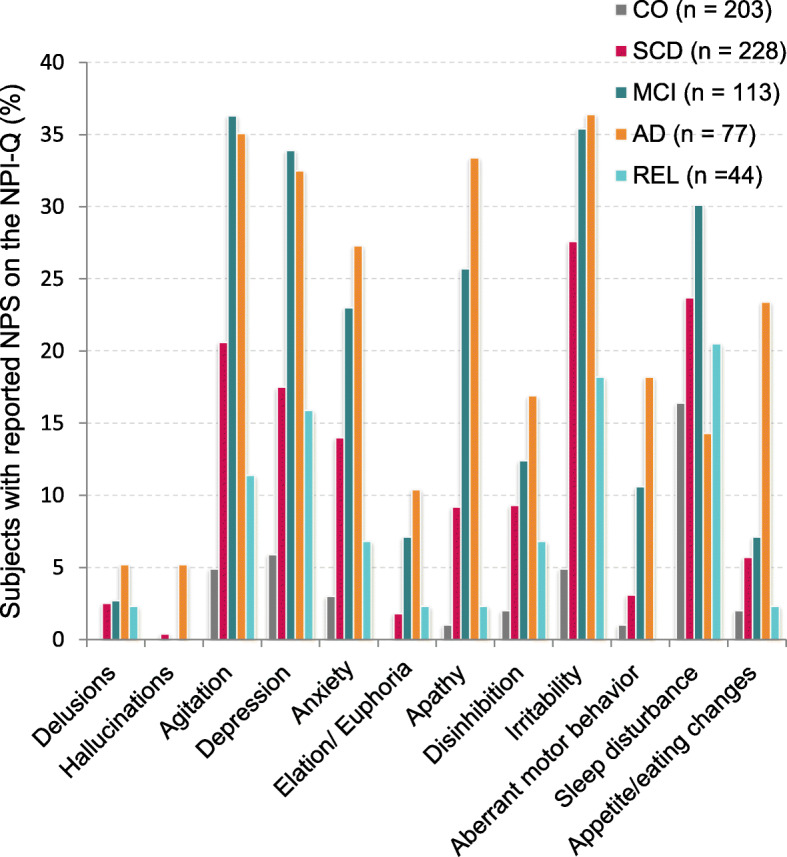
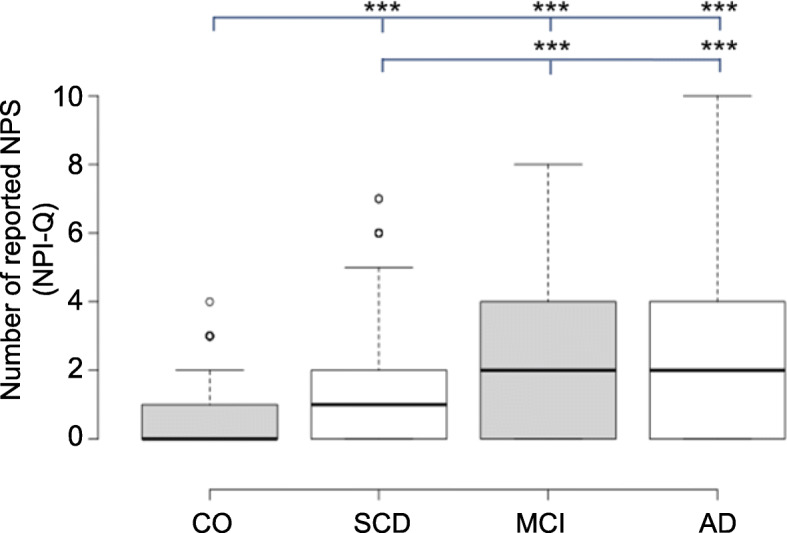
Results: The numbers of reported NPS, depression scores, and anxiety scores were significantly higher in subjects with SCD compared to CO. The quantity of reported NPS in subjects with SCD was lower compared to the MCI and AD group. In cognitively unimpaired subjects with worries, low Aß42 was associated with higher rates of reporting two or more NPS (OR 0.998, 95% CI 0.996-1.000, p < .05).
Conclusion: These findings give insight into the prevalence of NPS in different diagnostic groups, including SCD and healthy controls. NPS based on informant report seem to be associated with underlying AD pathology in cognitively unimpaired participants who worry about cognitive decline.
Trial registration: German Clinical Trials Register DRKS00007966 . Registered 4 May 2015.
Keywords: Alzheimer’s disease; Amyloid; Neuropsychiatric symptoms; Subjective cognitive decline.
Conflict of interest statement
The authors declare that they have no competing interests with regard to the content of the manuscript.
Figures
References
Publication types
MeSH terms
Substances
LinkOut - more resources
Full Text Sources
Medical
