


A risk-stratified approach to colorectal cancer prevention and diagnosis
- PMID: 33067592
- PMCID: PMC7562765
- DOI: 10.1038/s41575-020-00368-3
A risk-stratified approach to colorectal cancer prevention and diagnosis
Abstract
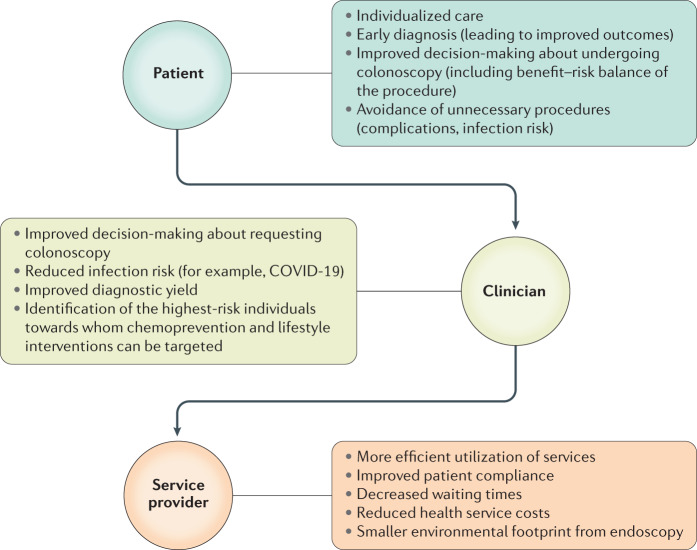
Population screening and endoscopic surveillance are used widely to prevent the development of and death from colorectal cancer (CRC). However, CRC remains a major cause of cancer mortality and the increasing burden of endoscopic investigations threatens to overwhelm some health services. This Perspective describes the rationale for and approach to improved risk stratification and decision-making for CRC prevention and diagnosis. Limitations of current approaches will be discussed using the UK as an example of the challenges faced by a particular health-care system, followed by discussion of novel risk biomarker utilization. We explore how risk stratification will be advantageous to current health-care providers and users, enabling more efficient use of limited colonoscopy resources. We discuss risk stratification in the setting of population screening as well as the surveillance of high-risk groups and investigation of symptomatic patients. We also address challenges in the development and validation of risk stratification tools and identify key research priorities.
Conflict of interest statement
The authors declare no competing interests.
Figures
References
-
- Centers for Disease Control and Prevention. United States Cancer Statistics: Data Visualizations https://gis.cdc.gov/Cancer/USCS/DataViz.html (2015).
-
- Cancer Research UK. Bowel Cancer Statistics https://www.cancerresearchuk.org/health-professional/cancer-statistics/s... (2017).
-
- Public Health England: National Cancer Intelligence Network. Routes to diagnosis 2006–2016 year breakdown http://www.ncin.org.uk/publications/routes_to_diagnosis (2018).
Publication types
MeSH terms
Grants and funding
LinkOut - more resources
Full Text Sources
Medical
