


Improving patient-provider communication about chronic pain: development and feasibility testing of a shared decision-making tool
- PMID: 33069228
- PMCID: PMC7568350
- DOI: 10.1186/s12911-020-01279-8
Improving patient-provider communication about chronic pain: development and feasibility testing of a shared decision-making tool
Abstract
Background: Chronic pain has emerged as a disease in itself, affecting a growing number of people. Effective patient-provider communication is central to good pain management because pain can only be understood from the patient's perspective. We aimed to develop a user-centered tool to improve patient-provider communication about chronic pain and assess its feasibility in real-world settings in preparation for further evaluation and distribution.
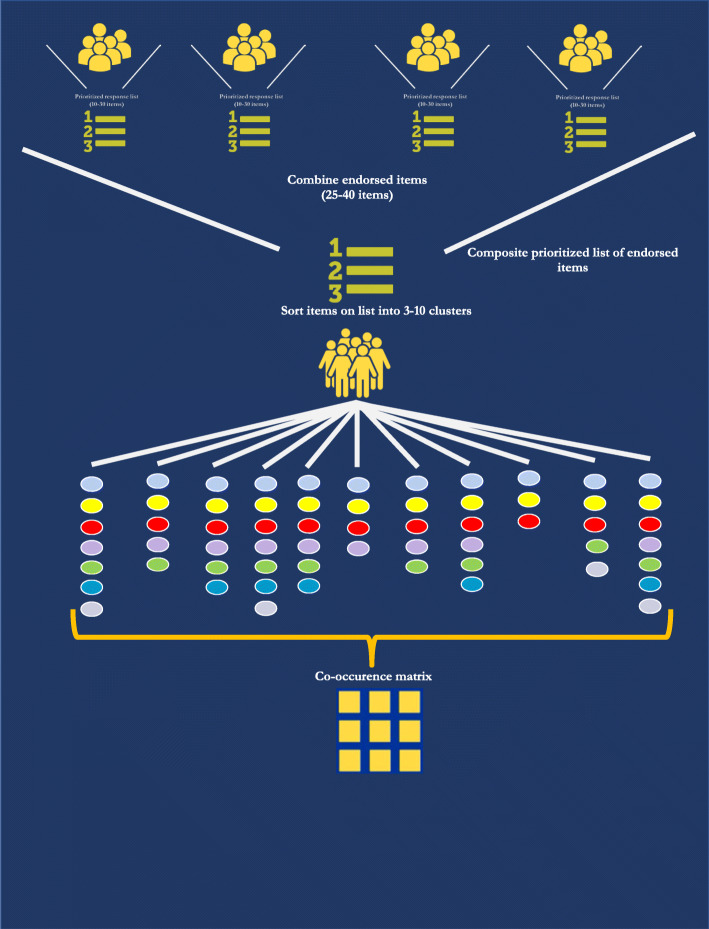
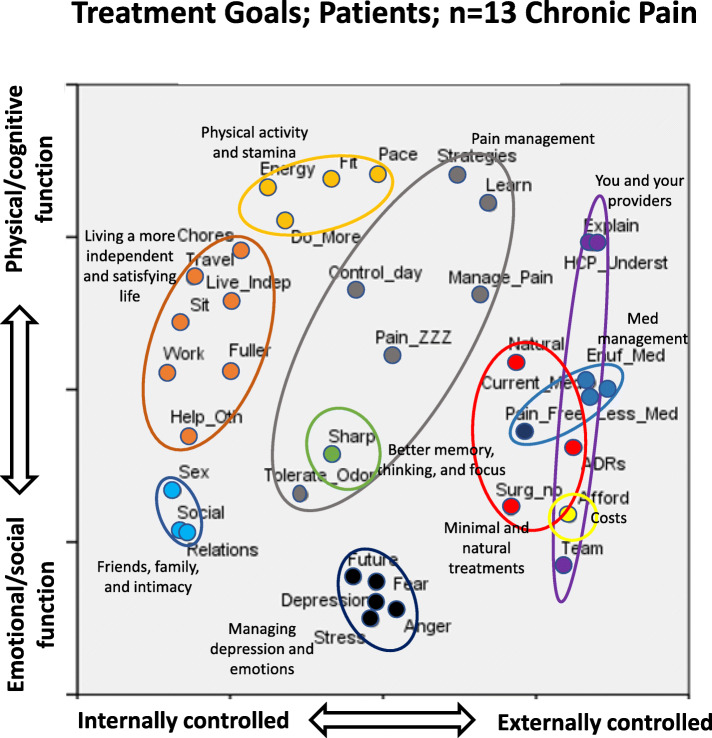
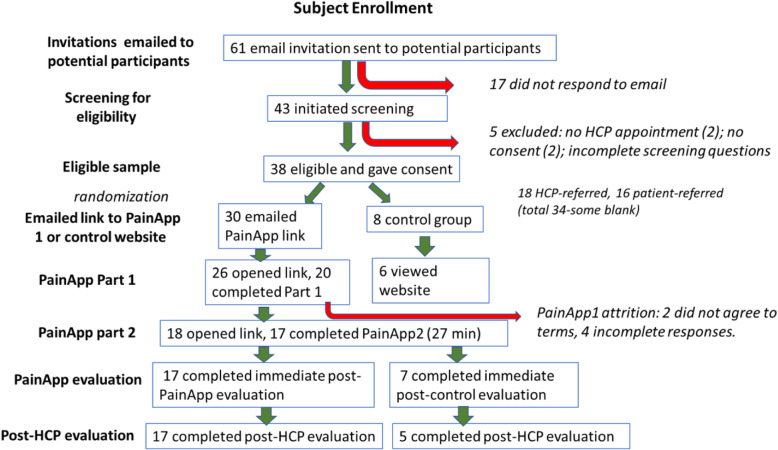
Methods: To identify and prioritize patient treatment goals for chronic pain, strategies to improve patient-provider communication about chronic pain, and facilitate implementation of the tool, we conducted nominal group technique meetings and card sorting with patients with chronic pain and experienced providers (n = 12). These findings informed the design of the PainAPP tool. Usability and beta-testing with patients (n = 38) and their providers refined the tool and assessed its feasibility, acceptability, and preliminary impact.
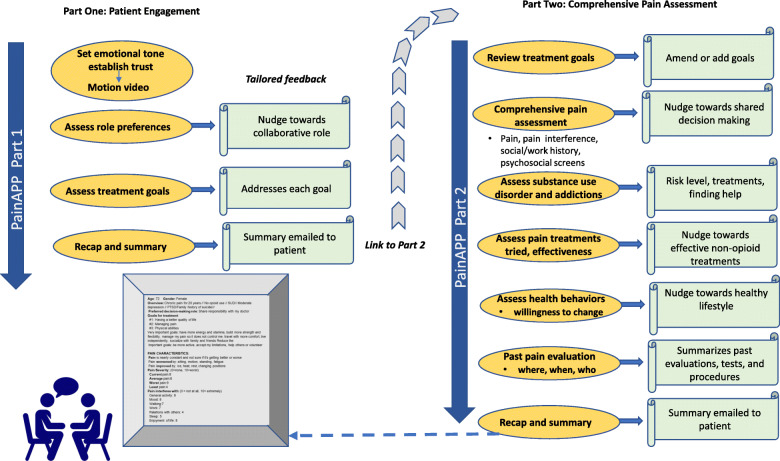
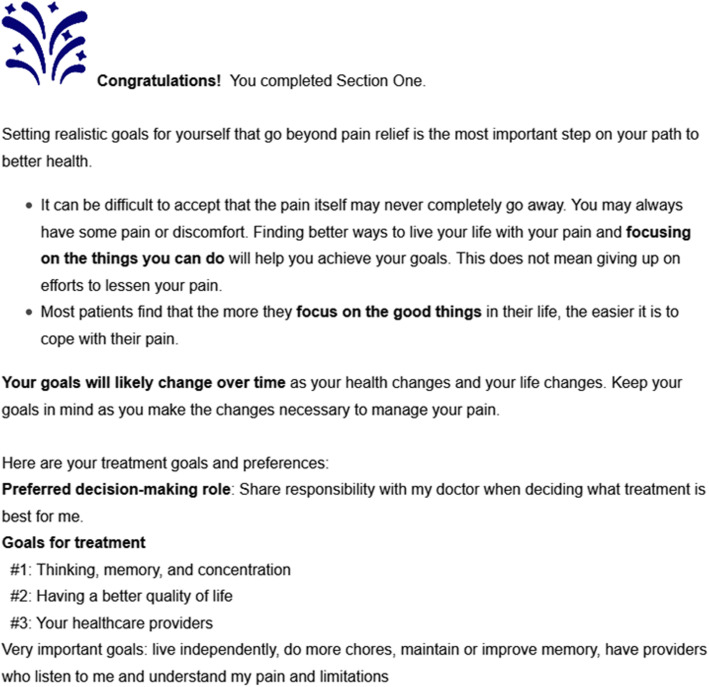
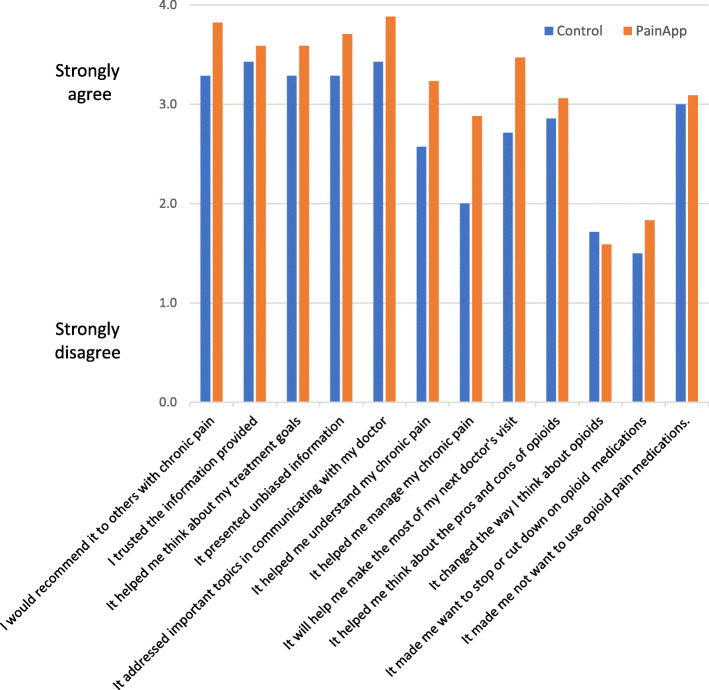
Results: Formative work revealed that patients felt neither respected nor trusted by their providers and focused on transforming providers' negative attitudes towards them, whereas providers focused on gathering patient information. PainAPP incorporated areas prioritized by patients and providers: assessing patient treatment goals and preferences, functional abilities and pain, and providing patients tailored education and an overall summary that patients can share with providers. Beta-testing involved 38 patients and their providers. Half of PainAPP users shared their summaries with their providers. Patients rated PainAPP highly in all areas. All users would recommend it to others with chronic pain; nearly all trusted the information and said it helped them think about my treatment goals (94%), understand my chronic pain (82%), make the most of my next doctor's visit (82%), and not want to use opioids (73%). Beta-testing revealed challenges delivering the tool and summary report to patients and providers in a timely manner and obtaining provider feedback.
Conclusions: PainAPP appears feasible for use, but further adaptation and testing is needed to assess its impact on patients and providers.
Trial registration: This study was approved by the University of New England Independent Review Board for the Protection of Human Subjects in Research (012616-019) and was registered with ClinicalTrials.gov (protocol ID: NCT03425266) prior to enrollment. The trial was prospectively registered and was approved on February 7, 2018.
Conflict of interest statement
NC has received consulting fees and research contracts from various entities through her contract research organization, Five Islands Consulting, LLC. Her paid and unpaid research and consulting have included developing and/or evaluating shared decision-making tools for multiple sclerosis (MS), aortic stenosis, atrial fibrillation, chronic pain, sleep apnea, and neurocritical care. Paid consulting included advising Miami University (assessing the quality of medical information), Biogen through their MS Quality Steering Committee, Emmi Solutions in developing decision aids, Wolters Kluwer in updating decision aids, Janssen Scientific Affairs, LLC (training, decision aids), 3D Communications (consulting), Epi-Q (consulting), Synchrony Group (consulting), Mallinckrodt’s SpecGx LLC (one-time consulting fee and reimbursement of travel), AceRx (one-time consulting fee and reimbursement of travel), Pacific Northwest University (travel expenses and honoraria), EMD-Serono (travel expenses, speaker fees, and research funding), and Edwards Lifesciences (research funding).
She serves as an unpaid mentor for 2 NIH training (K) grants developing decision tools in the areas of sleep apnea and neurocritical care. She received an independent research grant from MSAA (Multiple Sclerosis Association of America), Pfizer (in the area of chronic pain) and a research grant from Biogen (in the area of MS). She has 2 research grants under consideration: the Association of Community Cancer Centers (ACCC) and EMD Serono.
These authors declare that they have no competing interests: LN, VS, BT, NG, RE, EM, FS, SG, SH, NN, LP, MS.
Figures

References
-
- Care and Education Committee on Advancing Pain Research, IOM . Relieving pain in America: a blueprint for transforming prevention, care, education, and research. Washington, DC: National Academies Press; 2011. - PubMed
-
- Xu JQ, Murphy SL, Kochanek KD, Bastian B, Arias E. Deaths: final data for 2016. Natl Vital Stat Rep. 2018;67(5):1–76. - PubMed
-
- National Vital Statistics System . Mortality multiple cause-of-death public use data file documentation. Hyattsville: US Department of Health and Human Services; National Center for Health Statistics; 2015.
-
- Hedegaard H, Minino AM, Warner M. Drug overdose deaths in the United States, 1999-2017. NCHS data Bried. 2018. pp. 1–8. - PubMed
Publication types
MeSH terms
Associated data
Grants and funding
LinkOut - more resources
Full Text Sources
Medical
