


Mild encephalopathy with reversible splenium lesion (MERS) in a patient with COVID-19
- PMID: 33070911
- PMCID: PMC7340073
- DOI: 10.1016/j.jocn.2020.07.009
Mild encephalopathy with reversible splenium lesion (MERS) in a patient with COVID-19
Abstract
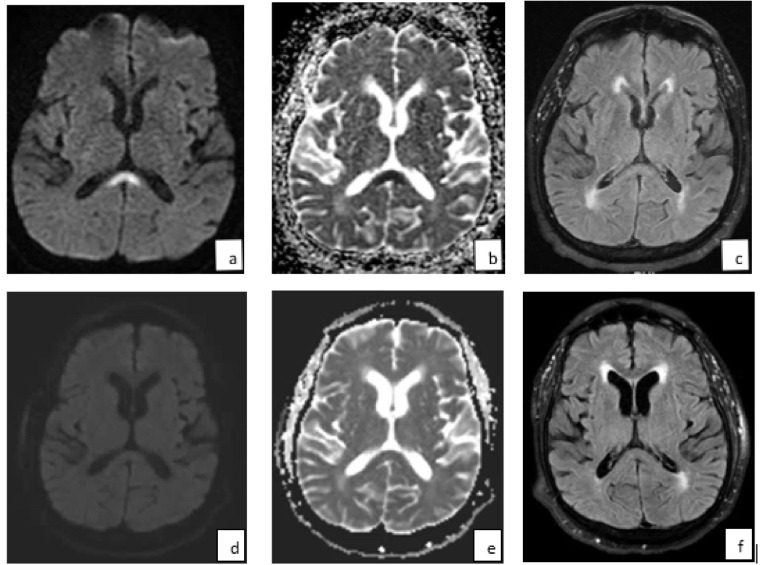
Neurological complications of coronavirus 2019 (COVID-19) are common, and novel manifestations are increasingly being recognized. Mild encephalopathy with reversible splenium lesion (MERS) is a syndrome that has been associated with viral infections, but not previously with COVID-19. In this report, we describe the case of a 69 year-old man who presented with fever and encephalopathy in the setting of a diffusion-restricting splenium lesion, initially mimicking an ischemic stroke. A comprehensive infectious workup revealed positive severe acute respiratory syndrome coronavirus 2 (SARS-CoV-2) antibodies, and a pro-inflammatory laboratory profile characteristic of COVID-19 infection. His symptoms resolved and the brain MRI findings completely normalized on repeat imaging, consistent with MERS. This case suggests that MERS may manifest as an autoimmune response to SARS-CoV-2 infection and should be considered in a patient with evidence of recent COVID-19 infection and the characteristic MERS clinico-radiological syndrome.
Keywords: COVID-19; MERS; Mild encephalopathy with reversible splenium lesion; SARS-CoV-2.
Copyright © 2020 Elsevier Ltd. All rights reserved.
Conflict of interest statement
Declaration of Competing Interest The authors declare that they have no known competing financial interests or personal relationships that could have appeared to influence the work reported in this paper.
Figures
References
Publication types
MeSH terms
LinkOut - more resources
Full Text Sources
Medical
Miscellaneous
