


High-protein and low-calorie diets improved the anti-aging Klotho protein in the rats' brain: the toxic role of high-fat diet
- PMID: 33072166
- PMCID: PMC7559193
- DOI: 10.1186/s12986-020-00508-1
High-protein and low-calorie diets improved the anti-aging Klotho protein in the rats' brain: the toxic role of high-fat diet
Abstract
Background: In the current study, our specific aim was to characterize the Klotho protein and expression levels in the hippocampus and prefrontal cortex of old rats treated with different diets (high-fat, high-protein, low-calorie, high-protein and low-calorie).
Methods: Rats were treated with high-fat, high-protein, low-calorie, low-calorie high-protein diets for 10 weeks and then behavioral and molecular assessments were evaluated.
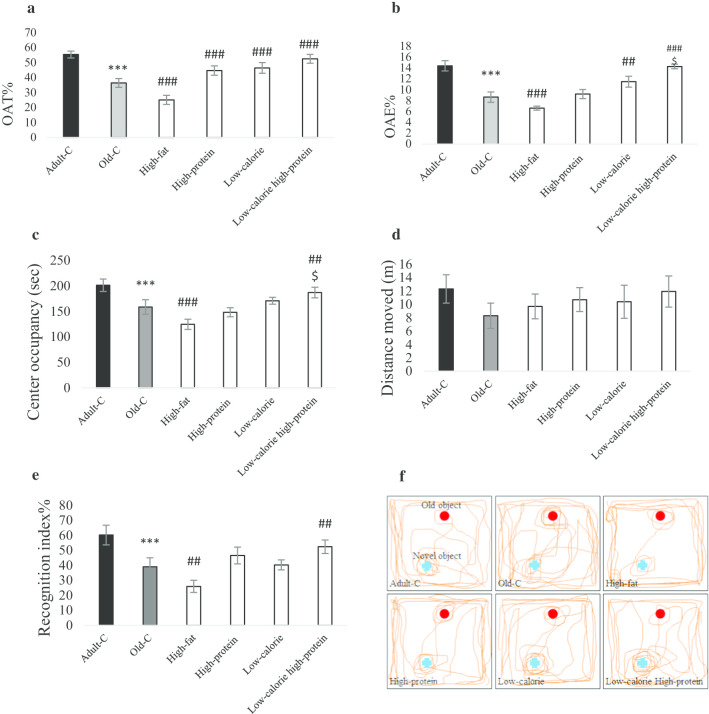
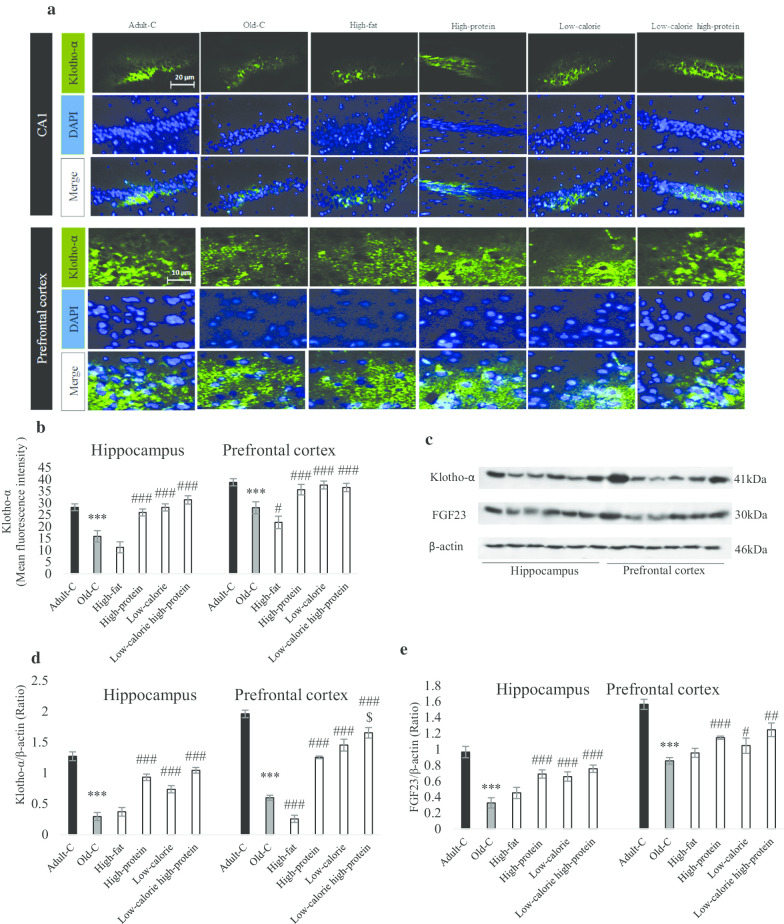
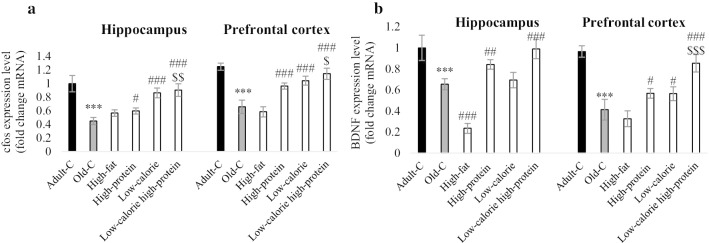
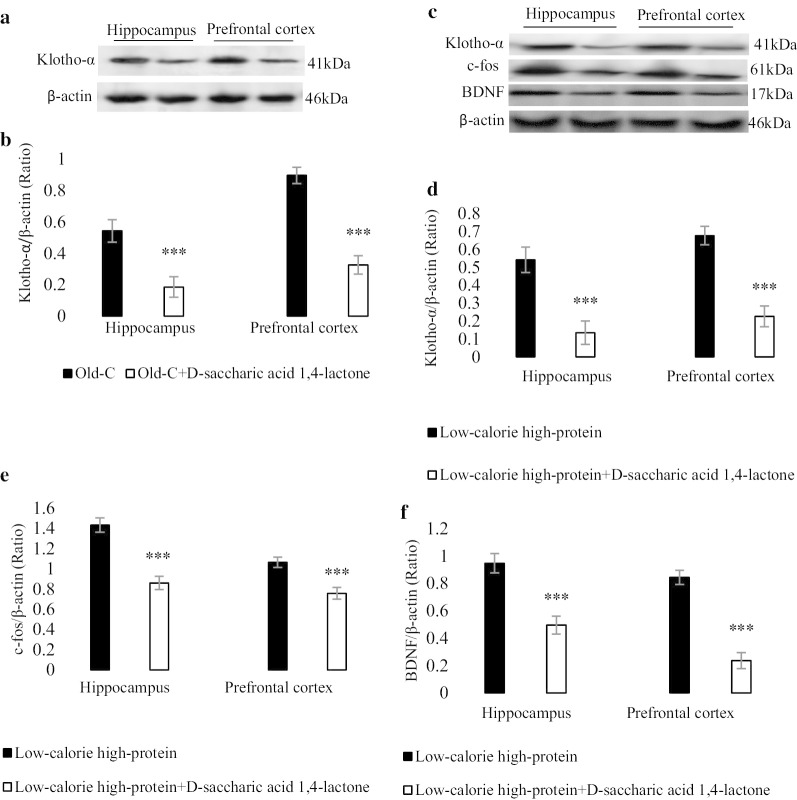
Results: Statistical analysis showed the percentage of open arm time was increased in the high-protein, low-calorie and low-calorie high-protein groups compared with old control (old-C) rats. The percentage of open arm entries was increased in the low-calorie and low-calorie high-protein group compared with old-C rats. The body weight and serum triglyceride were decreased in the low-calorie and low-calorie high-protein groups in comparison to control old rats. Low-calorie and low-calorie high-protein treatments statistically enhanced caspase-3 level compared with old-C rats in the hippocampus and prefrontal cortex. Treatment of old rats with high-protein, low-calorie and low-calorie high-protein could increase Klotho-α level compared with control old rats. The levels of Klotho-α, c-fos and brain-derived neurotrophic factors were decreased in the low-calorie high-protein group in Klotho inhibitor's presence compared with the low-calorie high-protein group.
Conclusion: According to our findings, Klotho-α level was reduced in old rats. Low-calorie, high-protein and particularly low-calorie high-protein diets increased this protein level and consequently increased neuronal plasticity and improved memory function.
Keywords: FGF23; High-protein diet; Klotho; Low-calorie diet; c-fos.
© The Author(s) 2020.
Conflict of interest statement
Competing interestsThe authors declare they have no conflict of interests.
Figures
References
LinkOut - more resources
Full Text Sources
Research Materials
