


Prevalence, Predictors, and Early Outcomes of Post-operative Delirium in Patients With Type A Aortic Dissection During Intensive Care Unit Stay
- PMID: 33072785
- PMCID: PMC7544982
- DOI: 10.3389/fmed.2020.572581
Prevalence, Predictors, and Early Outcomes of Post-operative Delirium in Patients With Type A Aortic Dissection During Intensive Care Unit Stay
Abstract
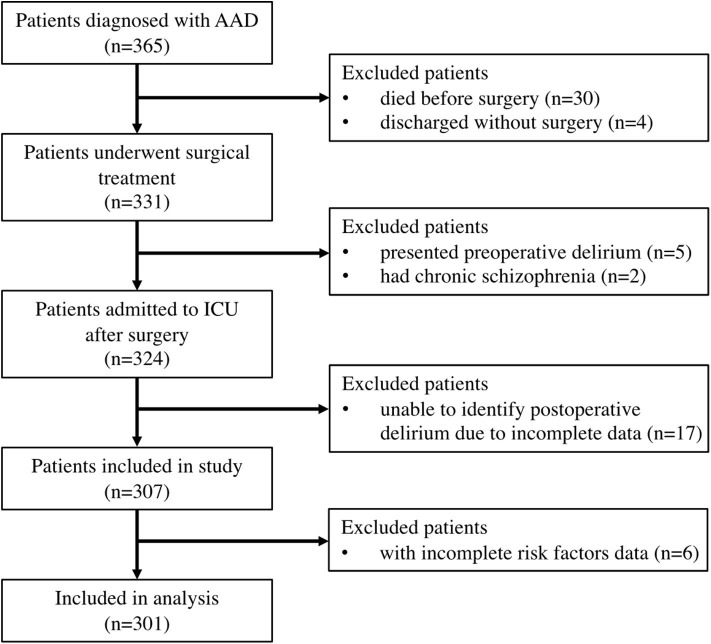
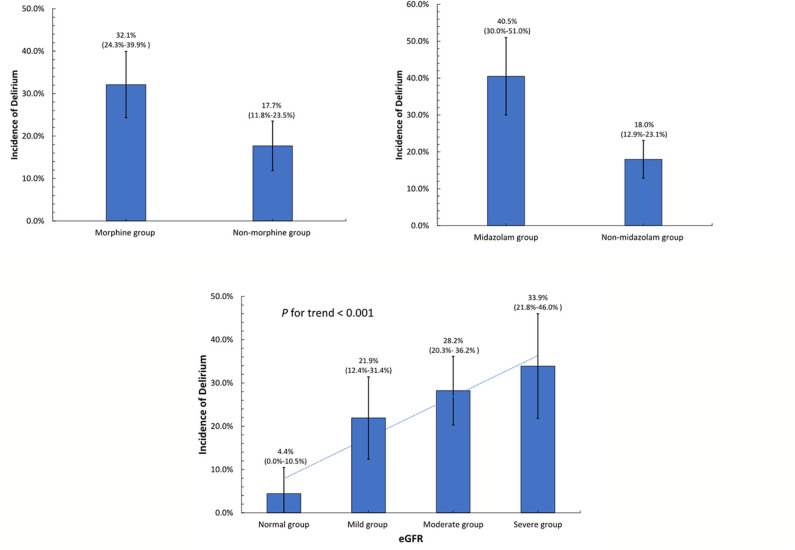
Objectives: The aim of this study was to investigate the prevalence and explore the predictors and early outcomes of post-operative delirium (POD) in patients with type A aortic dissection (AAD) during intensive care unit (ICU) stays. Methods: We retrospectively reviewed the records of 301 patients with AAD who underwent surgical treatment in our institution from January 2017 to December 2018. Results: Delirium developed in 73 patients (24.25%) during the ICU stay. Patients with lower estimated glomerular filtration rates [odds ratio (OR) 0.84, 95% CI 0.74-0.94, p = 0.003], post-operative midazolam use (OR 2.37, 95% CI 1.33-4.23, p = 0.004), and post-operative morphine use (OR 1.87, 95% CI 1.07-3.29, p = 0.029) were more susceptible to developing POD. Patients who developed POD had a longer ICU stay (11.52 vs. 7.22 days, p < 0.001) and hospital stay (23.99 vs. 18.91, p = 0.007) with higher hospitalization costs (48.82 vs. 37.66 thousand dollars, p < 0.001) than those without POD. The in-hospital mortality rate was higher in the delirium group, but the difference was not significant (6.85 vs. 4.82%, p = 0.502). Conclusions: The incidence of POD in patients with AAD was high and was associated with renal dysfunction and the use of midazolam and morphine. POD was associated with poor early outcomes, suggesting the importance of early screening, such as for renal dysfunction, and prevention by using sedation scales to minimize the use of midazolam and morphine in these patients.
Keywords: delirium; early outcomes; incidence; risk factors; type A aortic dissection.
Copyright © 2020 Cai, Zhang, Pan, Latour, Zheng, Zhong, Gao, Lv, Luo, Wang and Zhang.
Figures
References
LinkOut - more resources
Full Text Sources
