. 2020:21:100443.
doi: 10.1016/j.imu.2020.100443. Epub 2020 Oct 12.

Understand variability of COVID-19 through population and tissue variations in expression of SARS-CoV-2 host genes

Affiliations

Understand variability of COVID-19 through population and tissue variations in expression of SARS-CoV-2 host genes

Liang Chen et al. Inform Med Unlocked. 2020.

Abstract

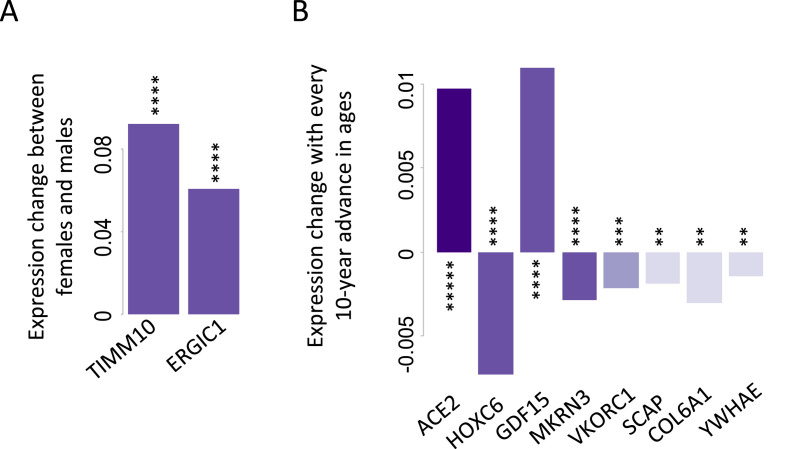
An urgent question of coronavirus disease 2019 (COVID-19) is population variation in susceptibility to SARS-CoV-2 infection and symptom severity. We explore the expression profiles of SARS-CoV-2 host genes, their population variations, associated genetic variants, age- and sex-dependency in normal individuals. SARS-CoV-2 host genes are provisionally defined as the human genes that are experimentally validated or bioinformatically predicted to interact with SARS-CoV-2 proteins. Genes exhibiting most variable expression include ACE2, CLEC4G, CLEC4M, CD209 (interact with the SARS-CoV-2 spike protein); REEP6 (a receptor accessory protein expressed in the olfactory epithelium); SLC27A2 and PKP2 (inhibit virus replication); and PTGS2 (mediates fever response). SNP rs4804803, associated with SARS severity, affects expression of CLEC4G and CD209. Genetic variants of proteases associated with SARS-CoV-2 entry (TMPRSS2, CTSB, and CTSL) are strongly associated with their expression variation, suggesting a genetic contribution to phenotypic variations in multiple organs upon virus attack. The most significant age-dependent gene is ACE2, the cellular receptor of SARS-CoV-2. Others include TGF-β family member GDF15, mediating inflammation, and VKORC1, possibly explaining vitamin K deficiency in COVID-19. TIMM10 and ERGIC1 exhibit significant sex differences. In summary, our results show genetic and multiple biological variables may underlie the population variation in SARS-CoV-2 infection and symptom severity.

Keywords: COVID-19; Expression variation; Genetic variants; Host genes; Perturbagens; SARS-CoV-2; Transcriptome.


Conflict of interest statement

None declared.

Figures
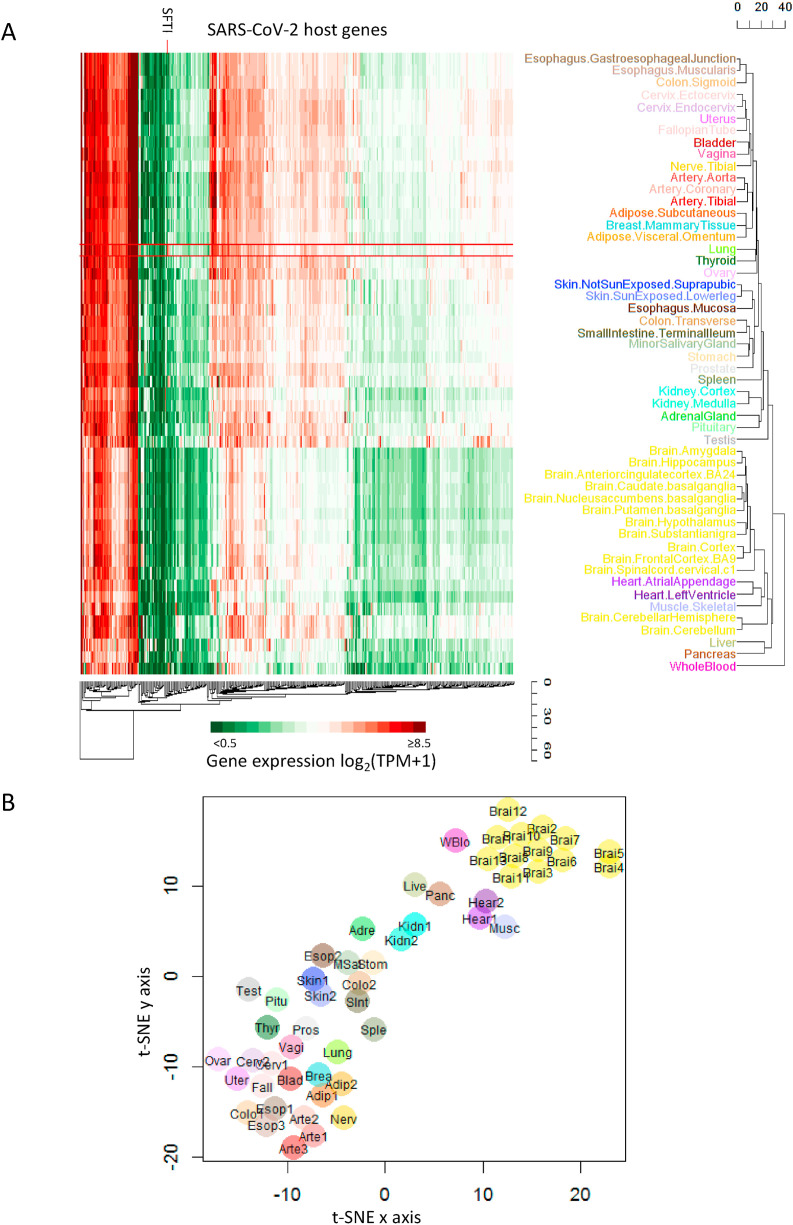
Fig. 1
Fig. 1
Expression profiles of SARS-CoV-2 host genes across different normal tissues. (A) Heatmap of host gene expression across tissues. We obtained the expression level of each gene in each sample quantified by GTEx RNA-seq. We then calculated the average expression level across multiple samples of the same tissue. The color warmness in the heatmap represents the expression level, as shown in the color scale. Hierarchical clustering based on average linkage was performed for both genes (columns) and tissues (rows). (B) t-SNE visualization of tissues based on their expression profiles of host genes. (For interpretation of the references to color in this figure legend, the reader is referred to the Web version of this article.)
Fig. 2
Fig. 2
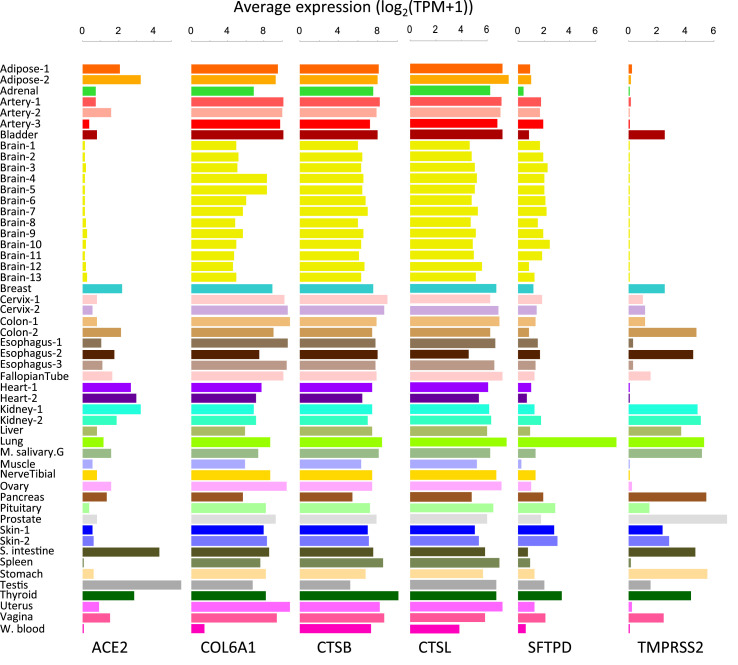
Expression profiles of important SARS-CoV-2 host genes.
Fig. 3
Fig. 3
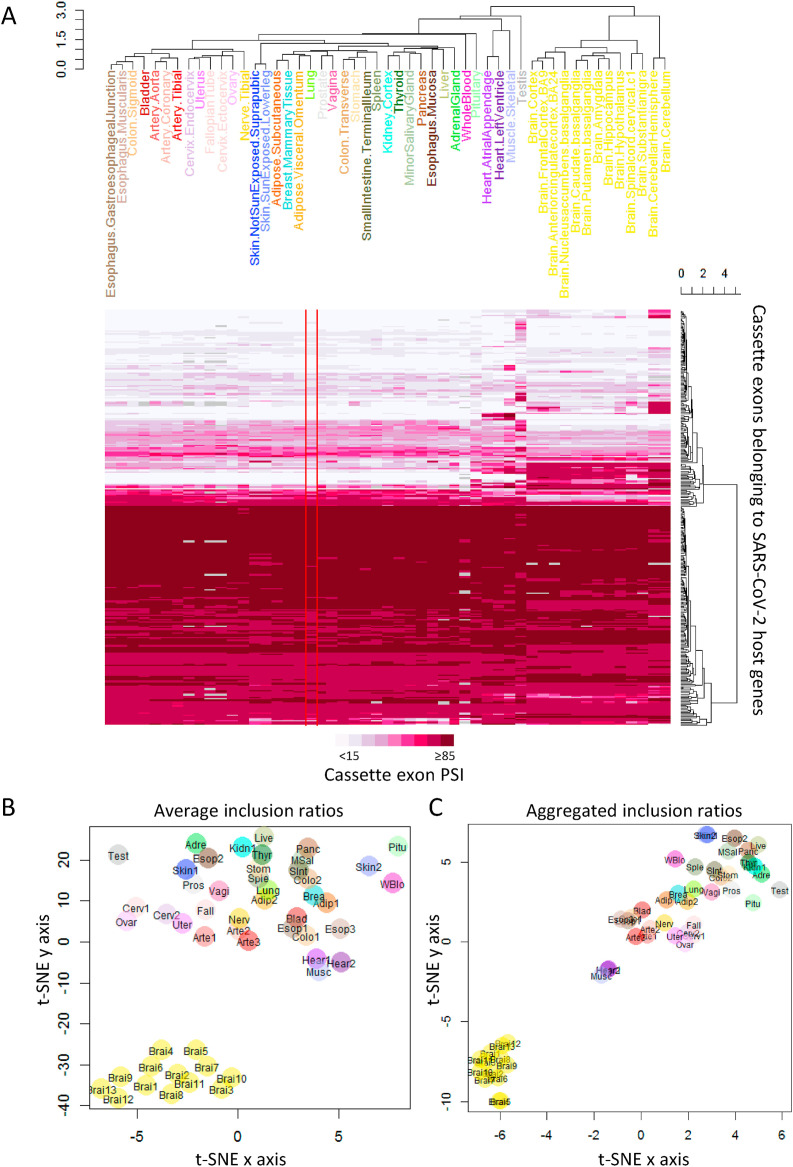
Splicing profiles of cassette exons belonging to SARS-CoV-2 host genes across different normal tissues. (A) Heatmap of the average inclusion ratios (PSI) of cassette exons. Hierarchical clustering was performed on 298 cassette exons which exhibited PSI ranges of at least 10 across tissues (kidney.medulla excluded) and less than five missing ratios due to insufficient junction reads. (B) t-SNE visualization based on the average inclusion ratios of the 298 cassette exons. (C) t-SNE visualization based on the aggregated inclusion ratios of cassette exons. We pooled junction reads from samples of the same tissue to calculate the aggregated inclusion ratios. A total of 371 cassette exons exhibited ranges of at least 10 for aggregated PSI across tissues (kidney.medulla excluded) and less than five missing ratios due to zero junction reads. Missing values (0.6% for B and 0.1% for C) were imputed as the mean inclusion ratio across all tissues for a specific cassette exon.
Fig. 4
Fig. 4
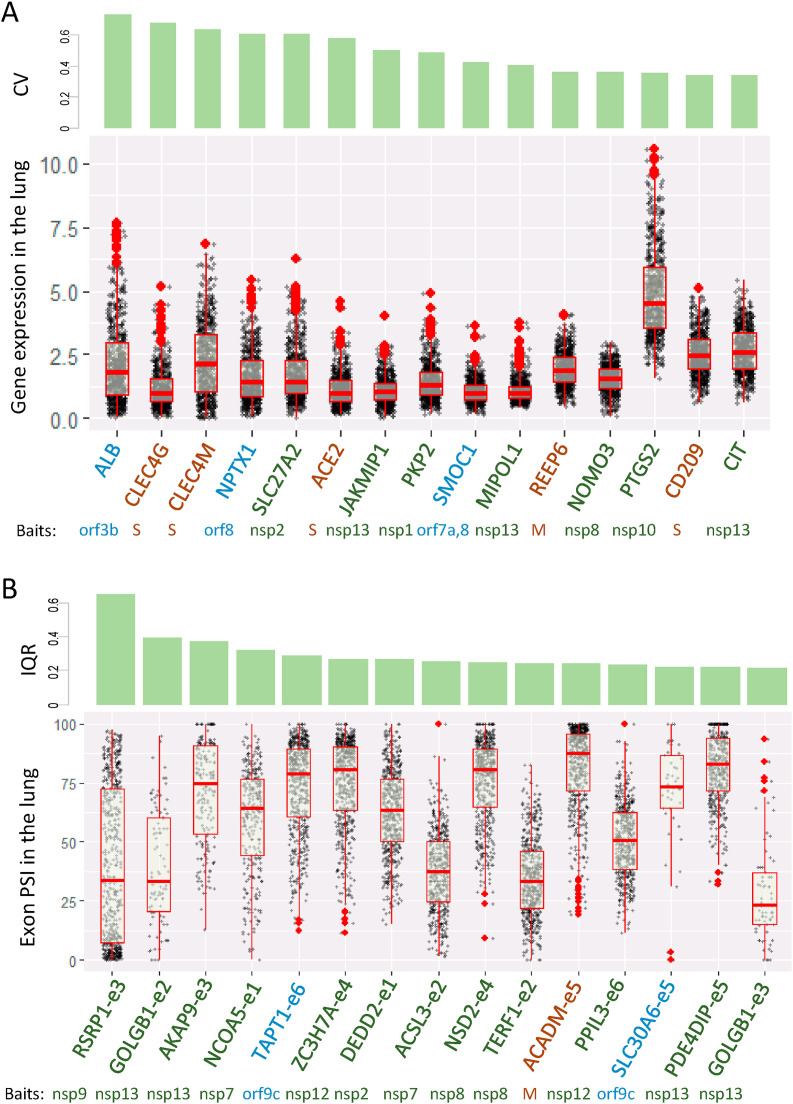
Population variation in expression and splicing of SARS-CoV-2 host genes. (A) Expression of top 15 genes with the largest coefficient of variation (CV) in the lung. Expression levels are at log2 (TPM+1). Genes with average TPM <1.0 were excluded. (B) Inclusion ratios (PSI) of top 15 cassette exons sorted by their interquartile ranges (IQR) in the lung. Baits are those SARS-CoV-2 proteins tested in Gordon et al.
Fig. 5
Fig. 5
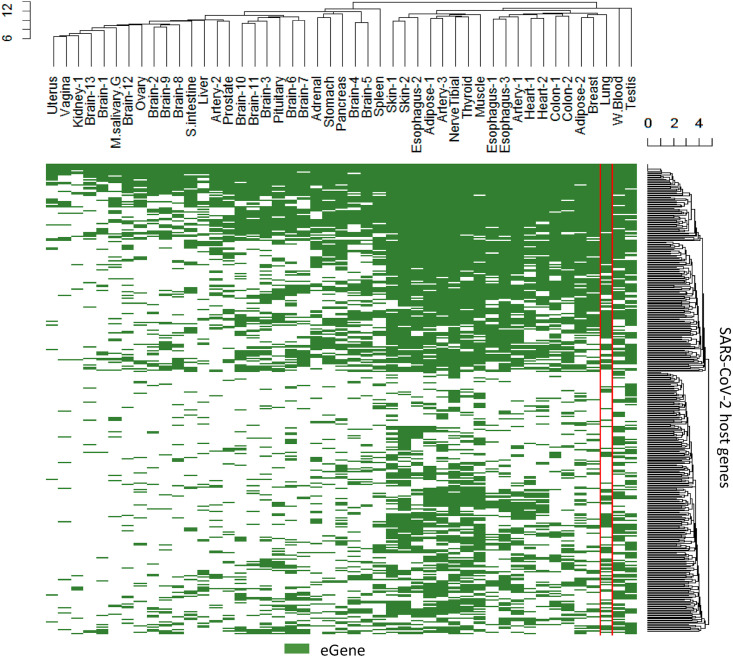
Tissues in which SARS-CoV-2 host genes are eGenes. The host genes have common genetic variants nearby to affect their expression levels in the green highlighted tissues. (For interpretation of the references to color in this figure legend, the reader is referred to the Web version of this article.)
Fig. 6
Fig. 6
Sex- (A) or age-dependent (B) expression for SARS-CoV-2 host genes. The expression changes were derived from the coefficients of fitted regression models. Expression levels are at log2 (TPM+1). FDR <0.1 was used as the cutoff for the multiple comparison adjustment. *****P ≤ 0.00005; ****P ≤ 0.0005; ***P ≤ 0.001; and **P ≤ 0.005.

References

    1. Wang D., Hu B., Hu C., Zhu F., Liu X., Zhang J. Clinical characteristics of 138 hospitalized patients with 2019 novel coronavirus-infected pneumonia in wuhan, China. J Am Med Assoc. 2020;323(11):1061–1069. - PMC - PubMed
    1. Colaneri M., Sacchi P., Zuccaro V., Biscarini S., Sachs M., Roda S., Pieri T.C., Valsecchi P., Piralla A., Seminari E., Di Matteo A., Novati S., Maiocchi L., Pagnucco L., Tirani M., Baldanti F., Mojoli F., Perlini S., Bruno R., The Covid Irccs San Matteo Pavia Task F. Clinical characteristics of coronavirus disease (COVID-19) early findings from a teaching hospital in Pavia, North Italy, 21 to 28 February 2020. Euro Surveill. 2020;25 - PMC - PubMed
    1. Siordia J.A., Jr. Epidemiology and clinical features of COVID-19: a review of current literature. J Clin Virol. 2020;127:104357. - PMC - PubMed
    1. Huang C., Wang Y., Li X., Ren L., Zhao J., Hu Y., Zhang L., Fan G., Xu J., Gu X., Cheng Z., Yu T., Xia J., Wei Y., Wu W., Xie X., Yin W., Li H., Liu M., Xiao Y., Gao H., Guo L., Xie J., Wang G., Jiang R., Gao Z., Jin Q., Wang J., Cao B. Clinical features of patients infected with 2019 novel coronavirus in Wuhan, China. Lancet. 2020;395:497–506. - PMC - PubMed
    1. Mao L., Jin H., Wang M., Hu Y., Chen S., He Q. Neurologic manifestations of hospitalized patients with coronavirus disease 2019 in wuhan, China. JAMA Neurol. 2020;77(6):683–690. - PMC - PubMed