


Introducing Newborn Screening for Severe Combined Immunodeficiency (SCID) in the Dutch Neonatal Screening Program
- PMID: 33072960
- PMCID: PMC7548907
- DOI: 10.3390/ijns4040040
Introducing Newborn Screening for Severe Combined Immunodeficiency (SCID) in the Dutch Neonatal Screening Program
Abstract
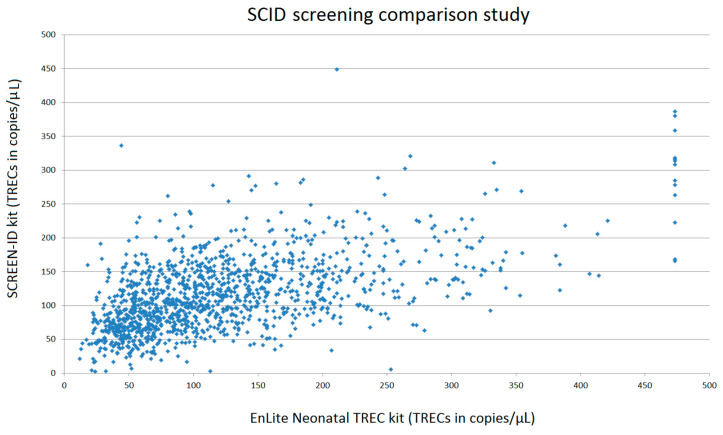
The implementation of newborn screening for severe combined immunodeficiency (SCID) in the Netherlands is a multifaceted process in which several parties are involved. The Dutch Ministry of Health adopted the advice of the Dutch Health Council to include SCID in the Dutch newborn screening program in 2015. As newborn screening for SCID is executed with a new, relatively expensive assay for the Dutch screening laboratory, an implementation pilot study is deemed instrumental for successful implementation. A feasibility study was performed in which the practicalities and preconditions of expanding the newborn screening program were defined. Cost-effectiveness analysis (CEA) indicated that SCID screening in the Netherlands might be cost-effective, recognizing that there are still many uncertainties in the variables underlying the CEA. Data and experience of the pilot study should provide better estimates of these parameters, thus enabling the actualization of CEA results. Prior to the implementation pilot study, a comparison study of two commercially available SCID screening assays was performed. A prospective implementation pilot study or so-called SONNET study (SCID screening research in the Netherlands with TRECs) started in April 2018 and allows the screening for SCID of all newborns in three provinces of the Netherlands for one year. Based on the results of the SONNET study, the Dutch Ministry of Health will make a final decision about national implementation of newborn screening for SCID in the Netherlands.
Keywords: SCID; SONNET study; T-cell receptor excision circles; TREC; newborn screening; severe combined immunodeficiency.
© 2018 by the authors.
Conflict of interest statement
Conflicts of InterestThe authors declare no conflict of interest.
Figures

References
-
- van der Ploeg C.P.B., Wins S., Olthof R., Eekhout I., Verkerk P.H. The Newborn Blood Spot Screening in the Netherlands—Monitor 2017. National Institute of Public Health and the Environment; Bilthoven, Dutch: 2018.
-
- Baker M.W., Grossman W.J., Laessig R.H., Hoffman G.L., Brokopp C.D., Kurtycz D.F., Cogley M.F., Litsheim T.J., Katcher M.L., Routes J.M. Development of a routine newborn screening protocol for severe combined immunodeficiency. J. Allergy Clin. Immunol. 2009;124:522–527. doi: 10.1016/j.jaci.2009.04.007. - DOI - PubMed
-
- Gerstel-Thompson J.L., Wilkey J.F., Baptiste J.C., Navas J.S., Pai S.Y., Pass K.A., Eaton R.B., Comeau A.M. High-throughput multiplexed T-cell-receptor excision circle quantitative PCR assay with internal controls for detection of severe combined immunodeficiency in population-based newborn screening. Clin Chem. 2010;56:1466–1474. doi: 10.1373/clinchem.2010.144915. - DOI - PubMed
Publication types
LinkOut - more resources
Full Text Sources
Research Materials
Miscellaneous
