


The Neonatal Screening Program in Brazil, Focus on Sickle Cell Disease (SCD)
- PMID: 33072971
- PMCID: PMC7510189
- DOI: 10.3390/ijns5010011
The Neonatal Screening Program in Brazil, Focus on Sickle Cell Disease (SCD)
Abstract
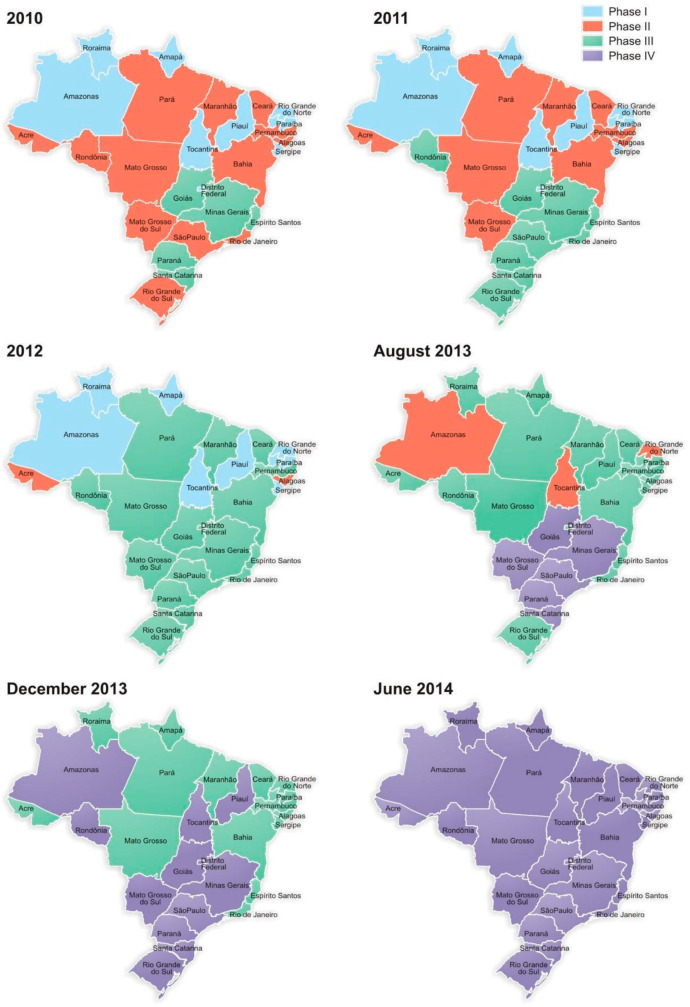
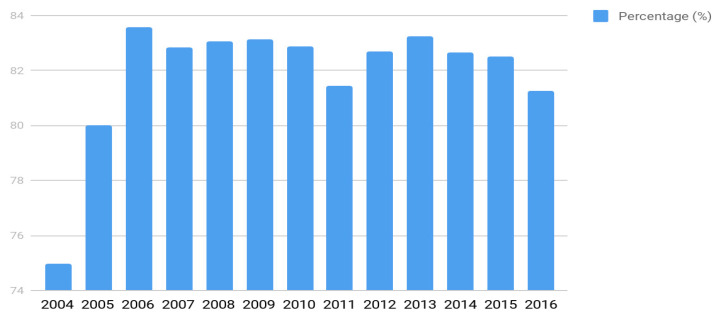
Since 2001, the Brazilian Ministry of Health has been coordinating a National Neonatal Screening Program (NNSP) that now covers all the 26 states and the Federal District of the Brazilian Republic and targets six diseases including sickle cell disease (SCD) and other hemoglobinopathies. In 2005, the program coverage reached 80% of the total live births. Since then, it has oscillated between 80% and 84% globally with disparities from one state to another (>95% in São Paulo State). The Ministry of Health has also published several Guidelines for clinical follow-up and treatment for the diseases comprised by the neonatal screening program. The main challenge was, and still is, to organize the public health network (SUS), from diagnosis and basic care to reference centers in order to provide comprehensive care for patients diagnosed by neonatal screening, especially for SCD patients. Considerable gains have already been achieved, including the implementation of a network within SUS and the addition of scientific and technological progress to treatment protocols. The goals for the care of SCD patients are the intensification of information provided to health care professionals and patients, measures to prevent complications, and care and health promotion, considering these patients in a global and integrated way, to reduce mortality and enhance their quality of life.
Keywords: hemoglobinopathies; neonatal screening; sickle cell disease.
© 2019 by the authors.
Conflict of interest statement
Conflicts of InterestThe authors declare no conflict of interest.
Figures
References
-
- Brasil, IBGE Demographic Census 2010. [(accessed on 17 September 2018)]; Available online: https://www.ibge.gov.br/
-
- Brasil, Ministério da Saúde Portaria GM/MS nº22 de 15/01/1992—triagem para fenilcetonúria e hipotireoidismo Congênito. Diário Oficial da União. Jan 15, 1992.
-
- Brasil, Ministério da saúde Portaria GM/MS nº 822 de 06 de junho de 2001—Programa de triagem neonatal no Brasil. Diário Oficial da União. Jun 6, 2001.
Publication types
LinkOut - more resources
Full Text Sources
