


Cardiorenal Tissues Express SARS-CoV-2 Entry Genes and Basigin (BSG/CD147) Increases With Age in Endothelial Cells
- PMID: 33073064
- PMCID: PMC7546186
- DOI: 10.1016/j.jacbts.2020.09.010
Cardiorenal Tissues Express SARS-CoV-2 Entry Genes and Basigin (BSG/CD147) Increases With Age in Endothelial Cells
Abstract
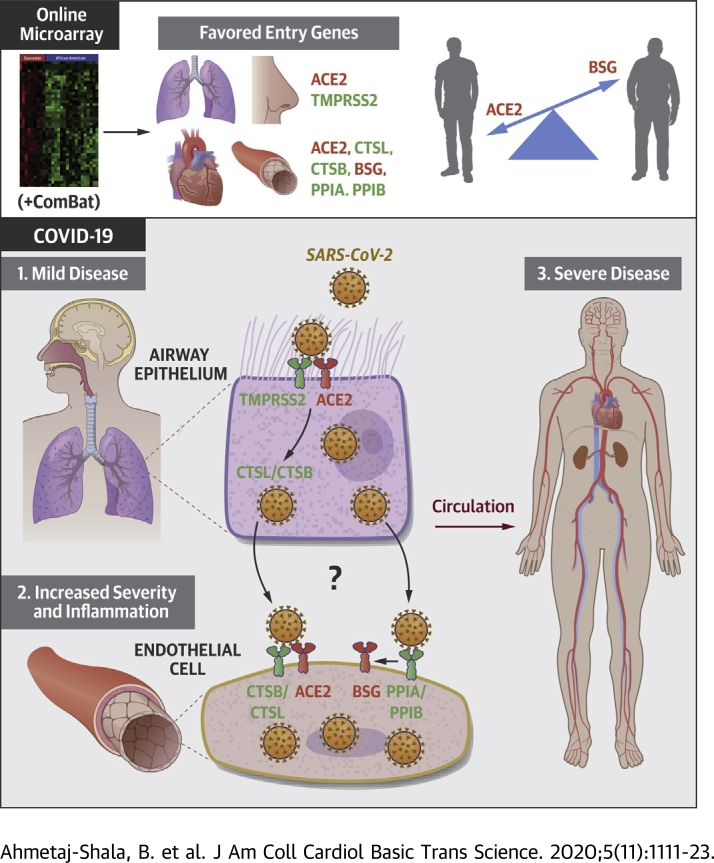
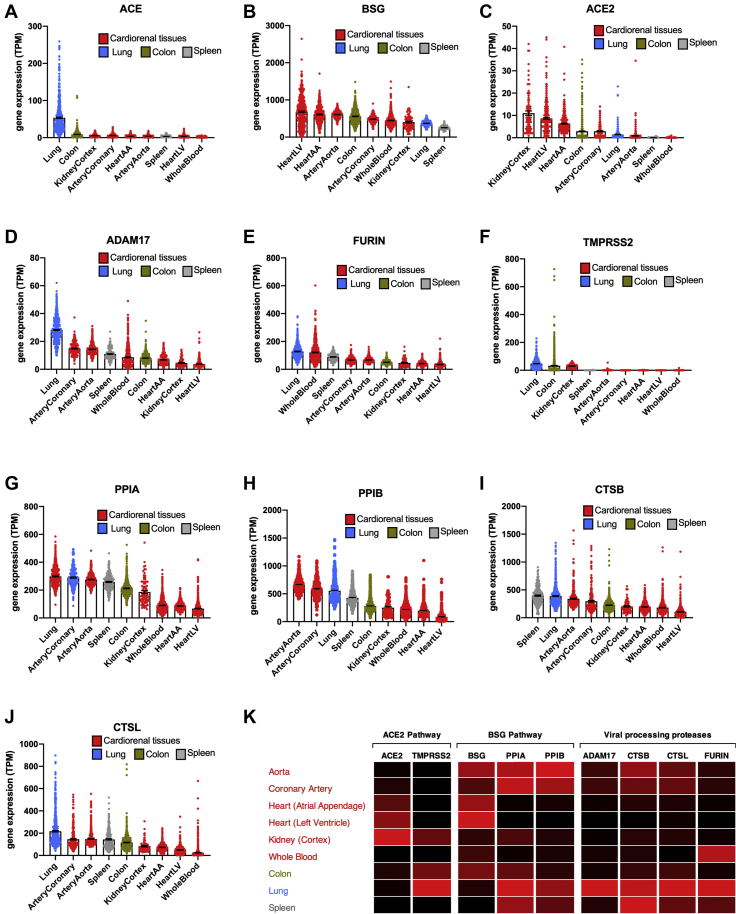
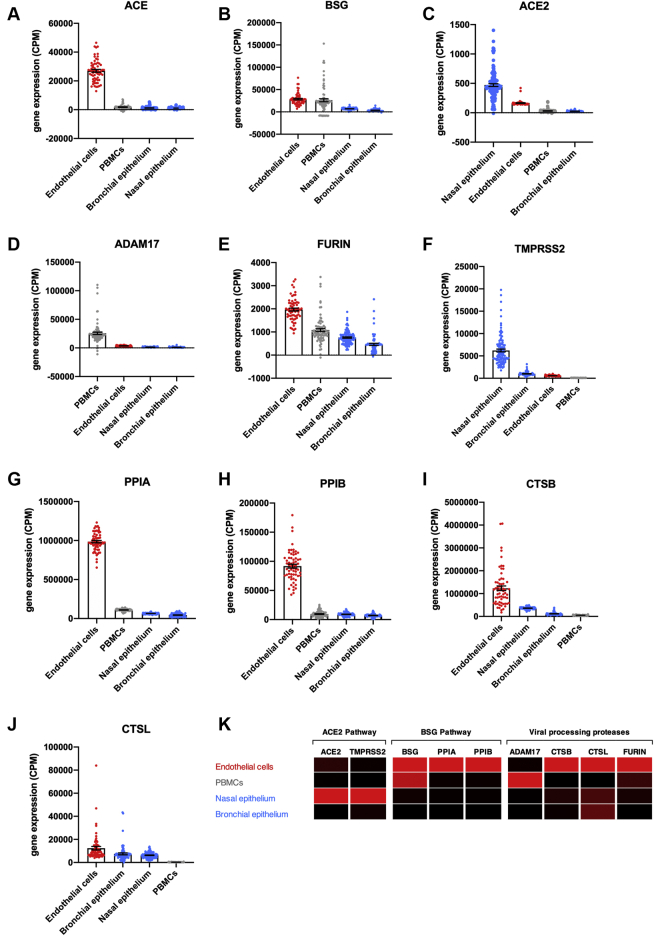
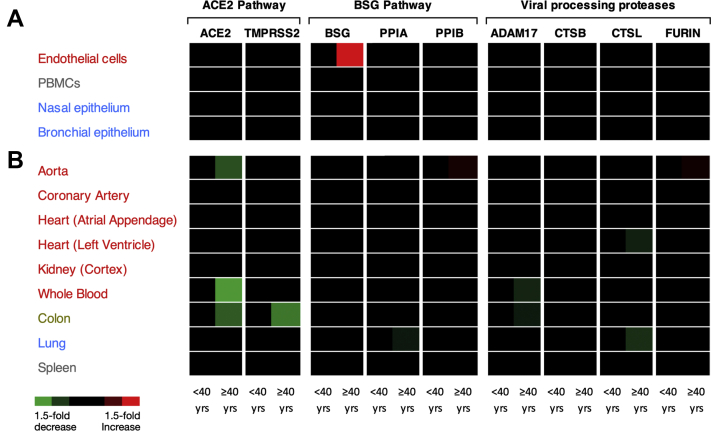
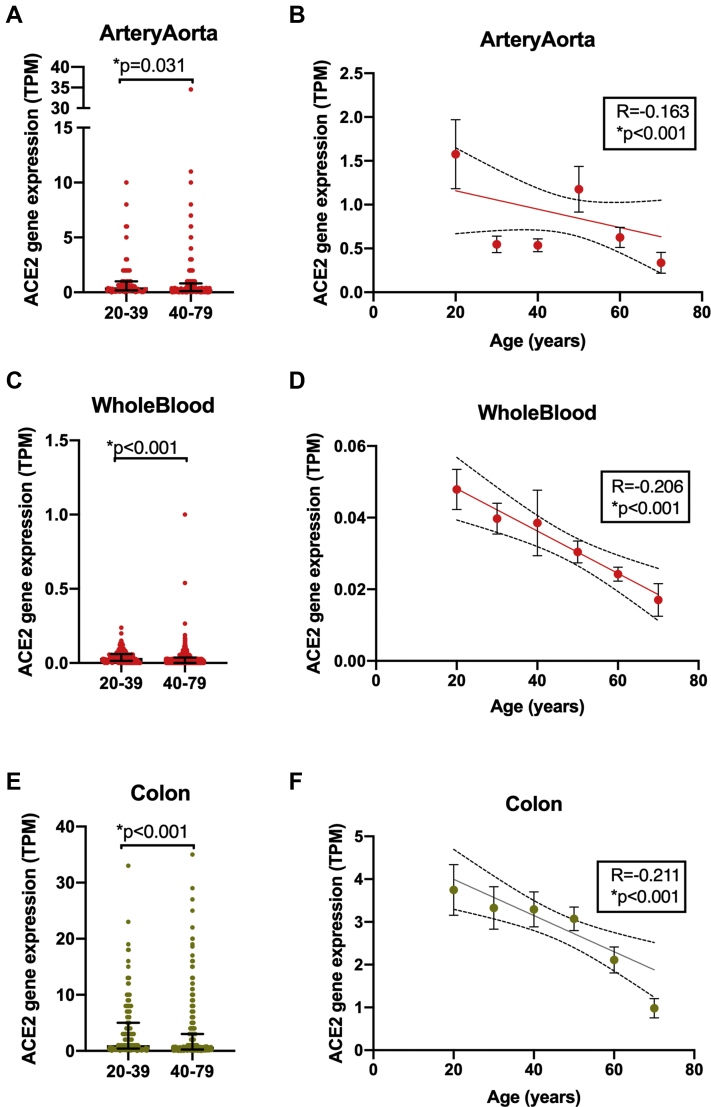
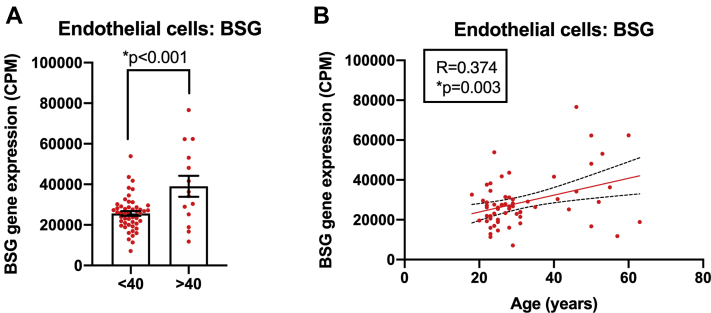
Vascular and cardiovascular inflammation and thrombosis occur in patients with severe coronavirus disease-2019 (COVID-19). Advancing age is the most significant risk factor for severe COVID-19. Using transcriptomic databases, the authors found that: 1) cardiovascular tissues and endothelial cells express putative genes for severe acute respiratory syndrome coronavirus-2 infection, including angiotensin-converting enzyme 2 (ACE2) and basigin (BSG); 2) severe acute respiratory syndrome coronavirus-2 receptor pathways ACE2/transmembrane serine protease 2 and BSG/peptidylprolyl isomerase B(A) polarize to lung/epithelium and vessel/endothelium, respectively; 3) expression of host genes is relatively stable with age; and 4) notable exceptions are ACE2, which decreases with age in some tissues, and BSG, which increases with age in endothelial cells, suggesting that BSG expression in the vasculature may explain the heightened risk for severe disease with age.
Keywords: ACE2, angiotensin converting enzyme 2; ADAM17, ADAM metallopeptidase domain 17; BSG, basigin; COVID-19; COVID-19, coronavirus disease-2019; CTSB, cathepsin B; CTSL, cathepsin L; GTEx, Genotype-Tissue Expression; PBMC, peripheral blood mononuclear cells; PPIA, peptidylprolyl isomerase A; PPIB, peptidylprolyl isomerase B; SARS-CoV-2, severe acute respiratory syndrome-coronavirus-2; TMPRSS2, transmembrane serine protease 2; age; cardiovascular; endothelial cells.
© 2020 The Authors.
Conflict of interest statement
This work was funded by the Wellcome Trust/Imperial College Institutional Support Fellowship for Dr. Ahmetaj-Shala. Dr. Kirkby is a recipient of an Intermediate Research Fellowship from the British Heart Foundation (FS/16/1/31699). Dr. Vaja is a recipient of a Clinical Training Fellowship from the British Heart Foundation (FS/19/6/34129). Drs. Kirkby and Mitchell are holders of a program grant from the British Heart Foundation (RG/18/4/33541). All other authors have reported that they have no relationships relevant to the contents of this paper to disclose.
Figures
Comment in
-
In the Age of COVID: Genomic Changes Over the Lifespan Help Explain Severe SARS-CoV-2 Disease.JACC Basic Transl Sci. 2020 Nov;5(11):1124-1126. doi: 10.1016/j.jacbts.2020.10.004. Epub 2020 Oct 23. JACC Basic Transl Sci. 2020. PMID: 33134610 Free PMC article.
References
-
- Wang K., Chen W., Zhou Y.-S. SARS-CoV-2 invades host cells via a novel route: CD147-spike protein. bioRxiv. https://www.biorxiv.org/content/10.1101/2020.03.14.988345v1 Available at: - DOI
-
- Shilts J., Wright G.J. No evidence for basigin/CD147 as a direct SARS-CoV-2 spike binding receptor. bioRxiv. https://www.biorxiv.org/content/10.1101/2020.07.25.221036v1 Available at: - DOI - PMC - PubMed
LinkOut - more resources
Full Text Sources
Miscellaneous
