


Detection of SARS-CoV-2 in saliva and characterization of oral symptoms in COVID-19 patients
- PMID: 33073910
- PMCID: PMC7645955
- DOI: 10.1111/cpr.12923
Detection of SARS-CoV-2 in saliva and characterization of oral symptoms in COVID-19 patients
Abstract
Objectives: In order to provide a more comprehensive understanding of the effects of SARS-CoV-2 on oral health and possible saliva transmission, we performed RNA-seq profiles analysis from public databases and also a questionnaire survey on oral-related symptoms of COVID-19 patients.
Materials and methods: To analyse ACE2 expression in salivary glands, bulk RNA-seq profiles from four public datasets including 31 COVID-19 patients were recruited. Saliva and oropharyngeal swabs were collected. SARS-CoV-2 nucleic acids in saliva were detected by real-time polymerase chain reaction (RT-PCR). Additionally, a questionnaire survey on various oral symptoms such as dry mouth and amblygeustia was also carried out on COVID-19 patients.
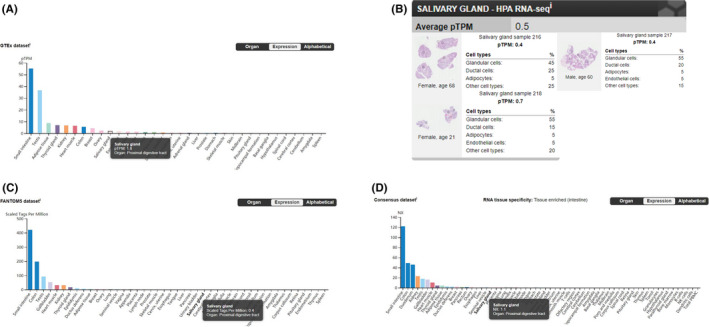
Results: ACE2 expression was present at detectable levels in the salivary glands. In addition, of four cases with positive detection of salivary SARS-CoV-2 nucleic acids, three (75%) were critically ill on ventilator support. Furthermore, we observed the two major oral-related symptoms, dry mouth (46.3%) and amblygeustia (47.2%), were manifested by a relatively high proportion of 108 COVID-19 patients who accepted the questionnaire survey.
Conclusions: This study confirms the expression of ACE2 in the salivary glands and demonstrates the possibility of SARS-CoV-2 infection of salivary glands. Saliva may be a new source of diagnostic specimens for critically ill patients, since it can be easily collected without any invasive procedures. In addition, dry mouth and amblygeustia can be considered as initial symptoms of COVID-19 infection.
Keywords: COVID-19 patients; SARS-CoV-2; amblygeustia; dry mouth; saliva.
© 2020 The Authors. Cell Proliferation Published by John Wiley & Sons Ltd.
Conflict of interest statement
We declare no competing interests.
Figures

Comment in
-
Inflammation of papillae of Wharton's duct in COVID-19 patients: A debatable entity.Spec Care Dentist. 2021 Jan;41(1):127-128. doi: 10.1111/scd.12526. Epub 2020 Oct 7. Spec Care Dentist. 2021. PMID: 33026110 Free PMC article. No abstract available.
References
-
- World Health Organization . Novel Coronavirus (2019‐nCoV): situation report, 22. Feb 27, 2020. https://apps.who.int/iris/handle/10665/330991/. Accessed March 3, 2020.
-
- World Health Organization . WHO Coronavirus Disease (COVID‐19) Dashboard. 2020. https://covid19.who.int/. Accessed August 23, 2020.
-
- National Public Radio . Coronavirus: COVID‐19 Is Now Officially A Pandemic, WHO Says. 2020. https://www.npr.org/sections/goatsandsoda/2020/03/11/814474930/coronavir.... Accessed March 14, 2020.
-
- National Health Commission of the People's Republic of China . Diagnosis guidelines for the new coronavirus pneumonia (NCIP) of the seventh edition. 2020. http://www.nhc.gov.cn/yzygj/s7652m/202003/a31191442e29474b98bfed5579d5af.... Accessed March 8, 2020.
-
- Marsh PD, Do T, Beighton D, Devine DA. Influence of saliva on the oral microbiota. Periodontol 2000. 2016;70:80‐92. - PubMed
MeSH terms
Substances
LinkOut - more resources
Full Text Sources
Medical
Miscellaneous
