


The Regulation of Cerebral Spinal Fluid Flow and Its Relevance to the Glymphatic System
- PMID: 33074399
- PMCID: PMC7864223
- DOI: 10.1007/s11910-020-01077-9
The Regulation of Cerebral Spinal Fluid Flow and Its Relevance to the Glymphatic System
Abstract
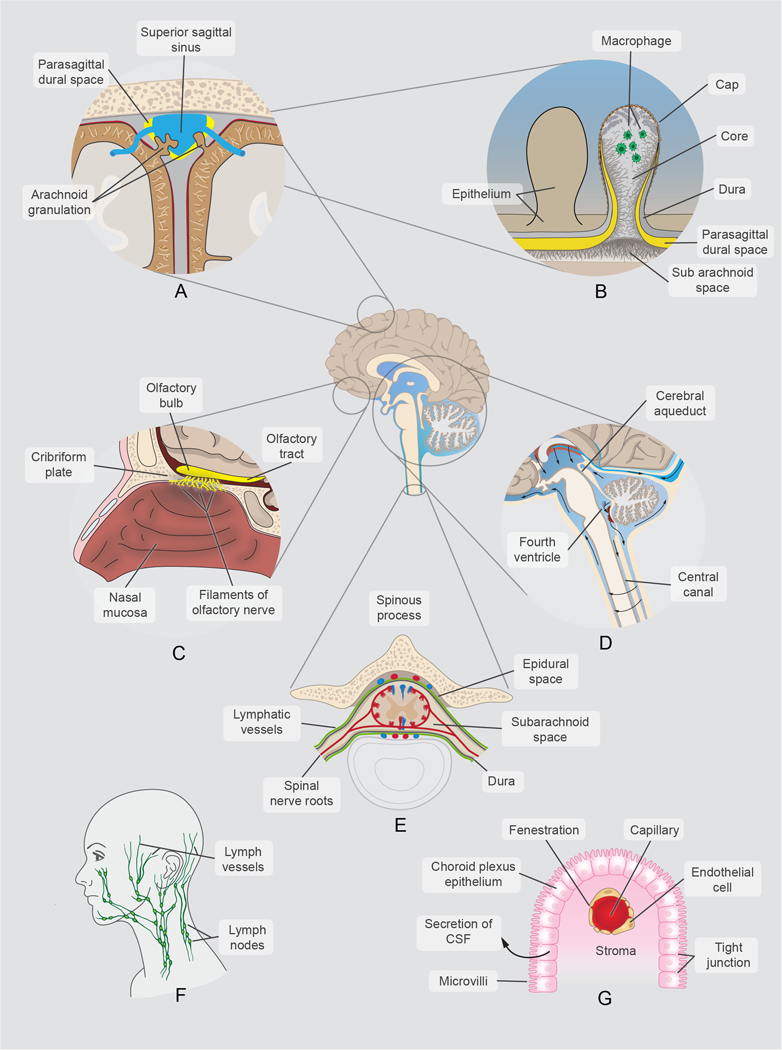
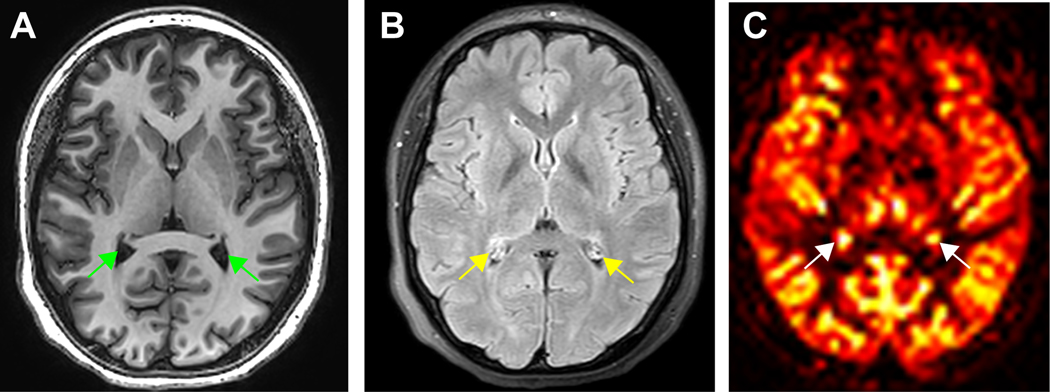
Purpose of review: The glymphatic system is a relatively new concept that has been associated with regulation of cerebrospinal fluid (CSF), as well as brain waste clearance. Novel techniques to study glymphatic dysfunction have in turn prompted a reassessment of brain physiology and underlying elements of neurological disease. This review incorporates a contemporary imaging perspective focused on understanding the regulation of CSF flow, thus expanding the putative clinical relevance of this system and the relationships between CSF flow and glymphatic function.
Recent findings: MR imaging studies, especially those that employ intrathecal gadolinium contrast, have identified potentially new pathways regulating CSF production, absorption, and clearance. These studies, when viewed in the context of more historical anatomic descriptors of CSF production and absorption, provide a more robust description of CSF physiology and waste clearance. CSF production and resorption are under-investigated and could be related to various pathophysiologic processes in neurodegeneration. Anatomically based clinical exemplars of CSF clearance are discussed. Future studies should focus on linking glymphatic functionality with neurological disease.
Keywords: Arachnoid granulations; Glymphatic; Neurodegeneration; Neuroimaging; Perivascular space.
Figures
References
-
- Iliff JJ, Wang M, Liao Y, Plogg BA, Peng W, Gundersen GA, Benveniste H, Vates GE, Deane R, Goldman SA, Nagelhus EA, Nedergaard M. A paravascular pathway facilitates CSF flow through the brain parenchyma and the clearance of interstitial solutes, including amyloid β. Sci Transl Med. 2012:4(147):147ra111. doi: 10.1126/scitranslmed.3003748. - DOI - PMC - PubMed
-
- Taoka T, Masutani Y, Kawai H, Nakane T, Matsuoka K, Yasuno F, Kishimoto T, Naganawa S. Evaluation of glymphatic system activity with the diffusion MR technique: diffusion tensor image analysis along the perivascular space (DTI-ALPS) in Alzheimer’s disease cases. Jpn J Radiol. 2017:35(4):172–178. doi: 10.1007/s11604-017-0617-z. - DOI - PubMed
Publication types
MeSH terms
Grants and funding
LinkOut - more resources
Full Text Sources
Medical
Research Materials
