


COVID-19 and Hypercoagulability: A Review
- PMID: 33074732
- PMCID: PMC7592310
- DOI: 10.1177/1076029620962853
COVID-19 and Hypercoagulability: A Review
Abstract
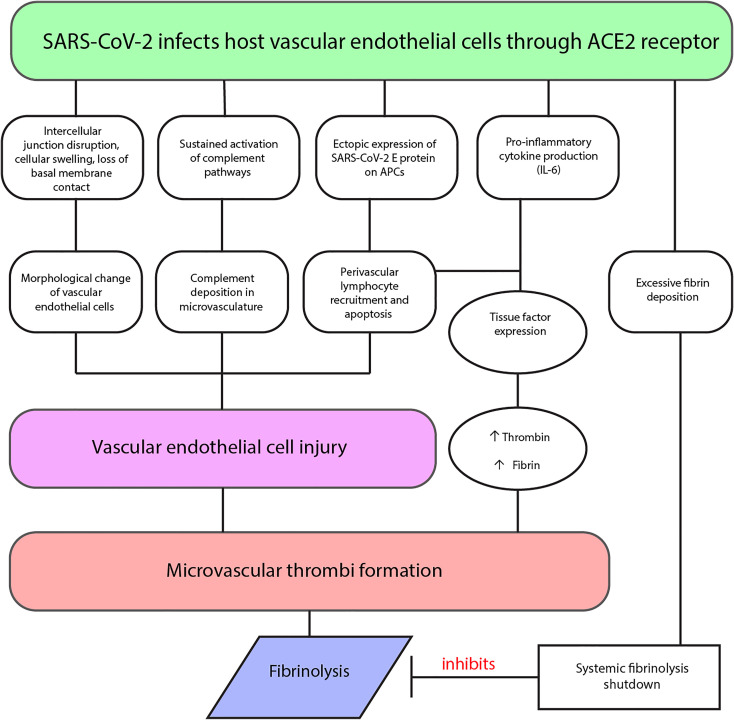
Thrombotic complications of the novel coronavirus (COVID-19) are a concerning aspect of the disease, due to the high incidence in critically ill patients and poor clinical outcomes. COVID-19 predisposes patients to a hypercoagulable state, however, the pathophysiology behind the thrombotic complications seen in this disease is not well understood. Several mechanisms have been proposed and the pathogenesis likely involves a host immune response contributing to vascular endothelial cell injury, inflammation, activation of the coagulation cascade via tissue factor expression, and shutdown of fibrinolysis. Treatments targeting these pathways may need to be considered to improve clinical outcomes and decrease overall mortality due to thrombotic complications. In this review, we will discuss the proposed pathophysiologic mechanisms for thrombotic complications in COVID-19, as well as treatment strategies for these complications based on the current literature available.
Keywords: coagulopathy; embolism; venous thromboembolism.
Conflict of interest statement
Figures
References
-
- WHO. Modes of transmission of virus causing COVID-19: implications for IPC precaution recommendations. World Health Organization. 2020. Accessed October 8, 2020 https://www.who.int/news-room/commentaries/detail/modes-of-transmission-...
-
- WHO. WHO coronavirus disease (COVID-19) dashboard. World Health Organization. 2020. Accessed October 8, 2020 https://covid19.who.int/
Publication types
MeSH terms
LinkOut - more resources
Full Text Sources
