


Acute aortoiliac occlusion in a patient with novel coronavirus disease-2019
- PMID: 33075454
- PMCID: PMC7568051
- DOI: 10.1016/j.jvs.2020.10.018
Acute aortoiliac occlusion in a patient with novel coronavirus disease-2019
Abstract
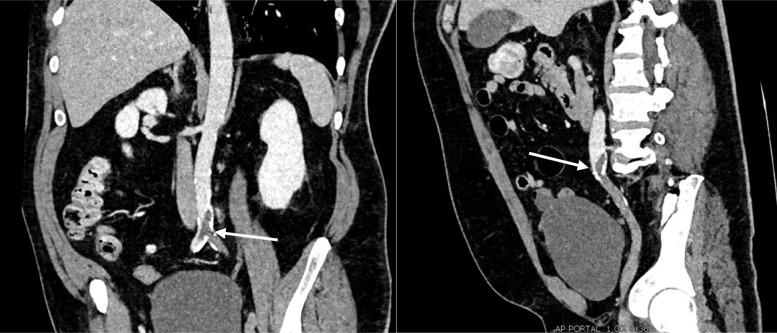
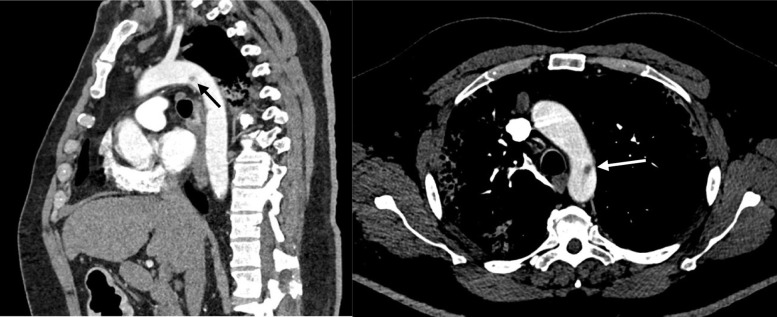
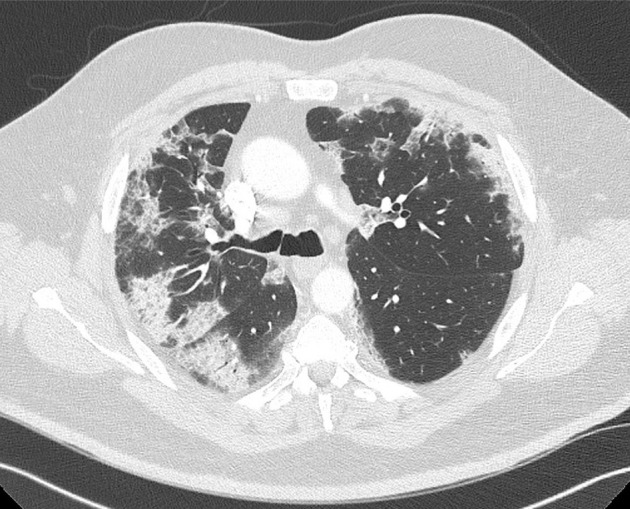
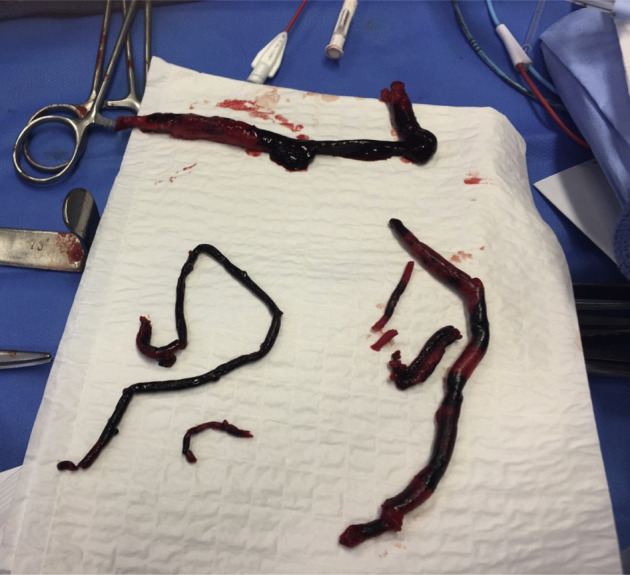
The severe acute respiratory syndrome novel coronavirus-2 pandemic is affecting almost every country in the world. Even if the major symptoms of coronavirus disease-2019 are respiratory, different symptoms at presentation are now recognized. Venous thromboembolism has been reported in infected patients and few but increasing cases of arterial thrombosis have been described. We report a case of acute aortoiliac and lower limb artery occlusions in a patient presenting with severe coronavirus disease-2019 infection. The mechanism of the occlusion seemed to be distal embolization from a floating thrombus in the aortic arch caused by a major inflammatory state and virus infection. The patient underwent aortoiliac and lower limb artery mechanical thrombectomy, but required unilateral major amputation.
Keywords: Arterial occlusion; Arterial thrombosis; COVID-19; Coronavirus; Inflammatory state.
Copyright © 2020 Society for Vascular Surgery. Published by Elsevier Inc. All rights reserved.
Figures
Comment in
-
Acute paraplegia with or without coronavirus disease 2019 infection: Decision-making algorithm.J Vasc Surg. 2021 Sep;74(3):1047-1048. doi: 10.1016/j.jvs.2021.05.012. J Vasc Surg. 2021. PMID: 34425946 Free PMC article. No abstract available.
-
Paraparesis due to aortic thromboembolism as a rare complication of COVID-19 infection.J Vasc Surg. 2021 Sep;74(3):1047. doi: 10.1016/j.jvs.2021.04.062. J Vasc Surg. 2021. PMID: 34425947 Free PMC article. No abstract available.
References
-
- Han H., Yang L., Liu R., Liu F., Wu K., Li J., et al. Prominent changes in blood coagulation of patients with SARS-CoV-2 infection. Clin Chem Lab Med. 2020;58:1116–1120. - PubMed
Publication types
MeSH terms
LinkOut - more resources
Full Text Sources
Other Literature Sources
Medical
