


The Concerns, Difficulties, and Stressors of Caring for Pets during COVID-19: Results from a Large Survey of U.S. Pet Owners
- PMID: 33076475
- PMCID: PMC7602525
- DOI: 10.3390/ani10101882
The Concerns, Difficulties, and Stressors of Caring for Pets during COVID-19: Results from a Large Survey of U.S. Pet Owners
Abstract
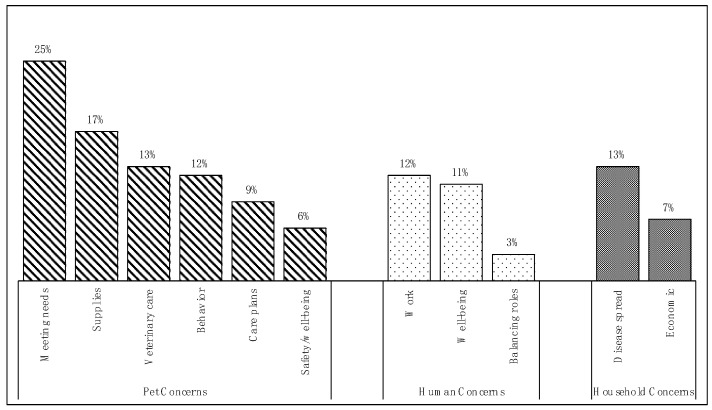
Pets may be a positive presence for their owners during the Coronavirus Disease 2019 (COVID-19) pandemic. However, it is pertinent to identify the hardships associated with pet ownership. We conducted a large-scale survey of U.S. pet owners (n = 2254) in spring and summer 2020 to assess the ways that relationships with pets impacted life during COVID-19. We used thematic analysis to analyze 3671 open-ended responses to three prompts. Reported concerns fell into three major categories: (1) pet-focused (meeting needs of pets; procuring supplies; accessing veterinary care; new and emerging behavioral issues; fate of the pet if owner becomes ill; general safety and well-being), (2) human-focused (issues with working from home; well-being and mental health; balancing responsibilities), and (3) household-focused (disease spread; economic issues). Quantitative analyses showed that the owner's strength of attachment to their pet, economic resources, and relationship status were associated with the types of concerns expressed. Results from this study indicate that pet owners experienced unique hardships related to changes in everyday life from the COVID-19 pandemic. These hardships should be considered alongside the potential benefits found in other studies in order to manage pet owner expectations, prevent pet relinquishment, and more fully understand multifaceted human-companion animal relationships.
Keywords: COVID-19; animal behavior; animal welfare; companion animals; coronavirus; dogs; human-animal interaction; pet owner expectations; pet owners; relinquishment.
Conflict of interest statement
The authors declare no conflict of interest.
Figures
References
-
- Applebaum J.W., Peek C.W., Zsembik B.A. Examining U.S. pet ownership using the General Social Survey. Soc. Sci. J. 2020:1–10. doi: 10.1080/03623319.2020.1728507. - DOI
-
- Kavin K. Adoptions and sales of dogs soar during coronavirus pandemic. Washington Post. Aug 12, 2020.
-
- Herzog H. The Impact of Pets on Human Health and Psychological Well-Being: Fact, Fiction, or Hypothesis? Curr. Dir. Psychol. Sci. 2011;20:236–239. doi: 10.1177/0963721411415220. - DOI
-
- Hoy-Gerlach J., Rauktis M., Newhill C. (Non-Human) Animal Companionship: A Crucial Support for People During the Covid-19 Pandemic. Soc. Regist. 2020;4:109–120. doi: 10.14746/sr.2020.4.2.08. - DOI
LinkOut - more resources
Full Text Sources
