


The incidence of geriatric trauma is increasing and comparison of different scoring tools for the prediction of in-hospital mortality in geriatric trauma patients
- PMID: 33076958
- PMCID: PMC7574576
- DOI: 10.1186/s13017-020-00340-1
The incidence of geriatric trauma is increasing and comparison of different scoring tools for the prediction of in-hospital mortality in geriatric trauma patients
Abstract
Purpose: The study aimed to examine the changing incidence of geriatric trauma and evaluate the predictive ability of different scoring tools for in-hospital mortality in geriatric trauma patients.
Methods: Annual reports released by the National Trauma Database (NTDB) in the USA from 2005 to 2015 and the Trauma Register DGU® in Germany from 1994 to 2012 were analyzed to examine the changing incidence of geriatric trauma. Secondary analysis of a single-center cohort study conducted among 311 severely injured geriatric trauma patients in a level I trauma center in Switzerland was completed. According to the in-hospital survival status, patients were divided into the survival and non-survival group. The differences of the ISS (injury severity score), NISS (new injury severity score), TRISS (Trauma and Injury Severity Score), APACHE II (Acute Physiology and Chronic Health Evaluation II), and SPAS II (simplified acute physiology score II) between two groups were evaluated. Then, the areas under the receiver-operating characteristic curve (AUC-ROC) of different scoring tools for the prediction of in-hospital mortality in geriatric trauma patients were calculated.
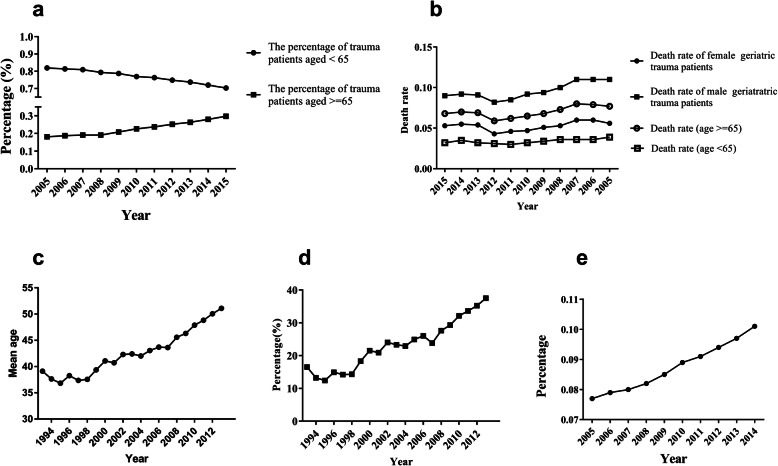
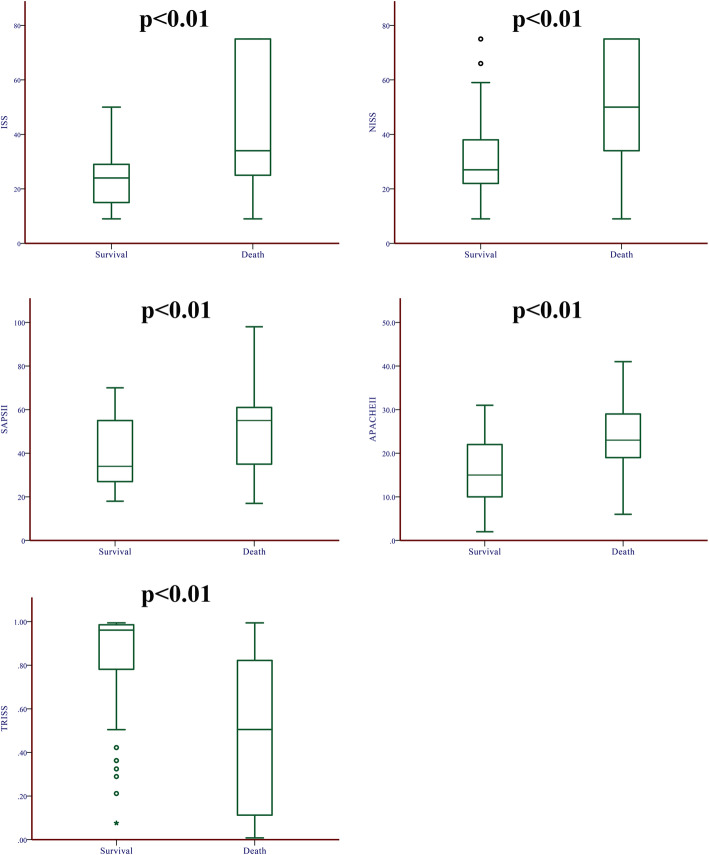
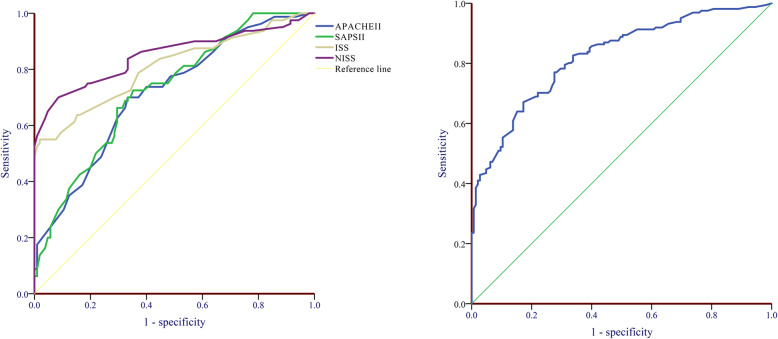
Results: The analysis of the NTDB showed that the increase in the number of geriatric trauma ranged from 18 to 30% between 2005 and 2015. The analysis of the DGU® showed that the mean age of trauma patients rose from 39.11 in 1993 to 51.10 in 2013, and the proportion of patients aged ≥ 60 years rose from 16.5 to 37.5%. The findings from the secondary analysis showed that 164 (52.73%) patients died in the hospital. The ISS, NISS, APACHE II, and SAPS II in the death group were significantly higher than those in the survival group, and the TRISS in the death group was significantly lower than those in the survival group. The AUCs of the ISS, NISS, TRISS, APACHE II, and SAPS II for the prediction of in-hospital mortality in geriatric trauma patients were 0.807, 0.850, 0.828, 0.715, and 0.725, respectively.
Conclusion: The total number of geriatric trauma is increasing as the population ages. The accuracy of ISS, NISS and TRISS was higher than the APACHE II and SAPS II for the prediction of in-hospital mortality in geriatric trauma patients.
Keywords: Aging population; Elderly trauma; Geriatric trauma; In-hospital mortality; Scoring tool.
Conflict of interest statement
We declare no competing interests.
Figures
References
Publication types
MeSH terms
LinkOut - more resources
Full Text Sources
Medical
