


Anti-proliferation and apoptosis-inducing effects of sodium aescinate on retinoblastoma Y79 cells
- PMID: 33078103
- PMCID: PMC7511392
- DOI: 10.18240/ijo.2020.10.06
Anti-proliferation and apoptosis-inducing effects of sodium aescinate on retinoblastoma Y79 cells
Abstract
Aim: To investigate the anti-proliferation and apoptosis-inducing effects of sodium aescinate (SA) on retinoblastoma Y79 cells and its mechanism.
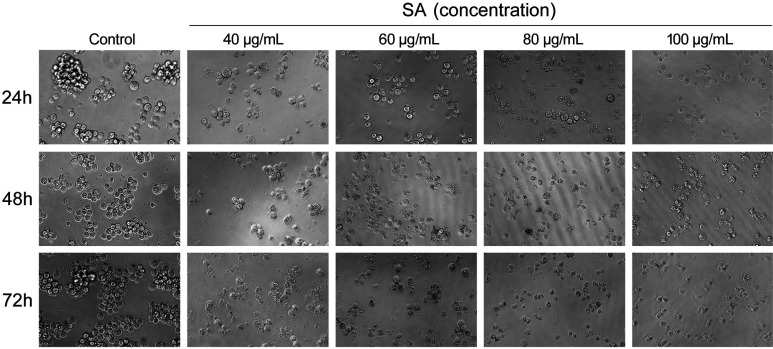
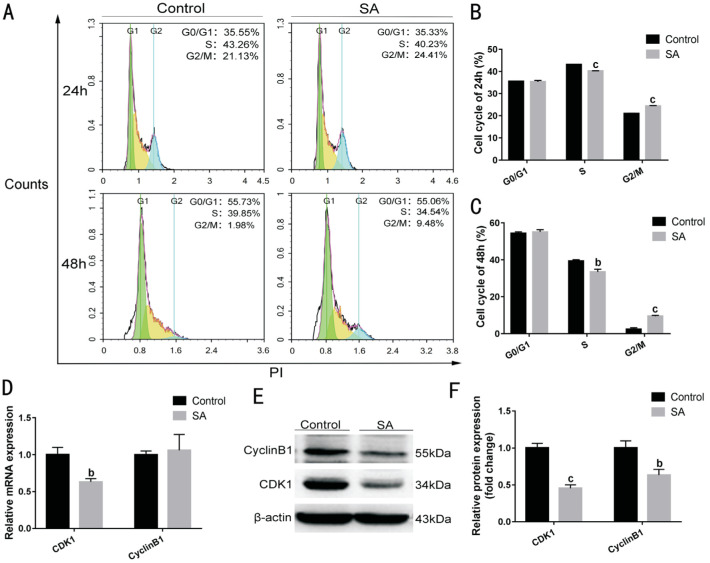
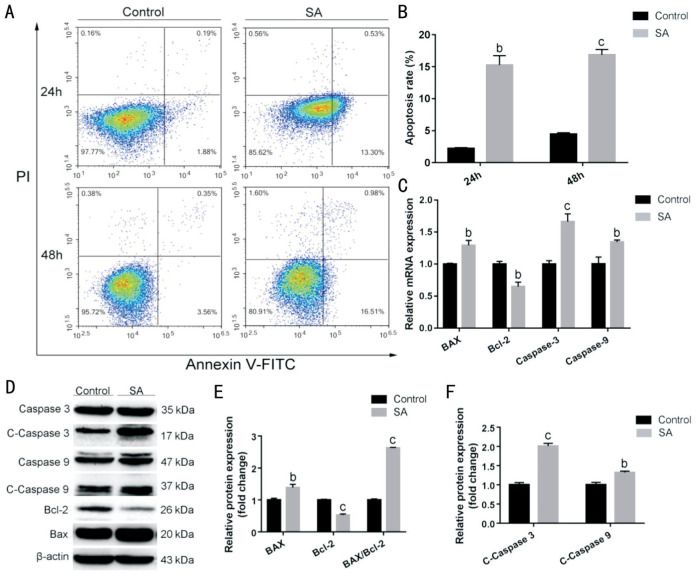
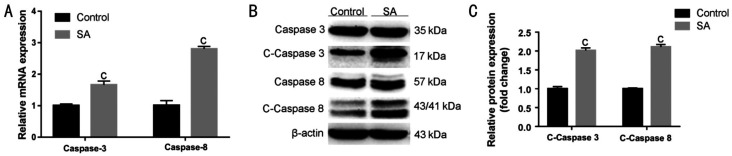
Methods: Y79 cells were cultured at different drug concentrations for different periods of time (24, 48, and 72h). The inhibitory effect of SA on proliferation of Y79 cells was detected by the cell counting kit-8 (CCK-8) assay, and the morphology of Y79 cells in each group was observed under an inverted microscope. An IC50 of 48h was selected for subsequent experiments. After pretreatment with SA for 24 and 48h, cellular DNA distribution and apoptosis were detected by flow cytometry. Real-time qunatitative polymerase chain reaction (RT-qPCR) and Western blot were used to assess changes in related genes (CDK1, CyclinB1, Bax, Bcl-2, caspase-9, caspase-8, and caspase-3).
Results: SA inhibited proliferation and induced apoptosis of Y79 cells in a time-dependent and concentration-dependent manner. Following its intervention in the cell cycle pathway, SA can inhibit the expression of CDK1 and CyclinB1 at the mRNA and protein levels, and block cells in the G2/M phase. In caspase-related apoptotic pathways, up-regulation of Bax and down-regulation of Bcl-2 caused caspase-9 to self-cleave and further activate caspase-3. What's more, the caspase-8-mediated extrinsic apoptosis pathway was activated, and the activated caspase-8 was released into the cytoplasm to activate caspase-3, which as a member of the downstream apoptotic effect group, initiates a caspase-cascade reaction that induces cell apoptosis.
Conclusion: SA inhibits the proliferation of Y79 cells by arresting the cell cycle at the G2/M phase, and induces apoptosis via the caspase-related apoptosis pathway, indicating that SA may have promising potential as a chemotherapeutic drug.
Keywords: cell cycle arrest; extrinsic apoptosis pathway; intrinsic apoptosis pathway; retinoblastoma; sodium aescinate.
International Journal of Ophthalmology Press.
Figures
References
-
- Yang G, Fu Y, Zhang LX, Lu XY, Li QM. miR106b regulates retinoblastoma Y79 cells through Runx3. Oncol Rep. 2017;38(5):3039–3043. - PubMed
-
- Agnieszka B, Cezary G. Retinoblastoma. Journal of Education, Health and Sport. 2018;8(7):204–213.
-
- Mattosinho CCS, Moura ATMS, Oigman G, Ferman SE, Grigorovski N. Time to diagnosis of retinoblastoma in Latin America: a systematic review. Pediatr Hematol Oncol. 2019;36(2):55–72. - PubMed
-
- Dimaras H, Kimani K, Dimba EA, Gronsdahl P, White A, Chan HS, Gallie BL. Retinoblastoma. Lancet. 2012;379(9824):1436–1446. - PubMed
-
- Matsuda H, Li Y, Yoshikawa M. Effects of escins Ia, Ib, IIa, and IIb from horse chestnuts on gastrointestinal transit and ileus in mice. Bioorg Med Chem. 1999;7(8):1737–1741. - PubMed
LinkOut - more resources
Full Text Sources
Research Materials
Miscellaneous