. 2020 Oct 20;324(15):1532-1542.
doi: 10.1001/jama.2020.16244.

Lifetime Prevalence of Cervical Cancer Screening in 55 Low- and Middle-Income Countries

Affiliations

Lifetime Prevalence of Cervical Cancer Screening in 55 Low- and Middle-Income Countries

Julia M Lemp et al. JAMA. .

Abstract

Importance: The World Health Organization is developing a global strategy to eliminate cervical cancer, with goals for screening prevalence among women aged 30 through 49 years. However, evidence on prevalence levels of cervical cancer screening in low- and middle-income countries (LMICs) is sparse.

Objective: To determine lifetime cervical cancer screening prevalence in LMICs and its variation across and within world regions and countries.

Design, setting, and participants: Analysis of cross-sectional nationally representative household surveys carried out in 55 LMICs from 2005 through 2018. The median response rate across surveys was 93.8% (range, 64.0%-99.3%). The population-based sample consisted of 1 136 289 women aged 15 years or older, of whom 6885 (0.6%) had missing information for the survey question on cervical cancer screening.

Exposures: World region, country; countries' economic, social, and health system characteristics; and individuals' sociodemographic characteristics.

Main outcomes and measures: Self-report of having ever had a screening test for cervical cancer.

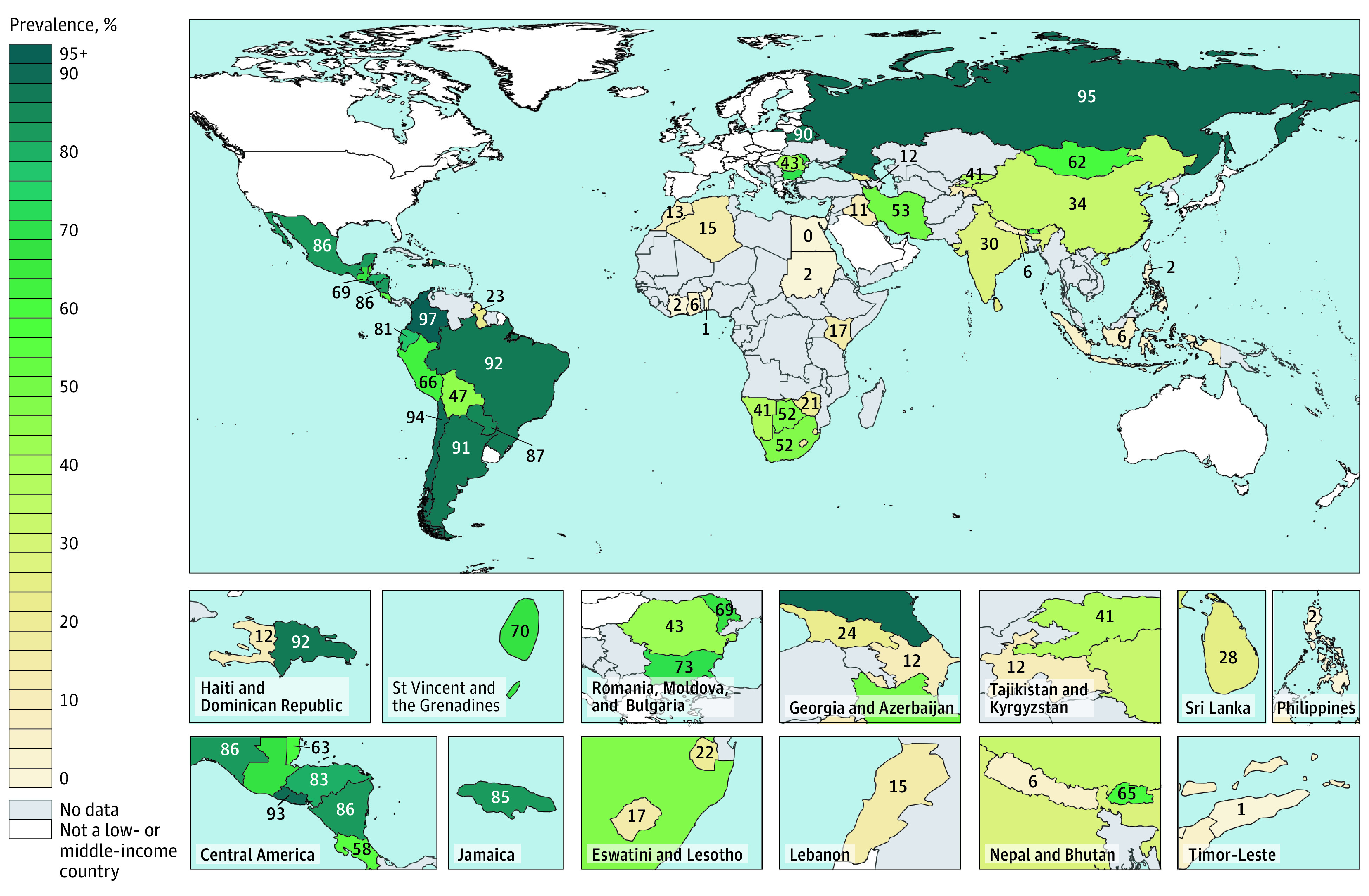
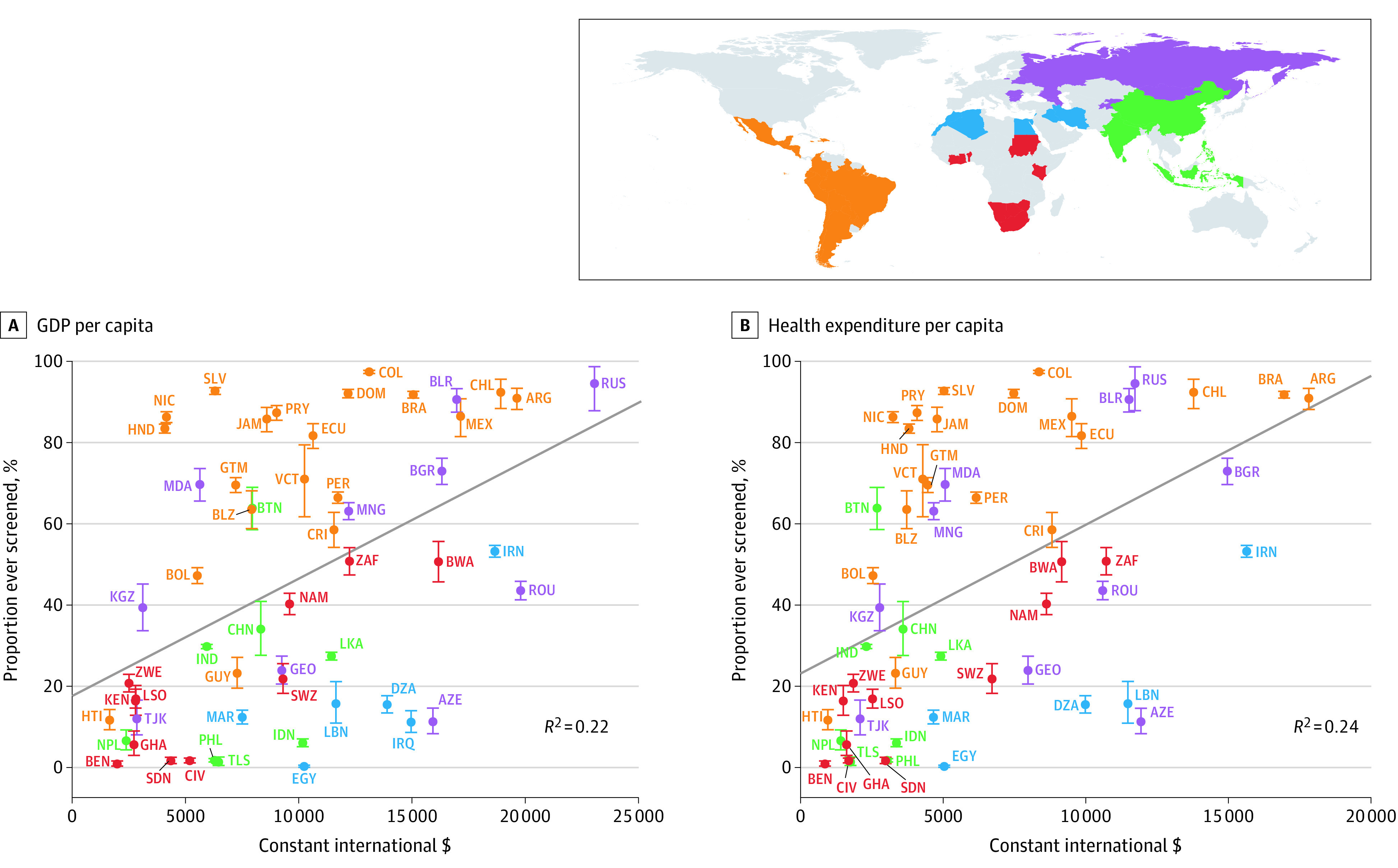
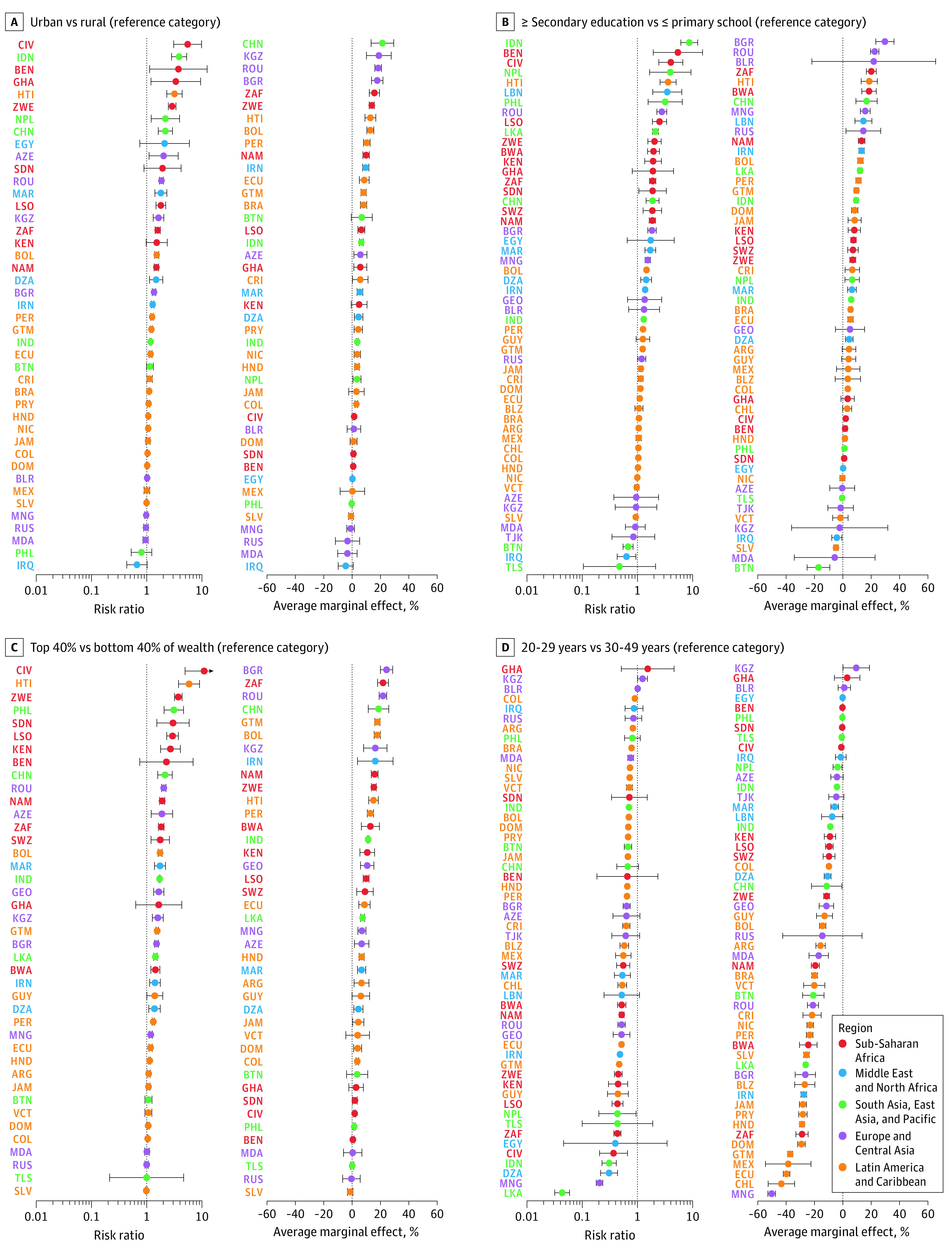
Results: Of the 1 129 404 women included in the analysis, 542 475 were aged 30 through 49 years. A country-level median of 43.6% (interquartile range [IQR], 13.9%-77.3%; range, 0.3%-97.4%) of women aged 30 through 49 years self-reported to have ever been screened, with countries in Latin America and the Caribbean having the highest prevalence (country-level median, 84.6%; IQR, 65.7%-91.1%; range, 11.7%-97.4%) and those in sub-Saharan Africa the lowest prevalence (country-level median, 16.9%; IQR, 3.7%-31.0%; range, 0.9%-50.8%). There was large variation in the self-reported lifetime prevalence of cervical cancer screening among countries within regions and among countries with similar levels of per capita gross domestic product and total health expenditure. Within countries, women who lived in rural areas, had low educational attainment, or had low household wealth were generally least likely to self-report ever having been screened.

Conclusions and relevance: In this cross-sectional study of data collected in 55 low- and middle-income countries from 2005 through 2018, there was wide variation between countries in the self-reported lifetime prevalence of cervical cancer screening. However, the median prevalence was only 44%, supporting the need to increase the rate of screening.


Conflict of interest statement

Conflict of Interest Disclosures: Dr Dryden-Peterson reported receiving personal fees from UpToDate Inc outside the submitted work. No other disclosures were reported.

Figures

Figure 1.
Figure 1.. Self-reported Lifetime Prevalence of Cervical Cancer Screening Among Women Aged 30 Through 49 Years
Gray indicates no eligible survey or access to data was unavailable. The numbers indicate prevalence in percent of women aged 30 through 49 years. Prevalence estimates are shown for the survey years listed in the Table. A map with aged-standardized estimates based on the World Health Organization World Standard Population is shown in eFigure 3 in the Supplement.
Figure 2.
Figure 2.. Self-reported Lifetime Prevalence of Cervical Cancer Screening by GDP per Capita and Total Health Expenditure per Capita
The sample includes only women aged 30 through 49 years; ISO codes are defined in the Table. Gross domestic product (GDP) and total health expenditure per capita is in constant 2011 international dollars for the survey year. Iraq’s health expenditure per capita was unavailable. Error bars indicate the 95% CIs; diagonal lines depict ordinary least-squares regressions (with each country having the same weight) of lifetime cervical cancer screening prevalence in a country onto the GDP or total health expenditure per capita. The standardized regression coefficients were 0.47 (95% CI, 0.23-0.71) for GDP and 0.49 (95% CI, 0.25-0.73) for health expenditure per capita. Estimates among all women and estimates adjusted for differences in individual-level characteristics between countries are shown in eFigures 6, 8, and 10 in the Supplement.
Figure 3.
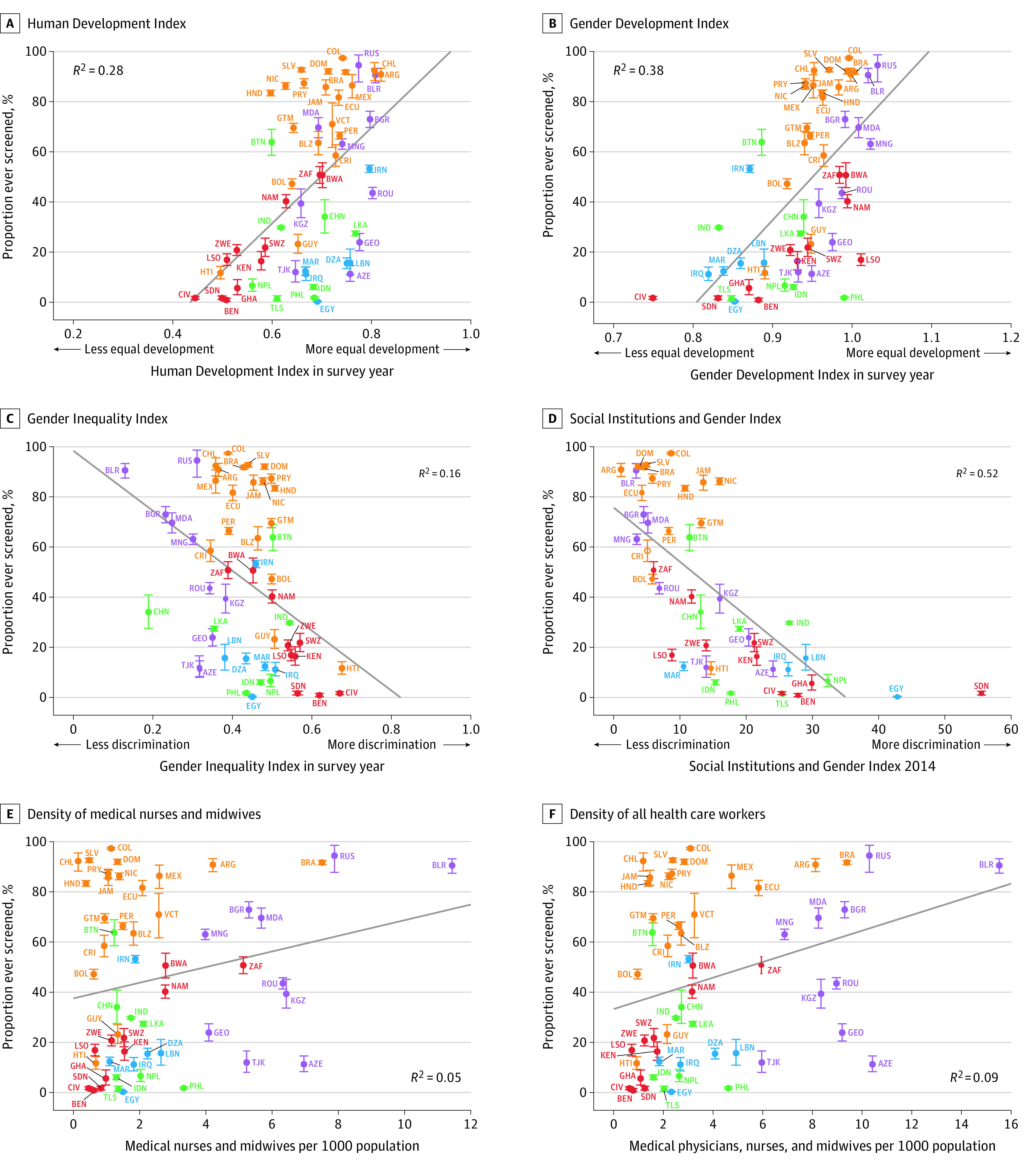
Figure 3.. Self-reported Lifetime Prevalence of Cervical Cancer Screening by Human Development Index, Gender Equality Indices, and Health Worker Density
The sample included only women aged 30 through 49 years. ISO codes are defined in the Table. A Gender Development Index value was not available for St Vincent and the Grenadines; a Gender Inequality Index value was not available for Ghana, St Vincent and the Grenadines, and Timor-Leste. Error bars indicate 95% CIs. The diagonal lines depict ordinary least-squares regressions (with each country having the same weight) of lifetime cervical cancer screening prevalence in a country onto the country-level variables of the Human Development Index (0.53; 95% CI, 0.30 to 0.76), Gender Development Index (0.62; 95% CI, 0.41 to 0.83), Gender Inequality Index (−0.40; 95% CI, −0.66 to −0.15), Social Institutions and Gender Index (−0.72; 95% CI, −0.92 to −0.52), density of medical nurses and midwives (0.22; 95% CI, 0.04 to 0.48), and health worker density (0.30; 95% CI, 0.04 to 0.56 ). Estimates among all women and estimates that were adjusted for differences in individual-level characteristics between countries are shown in eFigures 7, 9, and 11 in the Supplement.
Figure 4.
Figure 4.. Relative and Absolute Differences in the Probability of Having Ever Been Screened for Cervical Cancer by Sociodemographics
ISO codes are defined in the Table. All regressions were adjusted for age (except D) only, using restricted splines placed at the 5th, 27.5th, 50th, 72.5th, and 95th percentiles. All regressions used sampling weights and adjusted SEs for clustering at the primary sampling unit. Error bars depict 95% CIs. Estimates are in the Supplement.

Comment in

References

    1. Bray F, Ferlay J, Soerjomataram I, Siegel RL, Torre LA, Jemal A. Global cancer statistics 2018: GLOBOCAN estimates of incidence and mortality worldwide for 36 cancers in 185 countries. CA Cancer J Clin. 2018;68(6):394-424. doi: 10.3322/caac.21492 - DOI - PubMed
    1. Peirson L, Fitzpatrick-Lewis D, Ciliska D, Warren R. Screening for cervical cancer: a systematic review and meta-analysis. Syst Rev. 2013;2(1):35. doi: 10.1186/2046-4053-2-35 - DOI - PMC - PubMed
    1. Campos NG, Sharma M, Clark A, et al. The health and economic impact of scaling cervical cancer prevention in 50 low- and lower-middle-income countries. Int J Gynaecol Obstet. 2017;138(suppl 1):47-56. doi: 10.1002/ijgo.12184 - DOI - PubMed
    1. Huh WK, Joura EA, Giuliano AR, et al. Final efficacy, immunogenicity, and safety analyses of a nine-valent human papillomavirus vaccine in women aged 16-26 years: a randomised, double-blind trial. Lancet. 2017;390(10108):2143-2159. doi: 10.1016/S0140-6736(17)31821-4 - DOI - PubMed
    1. Brisson M, Kim JJ, Canfell K, et al. Impact of HPV vaccination and cervical screening on cervical cancer elimination: a comparative modelling analysis in 78 low-income and lower-middle-income countries. Lancet. 2020;395(10224):575-590. doi: 10.1016/S0140-6736(20)30068-4 - DOI - PMC - PubMed

Publication types