Review
. 2020 Oct 18;21(20):7698.
doi: 10.3390/ijms21207698.

Homocysteine and Mitochondria in Cardiovascular and Cerebrovascular Systems

Affiliations
Review

Homocysteine and Mitochondria in Cardiovascular and Cerebrovascular Systems

Peter Kaplan et al. Int J Mol Sci. .

Abstract

Elevated concentration of homocysteine (Hcy) in the blood plasma, hyperhomocysteinemia (HHcy), has been implicated in various disorders, including cardiovascular and neurodegenerative diseases. Accumulating evidence indicates that pathophysiology of these diseases is linked with mitochondrial dysfunction. In this review, we discuss the current knowledge concerning the effects of HHcy on mitochondrial homeostasis, including energy metabolism, mitochondrial apoptotic pathway, and mitochondrial dynamics. The recent studies suggest that the interaction between Hcy and mitochondria is complex, and reactive oxygen species (ROS) are possible mediators of Hcy effects. We focus on mechanisms contributing to HHcy-associated oxidative stress, such as sources of ROS generation and alterations in antioxidant defense resulting from altered gene expression and post-translational modifications of proteins. Moreover, we discuss some recent findings suggesting that HHcy may have beneficial effects on mitochondrial ROS homeostasis and antioxidant defense. A better understanding of complex mechanisms through which Hcy affects mitochondrial functions could contribute to the development of more specific therapeutic strategies targeted at HHcy-associated disorders.

Keywords: ROS; brain; heart; homocysteine; hyperhomocysteinemia; mitochondria; oxidative stress.


Conflict of interest statement

The authors declare no conflict of interest.

Figures
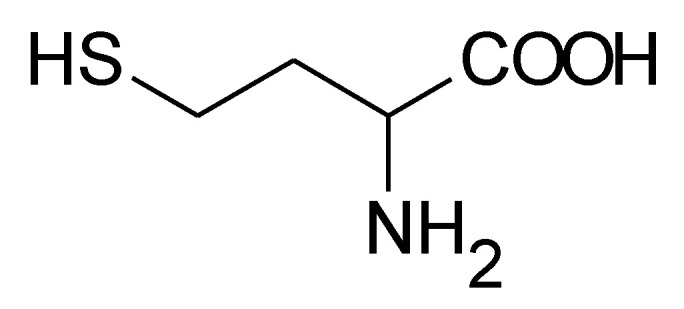
Figure 1
Figure 1
Structural formula of homocysteine (Mr = 135.2).
Figure 2
Figure 2
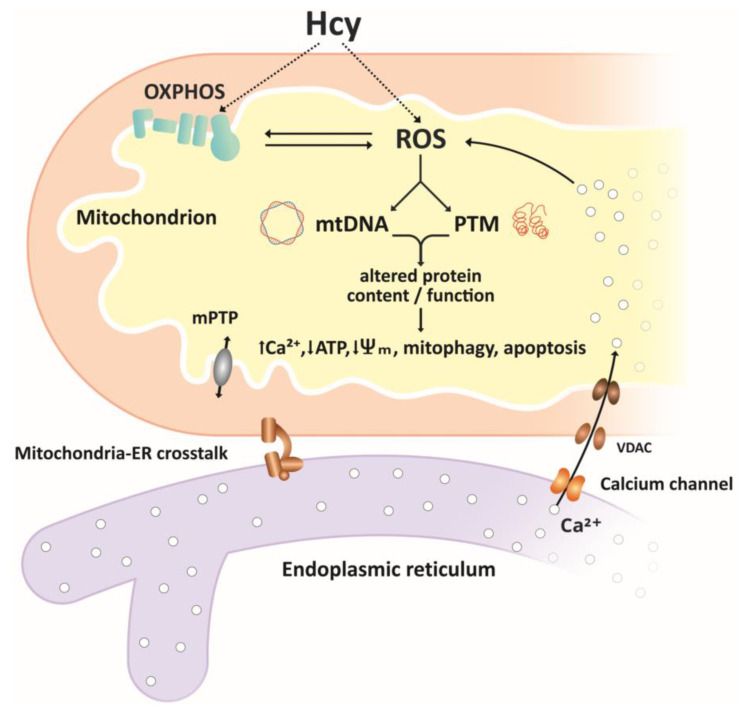
Simplified overview of homocysteine effects on mitochondria. Reactive oxygen species ROS, produced in the electron transport chain ETC or through autooxidation of Hcy, are important mediators of Hcy effects on mitochondrial function. ROS-associated oxidative damage to mtDNA and post-translational modifications PTMs of proteins result in altered content and/or function of mitochondrial proteins, including components of the ETC, antioxidant/pro-oxidant enzymes, membrane carriers, and receptors. Altered function of mitochondrial proteins may result in further increases in ROS levels, accumulation of Ca2+ ions mediated by mitochondria–ER crosstalk, decrease in ATP production, decreased membrane potential, and initiation of mitophagy and apoptosis.

References

    1. Cesari M., Rossi G.P., Sticchi D., Pessina A.C. Is homocysteine important as risk factor for coronary heart disease? Nutr. Metab. Cardiovasc. Dis. 2005;15:140–147. doi: 10.1016/j.numecd.2004.04.002. - DOI - PubMed
    1. Maron B.A., Loscalzo J. The treatment of hyperhomocysteinemia. Annu. Rev. Med. 2009;60:39–54. doi: 10.1146/annurev.med.60.041807.123308. - DOI - PMC - PubMed
    1. Škovierová H., Vidomanová E., Mahmood S., Sopková J., Drgová A., Červeňová T., Halasova E., Lehotský J. The molecular and cellular effect of homocysteine metabolism imbalance on human health. Int. J. Mol. Sci. 2016;17:1733. doi: 10.3390/ijms17101733. - DOI - PMC - PubMed
    1. Fu Y., Wang X., Kong W. Hyperhomocysteinaemia and vascular injury: Advances in mechanisms and drug targets. Br. J. Pharmacol. 2018;175:1173–1189. doi: 10.1111/bph.13988. - DOI - PMC - PubMed
    1. Lehmann M., Gottfries C., Regland B. Identification of cognitive impairment in the elderly: Homocysteine is an early marker. Dement. Geriatr. Cogn. Disord. 1998;10:12–20. doi: 10.1159/000017092. - DOI - PubMed

LinkOut - more resources