


Changes in the Honeybee Antioxidant System after 12 h of Exposure to Electromagnetic Field Frequency of 50 Hz and Variable Intensity
- PMID: 33081029
- PMCID: PMC7603132
- DOI: 10.3390/insects11100713
Changes in the Honeybee Antioxidant System after 12 h of Exposure to Electromagnetic Field Frequency of 50 Hz and Variable Intensity
Abstract
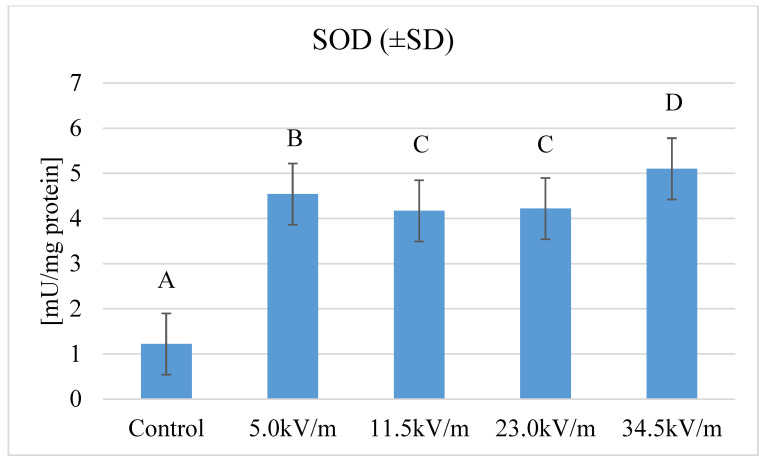
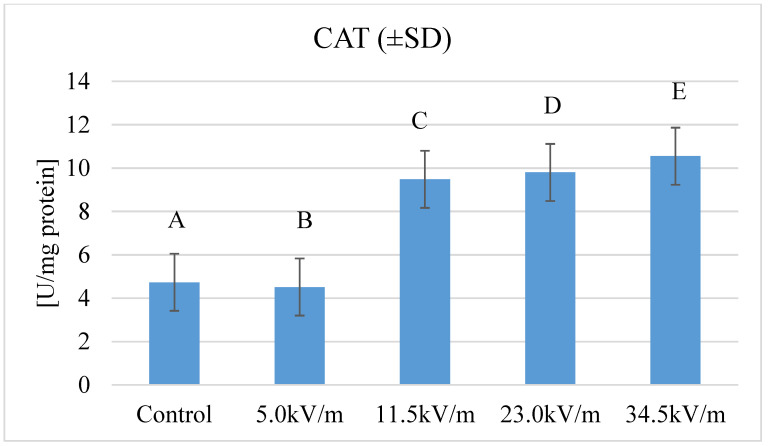
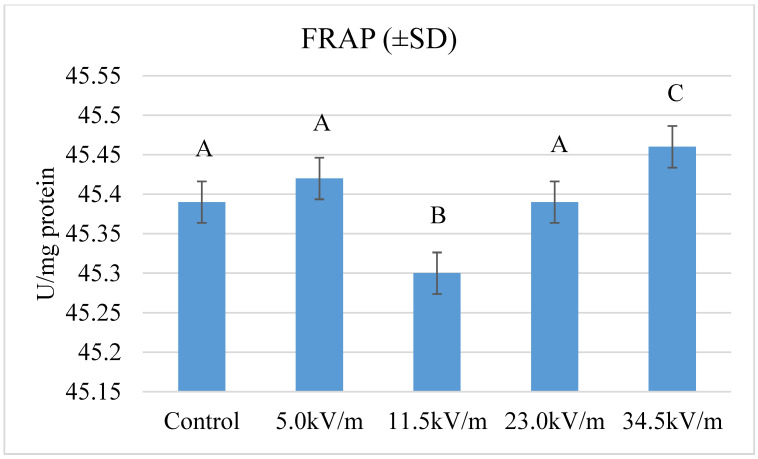
In recent years, on a global scale, more and more reports of a phenomenon called CCD (Colony Collapse Disorder) have been reported. In addition to pesticides, diseases, and other environmental stressors, electromagnetic fields are also mentioned as one of the possible causes of CCD. One of the body's first lines of defense against harmful factors is the antioxidant system. We hypothesized that electromagnetic field upregulate the activity of SOD (superoxide dismutase), CAT (catalases), and changed FRAP (total antioxidant potential) in honeybee hemolymph. In our research, 12 h bee's exposure to E-field was analyzed to determine changes in the antioxidant system. The frequency of 50 Hz and various intensities were used: 5.0 kV/m, 11.5 kV/m, 23.0 kV/m, and 34.5 kV/m. Superoxide dismutase was characterized by four times higher activity in the study groups as compared to the control group. Catalase activity in all groups was characterized by statistically significantly different activity between the groups. The highest activity was recorded in the 34.5 kV/m group. The lowest activity was recorded in the 11.5 kV/m group. A relationship was found between different E-field intensities and changes in the antioxidant system.
Keywords: 50 Hz; E-field; antioxidant system; catalase (CAT); honeybee; superoxide dismutase (SOD); total antioxidant potential (FRAP).
Conflict of interest statement
The authors have no conflict of interest to declare.
Figures
References
-
- Ollerton J., Winfree R., Tarrant S. How many flowering plants are pollinated by animals? Oikos. 2011;120:321–326. doi: 10.1111/j.1600-0706.2010.18644.x. - DOI
-
- Gallai N., Salles J.-M., Settele J., Vaissière B.E. Economic valuation of the vulnerability of world agriculture confronted with pollinator decline. Ecol. Econ. 2009;68:810–821. doi: 10.1016/j.ecolecon.2008.06.014. - DOI
-
- Van Engelsdorp D., Underwood R.M., Hayes J. An Estimate of Managed Colony Losses in the Winter of 2006–2007: A Report Commissioned by the Apiary Inspectors of America. Am. Bee J. 2007;147:599–630.
LinkOut - more resources
Full Text Sources
Miscellaneous
