


Modification of Serine 1040 of SIBRI1 Increases Fruit Yield by Enhancing Tolerance to Heat Stress in Tomato
- PMID: 33081382
- PMCID: PMC7589314
- DOI: 10.3390/ijms21207681
Modification of Serine 1040 of SIBRI1 Increases Fruit Yield by Enhancing Tolerance to Heat Stress in Tomato
Abstract
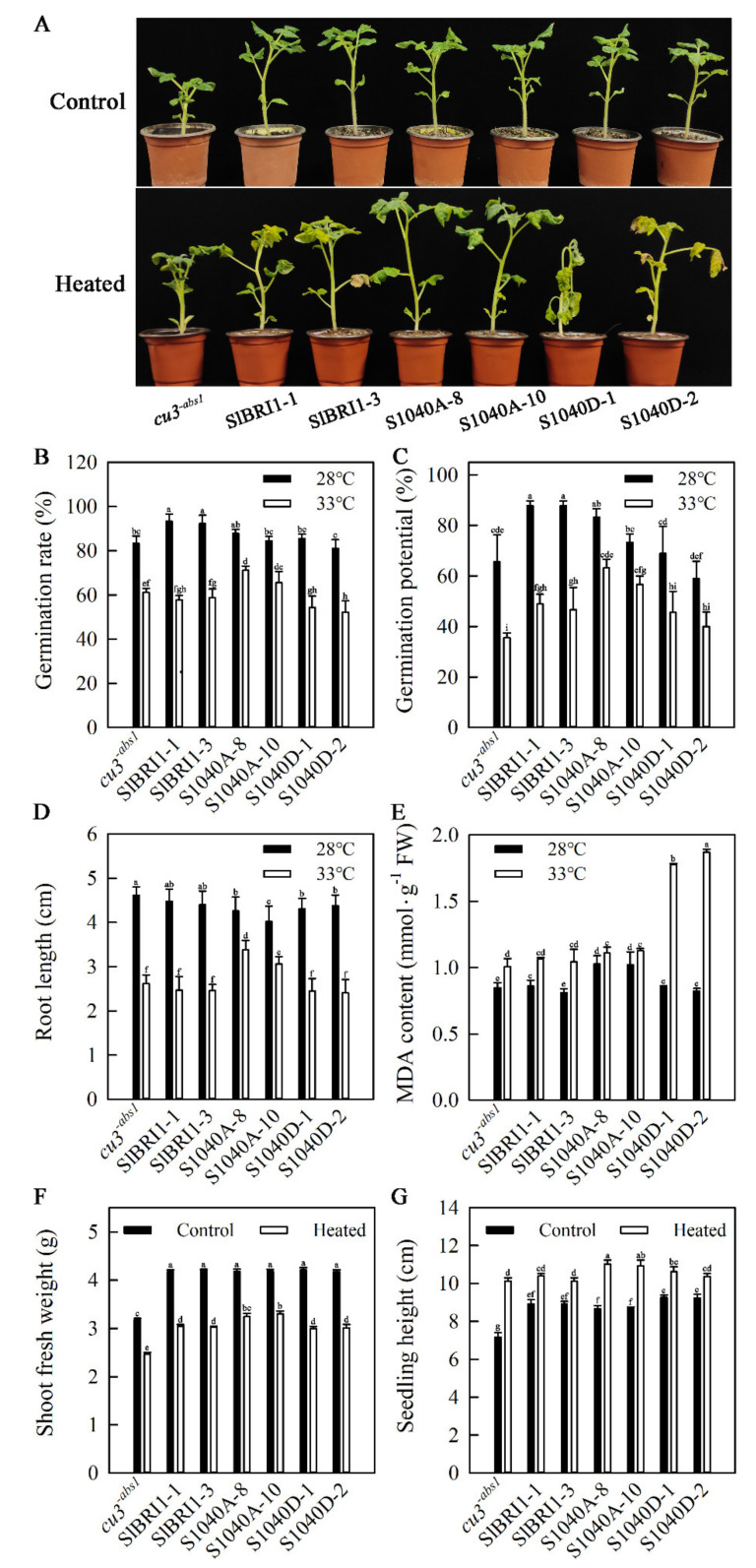
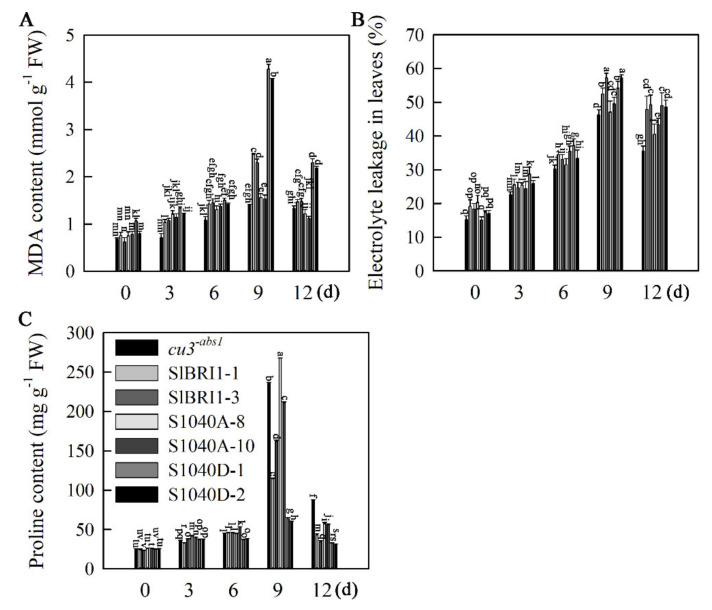
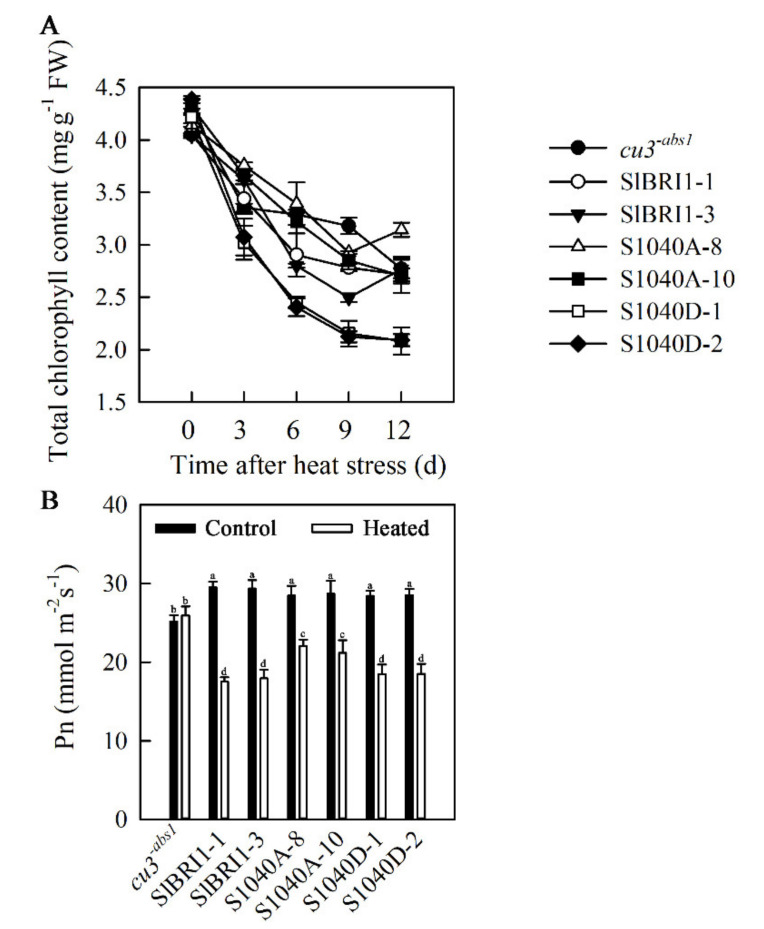
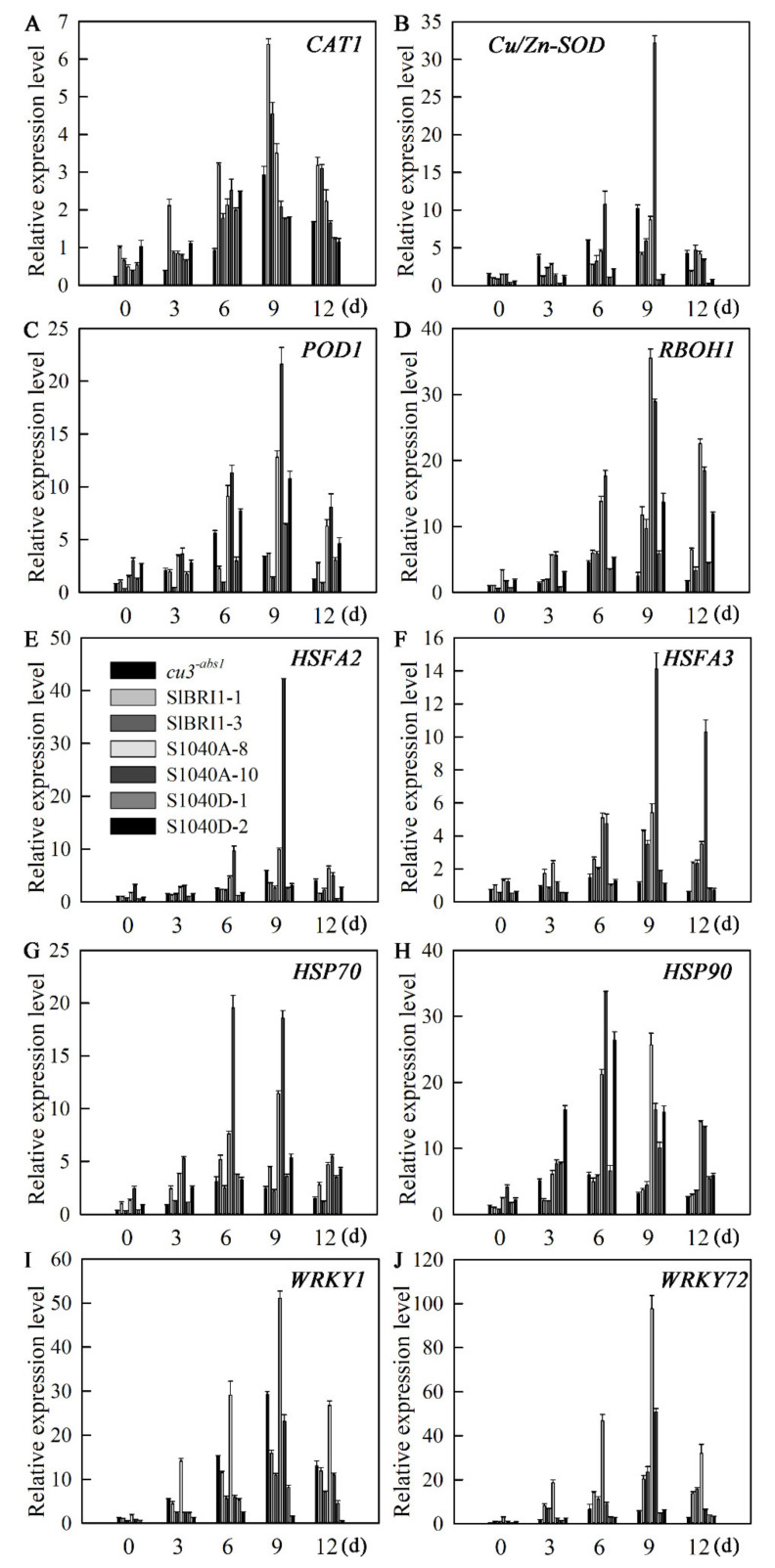
High temperature is a major environmental factor that adversely affects plant growth and production. SlBRI1 is a critical receptor in brassinosteroid signalling, and its phosphorylation sites have differential functions in plant growth and development. However, the roles of the phosphorylation sites of SIBRI1 in stress tolerance are unknown. In this study, we investigated the biological functions of the phosphorylation site serine 1040 (Ser-1040) of SlBRI1 in tomato. Phenotype analysis indicated that transgenic tomato harbouring SlBRI1 dephosphorylated at Ser-1040 showed increased tolerance to heat stress, exhibiting better plant growth and plant yield under high temperature than transgenic lines expressing SlBRI1 or SlBRI1 phosphorylated at Ser-1040. Biochemical and physiological analyses further showed that antioxidant activity, cell membrane integrity, osmo-protectant accumulation, photosynthesis and transcript levels of heat stress defence genes were all elevated in tomato plants harbouring SlBRI1 dephosphorylated at Ser-1040, and the autophosphorylation level of SlBRI1 was inhibited when SlBRI1 dephosphorylated at Ser-1040. Taken together, our results demonstrate that the phosphorylation site Ser-1040 of SlBRI1 affects heat tolerance, leading to improved plant growth and yield under high-temperature conditions. Our results also indicate the promise of phosphorylation site modification as an approach for protecting crop yields from high-temperature stress.
Keywords: SlBRI1; heating tolerance; phosphorylation site; tomato; yield.
Conflict of interest statement
The authors declare no conflict of interest.
Figures



References
-
- Suzuki N., Mittler R. Reactive oxygen species and temperature stresses: A delicate balance between signaling and destruction. Physiol. Plant. 2006;126:45–51. doi: 10.1111/j.0031-9317.2005.00582.x. - DOI
-
- Fariduddin Q., Yusuf M., Ahmad I., Ahmad A. Brassinosteroids and their role in response of plants to abiotic stresses. Biol. Plantarum. 2014;58:9–17. doi: 10.1007/s10535-013-0374-5. - DOI
MeSH terms
Substances
Grants and funding
LinkOut - more resources
Full Text Sources
