


Efficacy of probiotics in the prevention of VAP in critically ill ICU patients: an updated systematic review and meta-analysis of randomized control trials
- PMID: 33082958
- PMCID: PMC7561245
- DOI: 10.1186/s40560-020-00487-8
Efficacy of probiotics in the prevention of VAP in critically ill ICU patients: an updated systematic review and meta-analysis of randomized control trials
Abstract
Introduction: Ventilator-associated pneumonia (VAP) is reported as the second most common nosocomial infection among critically ill patients with the incidence ranging from 2 to 16 episodes per 1000 ventilator days. The use of probiotics has been shown to have a promising effect in many RCTs. Our systematic review and meta-analysis were thus planned to determine the effect of probiotic use in critically ill ventilated adult patients on the incidence of VAP, length of hospital stay, length of ICU stay, duration of mechanical ventilation, the incidence of diarrhea, and the incidence of oropharyngeal colonization and in-hospital mortality.
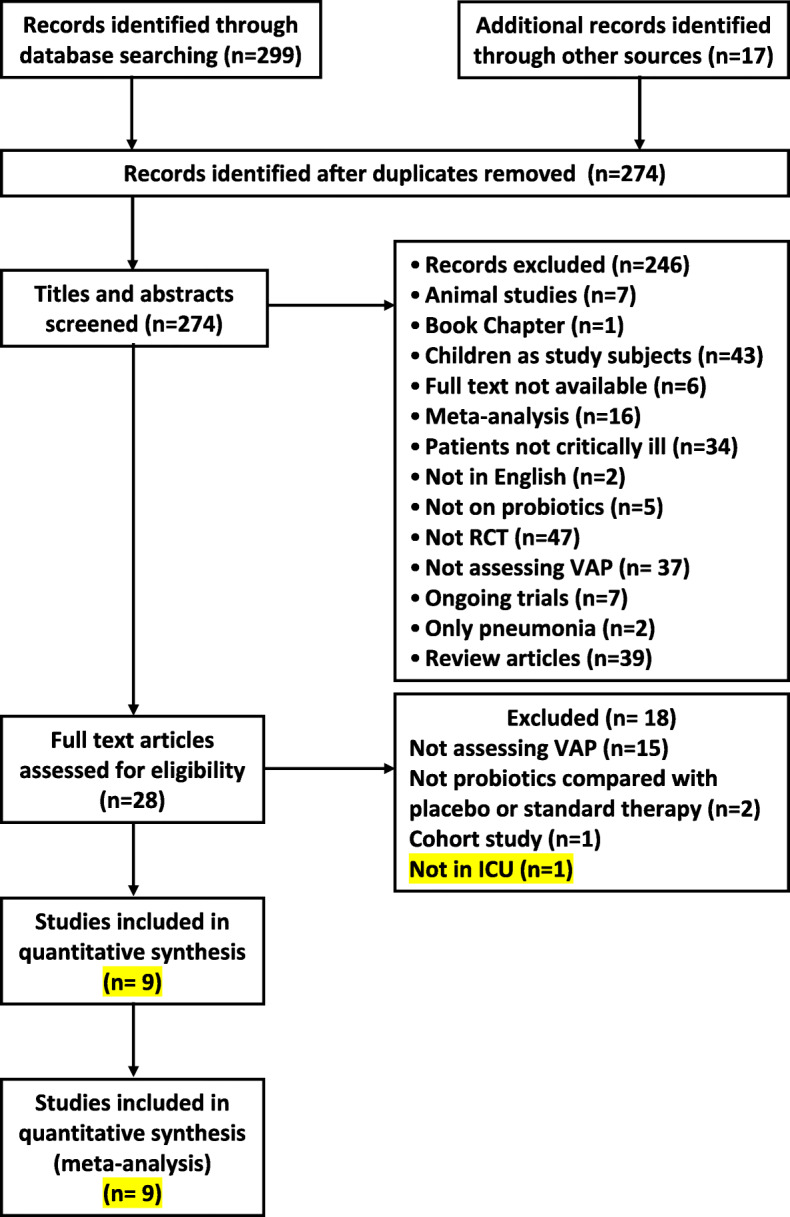
Methodology: Systematic search of various databases (such as Embase, Cochrane, and Pubmed), published journals, clinical trials, and abstracts of the various major conferences were made to obtain the RCTs which compare probiotics with placebo for VAP prevention. The results were expressed as risk ratios or mean differences. Data synthesis was done using statistical software - Review Manager (RevMan) Version 5.4 (The Cochrane Collaboration, 2020).
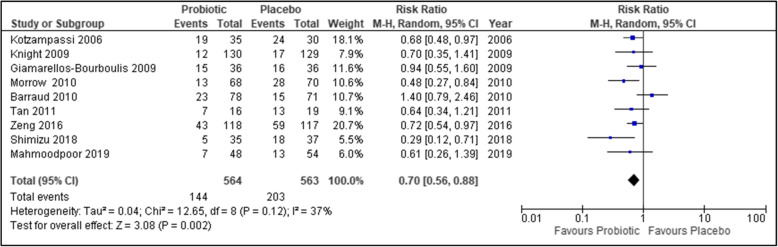
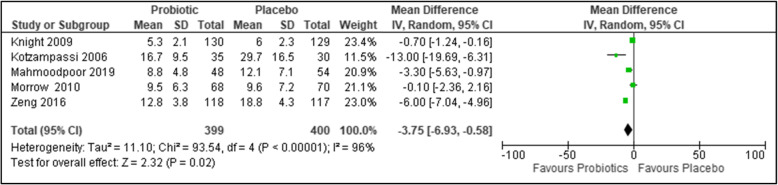
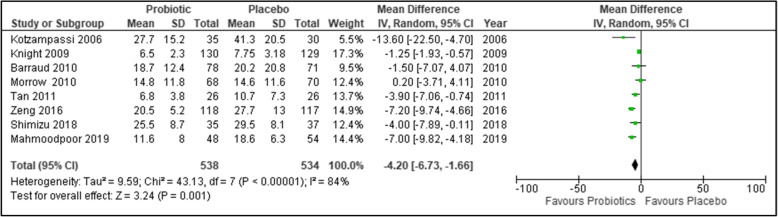
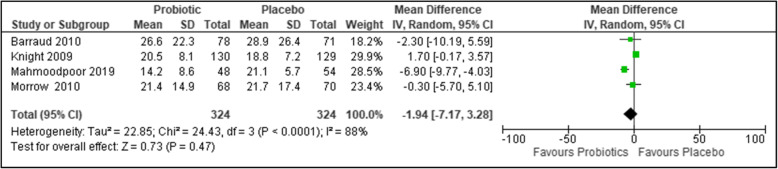
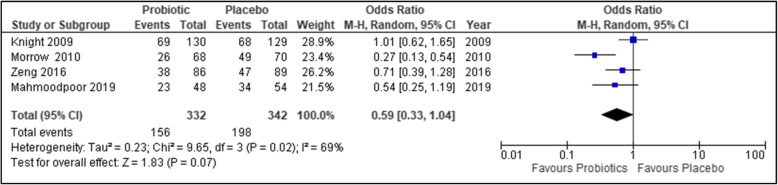
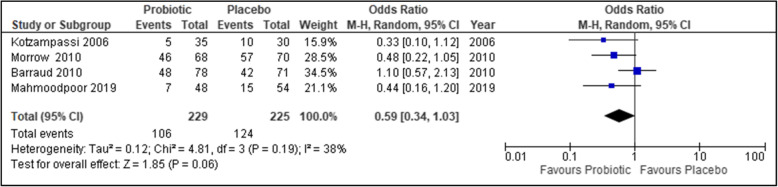
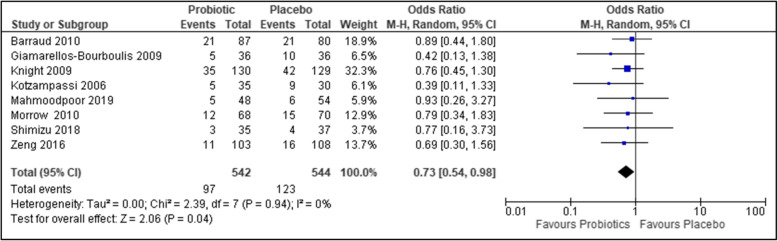
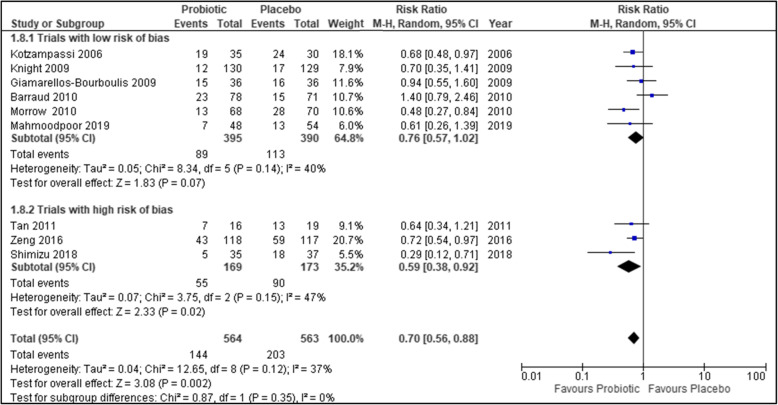
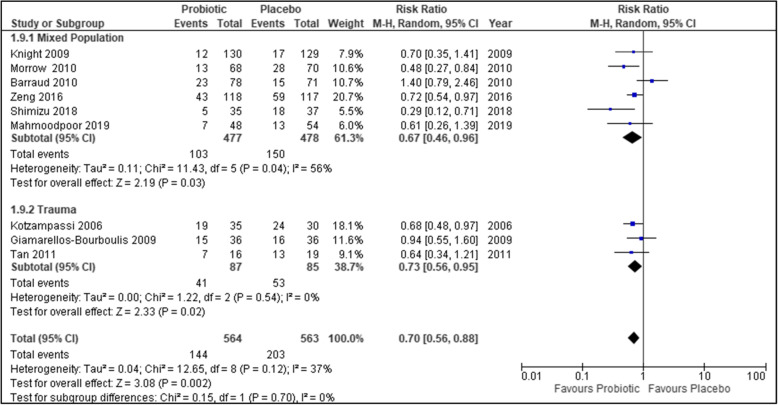
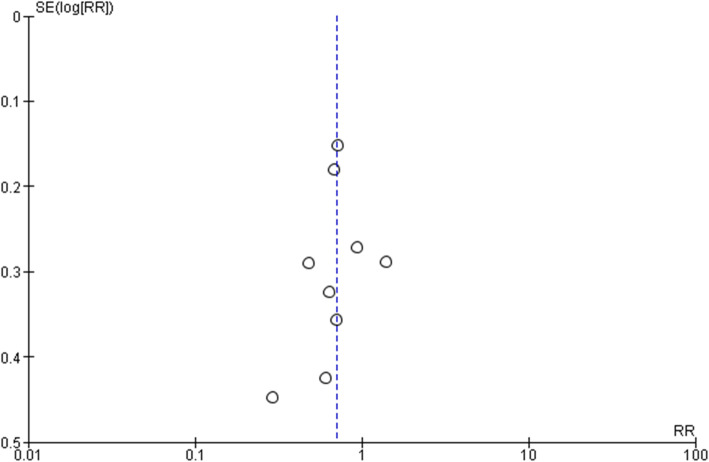
Results: Nine studies met our inclusion criterion and were included in the meta-analysis. The incidence of VAP (risk ratio: 0.70, CI 0.56, 0.88; P = 0.002; I 2 = 37%), duration of mechanical ventilation (mean difference -3.75, CI -6.93, -0.58; P 0.02; I 2 = 96%), length of ICU stay (mean difference -4.20, CI -6.73, -1.66; P = 0.001; I 2 = 84%) and in-hospital mortality (OR 0.73, CI 0.54, 0.98; P = 0.04; I 2 = 0%) in the probiotic group was significantly lower than that in the control group. Probiotic administration was not associated with a statistically significant reduction in length of hospital stay (MD -1.94, CI -7.17, 3.28; P = 0.47; I 2 = 88%), incidence of oro-pharyngeal colonization (OR 0.59, CI 0.33, 1.04; P = 0.07; I 2 = 69%), and incidence of diarrhea (OR 0.59, CI 0.34, 1.03; P = 0.06; I 2 = 38%).
Discussion: Our meta-analysis shows that probiotic administration has a promising role in lowering the incidence of VAP, the duration of mechanical ventilation, length of ICU stay, and in-hospital mortality.
Keywords: Critical care; Meta-analysis; Placebo; Probiotics; Ventilator-associated pneumonia.
© The Author(s) 2020.
Conflict of interest statement
Competing interestsThe authors declare that they have no competing interests.
Figures

References
-
- Timsit J-F, Esaied W, Neuville M, Bouadma L, Mourvillier B. Update on ventilator-associated pneumonia. F1000Research. 2017;6 Available from: https://www.ncbi.nlm.nih.gov/pmc/articles/PMC5710313/. Cited 2020 Feb 17. - PMC - PubMed
-
- International Nosocomial Infection Control Consortium (INICC) report, data summary of 36 countries, for 2004-2009. - PubMed - NCBI [Internet]. [cited 2020 Feb 17]. Available from: https://www.ncbi.nlm.nih.gov/pubmed/21908073/. - PubMed
-
- Torres A, Niederman MS, Chastre J, Ewig S, Fernandez-Vandellos P, Hanberger H, et al. International ERS/ESICM/ESCMID/ALAT guidelines for the management of hospital-acquired pneumonia and ventilator-associated pneumonia: Guidelines for the management of hospitalacquired pneumonia (HAP)/ventilator-associated pneumonia (VAP) of the European Respiratory Society (ERS), European Society of Intensive Care Medicine (ESICM), European Society of Clinical Microbiology and Infectious Diseases (ESCMID) and Asociación Latinoamericana del Tórax (ALAT) Eur Respir J. 2017;50(3):1700582. doi: 10.1183/13993003.00582-2017. - DOI - PubMed
-
- Chen C, Wang J, Yin M, Zhao Q. Probiotics are effective in decreasing the incidence of ventilator-associated pneumonia in adult patients: a meta-analysis of randomized controlled trials. :9.
Publication types
LinkOut - more resources
Full Text Sources
Miscellaneous
