


Preventive digital mental health interventions for children and young people: a review of the design and reporting of research
- PMID: 33083568
- PMCID: PMC7562906
- DOI: 10.1038/s41746-020-00339-7
Preventive digital mental health interventions for children and young people: a review of the design and reporting of research
Abstract
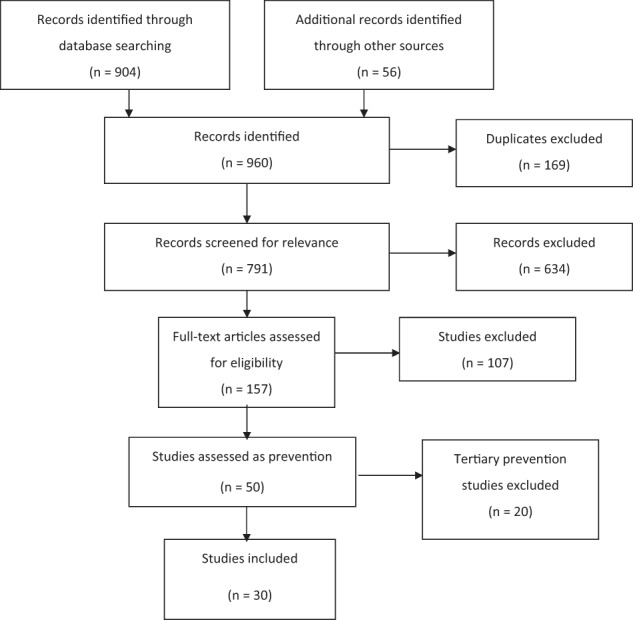
Digital health interventions (DHIs) have frequently been highlighted as one way to respond to increasing levels of mental health problems in children and young people. Whilst many are developed to address existing mental health problems, there is also potential for DHIs to address prevention and early intervention. However, there are currently limitations in the design and reporting of the development, evaluation and implementation of preventive DHIs that can limit their adoption into real-world practice. This scoping review aimed to examine existing evidence-based DHI interventions and review how well the research literature described factors that researchers need to include in their study designs and reports to support real-world implementation. A search was conducted for relevant publications published from 2013 onwards. Twenty-one different interventions were identified from 30 publications, which took a universal (n = 12), selective (n = 3) and indicative (n = 15) approach to preventing poor mental health. Most interventions targeted adolescents, with only two studies including children aged ≤10 years. There was limited reporting of user co-design involvement in intervention development. Barriers and facilitators to implementation varied across the delivery settings, and only a minority reported financial costs involved in delivering the intervention. This review found that while there are continued attempts to design and evaluate DHIs for children and young people, there are several points of concern. More research is needed with younger children and those from poorer and underserved backgrounds. Co-design processes with children and young people should be recognised and reported as a necessary component within DHI research as they are an important factor in the design and development of interventions, and underpin successful adoption and implementation. Reporting the type and level of human support provided as part of the intervention is also important in enabling the sustained use and implementation of DHIs.
Keywords: Medical research; Psychology.
© The Author(s) 2020.
Conflict of interest statement
Competing interestsJ.R., S.H. and S.M. were contributors to studies included in the review. D.D. reports grants, personal fees, non-financial support and other from Shire/Takeda, personal fees and non-financial support from Eli LIlly, personal fees and non-financial support from Medice, non-financial support from Qb Tech, other from Hachette, other from New Forest Parent Training Programme, outside the submitted work. All other authors have declared that they have no competing or potential conflicts of interest.
Figures
References
-
- NHS Digital. Mental Health of Children and Young People in England. Available at: https://digital.nhs.uk/data-and-information/publications/statistical/men... (2018).
-
- Public Health England. Universal approaches to improving children and young people’s mental health and wellbeing. Report of the findings of a Special Interest Group. Available at: https://assets.publishing.service.gov.uk/government/uploads/system/uploa... (2019).
-
- National Public Health Partnership. Preventing Chronic Disease : A strategic framework. 1–55. Available at: https://commed.vcu.edu/Chronic_Disease/2015/NPHPProject.pdf (2001).
Publication types
Grants and funding
LinkOut - more resources
Full Text Sources
