Ensemble learning predicts multiple sclerosis disease course in the SUMMIT study
- PMID: 33083570
- PMCID: PMC7567781
- DOI: 10.1038/s41746-020-00338-8
Ensemble learning predicts multiple sclerosis disease course in the SUMMIT study
Erratum in
-
Author Correction: Ensemble learning predicts multiple sclerosis disease course in the SUMMIT study.NPJ Digit Med. 2020 Nov 20;3(1):155. doi: 10.1038/s41746-020-00361-9. NPJ Digit Med. 2020. PMID: 33299133 Free PMC article. No abstract available.
Abstract
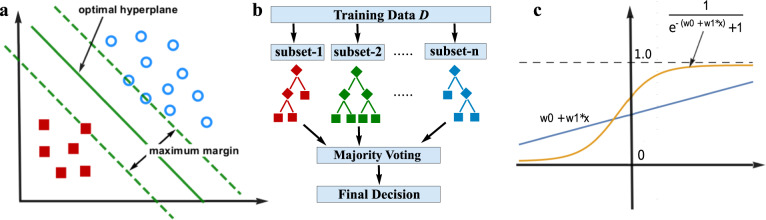
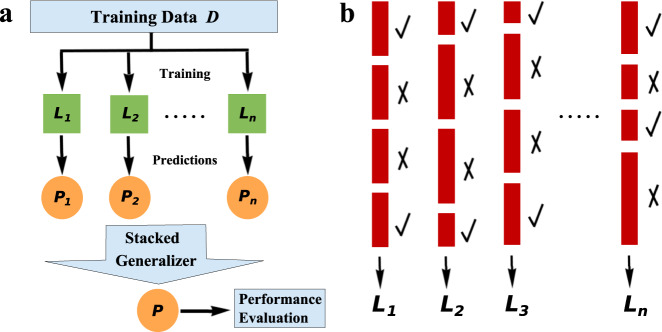
The rate of disability accumulation varies across multiple sclerosis (MS) patients. Machine learning techniques may offer more powerful means to predict disease course in MS patients. In our study, 724 patients from the Comprehensive Longitudinal Investigation in MS at Brigham and Women's Hospital (CLIMB study) and 400 patients from the EPIC dataset, University of California, San Francisco, were included in the analysis. The primary outcome was an increase in Expanded Disability Status Scale (EDSS) ≥ 1.5 (worsening) or not (non-worsening) at up to 5 years after the baseline visit. Classification models were built using the CLIMB dataset with patients' clinical and MRI longitudinal observations in first 2 years, and further validated using the EPIC dataset. We compared the performance of three popular machine learning algorithms (SVM, Logistic Regression, and Random Forest) and three ensemble learning approaches (XGBoost, LightGBM, and a Meta-learner L). A "threshold" was established to trade-off the performance between the two classes. Predictive features were identified and compared among different models. Machine learning models achieved 0.79 and 0.83 AUC scores for the CLIMB and EPIC datasets, respectively, shortly after disease onset. Ensemble learning methods were more effective and robust compared to standalone algorithms. Two ensemble models, XGBoost and LightGBM were superior to the other four models evaluated in our study. Of variables evaluated, EDSS, Pyramidal Function, and Ambulatory Index were the top common predictors in forecasting the MS disease course. Machine learning techniques, in particular ensemble methods offer increased accuracy for the prediction of MS disease course.
Keywords: Multiple sclerosis.
© The Author(s) 2020.
Conflict of interest statement
Competing interestsThe authors declare no competing interests. Complete disclosures are listed on ICJME forms.
Figures