


The Chromosome Level Genome and Genome-wide Association Study for the Agronomic Traits of Panax Notoginseng
- PMID: 33083766
- PMCID: PMC7509215
- DOI: 10.1016/j.isci.2020.101538
The Chromosome Level Genome and Genome-wide Association Study for the Agronomic Traits of Panax Notoginseng
Abstract
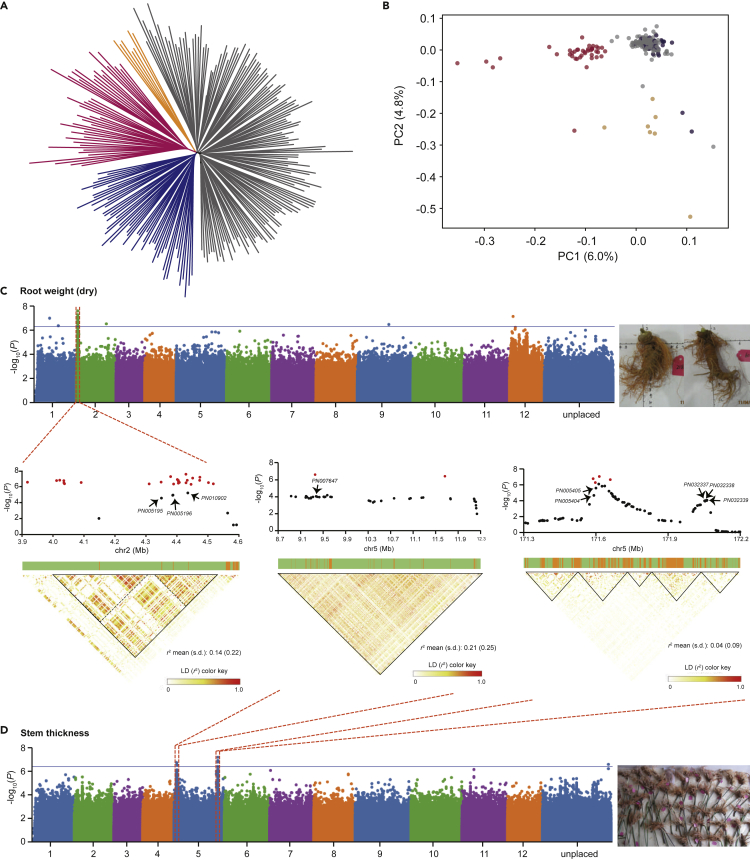
The Chinese ginseng Panax notoginseng is a domesticated herb with significant medicinal and economic value. Here we report a chromosome-level P. notoginseng genome assembly with a high (∼79%) repetitive sequence content. The juxtaposition with the widely distributed, closely related Korean ginseng (Panax ginseng) genome revealed contraction of plant defense genes (in particular R-genes) in the P. notoginseng genome. We also investigated the reasons for the larger genome size of Panax species, revealing contributions from two Panax-specific whole-genome duplication events and transposable element expansion. Transcriptome data and comparative genome analysis revealed the candidate genes involved in the ginsenoside synthesis pathway. We also performed a genome-wide association study on 240 cultivated P. notoginseng individuals and identified the associated genes with dry root weight (63 genes) and stem thickness (168 genes). The P. notoginseng genome represents a critical step toward harnessing the full potential of an economically important and enigmatic plant.
Keywords: Biological Sciences; Genomics; Plant Biology; Transcriptomics.
© 2020 The Author(s).
Conflict of interest statement
The authors declare no competing interests.
Figures
References
-
- Afzal A.J., Wood A.J., Lightfoot D.A. Plant receptor-like serine threonine kinases: roles in signaling and plant defense. Mol. Plant Microbe Interact. 2008;21:507–517. - PubMed
-
- Bangham C.R., McMichael A.J. HIV infection. Why the long latent period? Nature. 1990;348:388. - PubMed
-
- Bernards M.A., Yoesef L.F., Nicol R.W. Netherlands: Springer; 2006. The Allelopathic Potential of Ginsenosides.
LinkOut - more resources
Full Text Sources
