


Functional and prognostic implications of cardiac magnetic resonance feature tracking-derived remote myocardial strain analyses in patients following acute myocardial infarction
- PMID: 33083869
- PMCID: PMC7862195
- DOI: 10.1007/s00392-020-01747-1
Functional and prognostic implications of cardiac magnetic resonance feature tracking-derived remote myocardial strain analyses in patients following acute myocardial infarction
Abstract
Background: Cardiac magnetic resonance myocardial feature tracking (CMR-FT)-derived global strain assessments provide incremental prognostic information in patients following acute myocardial infarction (AMI). Functional analyses of the remote myocardium (RM) are scarce and whether they provide an additional prognostic value in these patients is unknown.
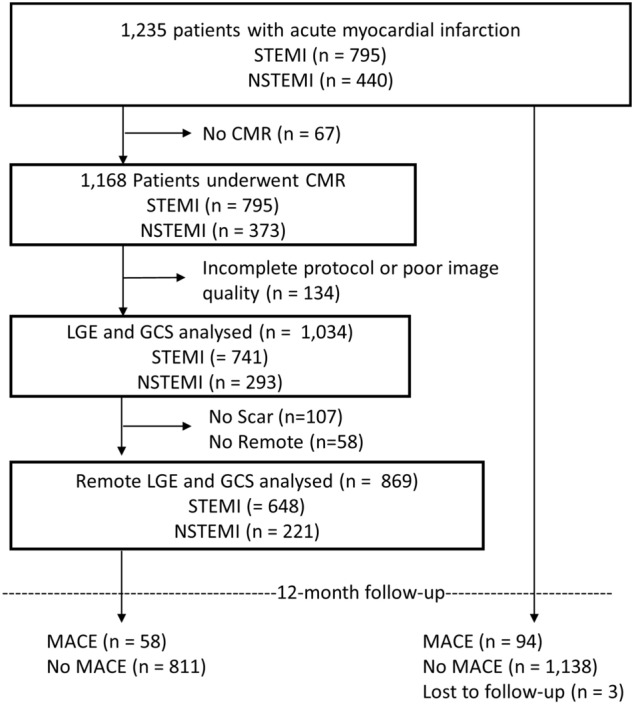
Methods: 1034 patients following acute myocardial infarction were included. CMR imaging and strain analyses as well as infarct size quantification were performed after reperfusion by primary percutaneous coronary intervention. The occurrence of major adverse cardiac events (MACE) within 12 months after the index event was defined as primary clinical endpoint.
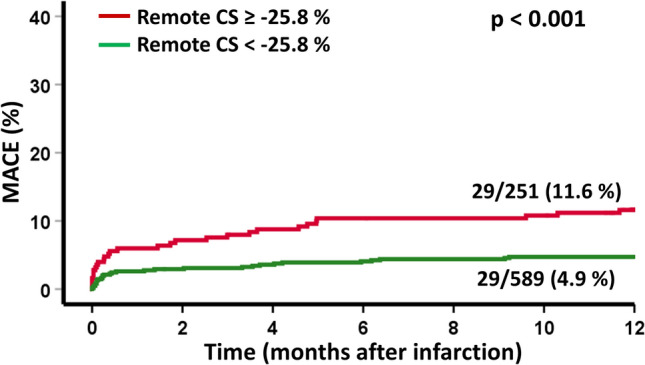
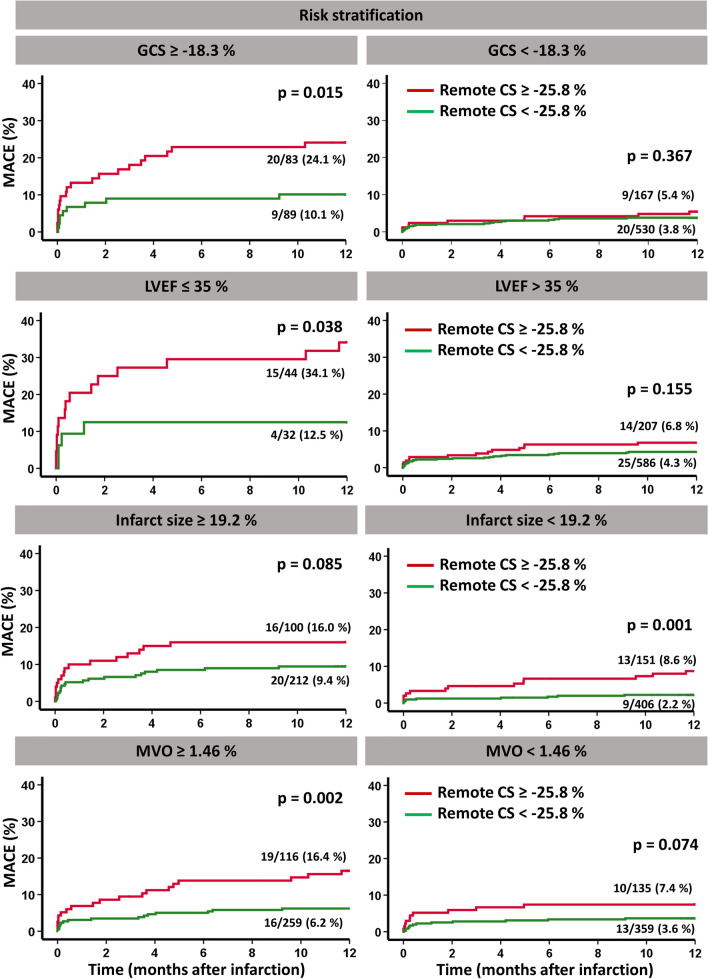
Results: Patients with MACE had significantly lower RM circumferential strain (CS) compared to those without MACE. A cutoff value for RM CS of - 25.8% best identified high-risk patients (p < 0.001 on log-rank testing) and impaired RM CS was a strong predictor of MACE (HR 1.05, 95% CI 1.07-1.14, p = 0.003). RM CS provided further risk stratification among patients considered at risk according to established CMR parameters for (1) patients with reduced left ventricular ejection fraction (LVEF) ≤ 35% (p = 0.038 on log-rank testing), (2) patients with reduced global circumferential strain (GCS) > - 18.3% (p = 0.015 on log-rank testing), and (3) patients with large microvascular obstruction ≥ 1.46% (p = 0.002 on log-rank testing).
Conclusion: CMR-FT-derived RM CS is a useful parameter to characterize the response of the remote myocardium and allows improved stratification following AMI beyond commonly used parameters, especially of high-risk patients.
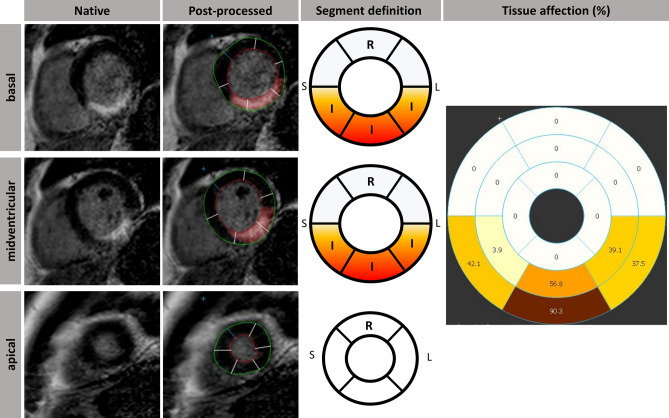
Trial registration: ClinicalTrials.gov, NCT00712101 and NCT01612312 Defining remote segments (R) in the presence of infarct areas (I) for the analysis of remote circumferential strain (CS). Remote CS was significantly lower in patients who suffered major adverse cardiac events (MACE) and a cutoff value for remote CS of - 25.8% best identified high-risk patients. In addition, impaired remote CS ≥ - 25.8 % (Remote -) and preserved remote CS < - 25.8 % (Remote +) enabled further risk stratification when added to established parameters like left ventricular ejection fraction (LVEF), global circumferential strain (GCS) or microvascular obstruction (MVO).
Keywords: CMR; Feature tracking; Myocardial infarction; Remote strain; Risk prediction.
Conflict of interest statement
The authors declare that they have no conflict of interest statement.
Figures
References
-
- Perk J, De Backer G, Gohlke H, et al. European Guidelines on cardiovascular disease prevention in clinical practice (version 2012). The Fifth Joint Task Force of the European Society of Cardiology and Other Societies on Cardiovascular Disease Prevention in Clinical Practice (constituted by representatives of nine societies and by invited experts) Eur Heart J. 2012;33:1635–1701. doi: 10.1093/eurheartj/ehs092. - DOI - PubMed
Publication types
MeSH terms
Associated data
LinkOut - more resources
Full Text Sources
Medical
