


How reliable is BMI? Bioimpedance analysis of body composition in underweight, normal weight, overweight, and obese women
- PMID: 33083960
- PMCID: PMC8302488
- DOI: 10.1007/s11845-020-02403-3
How reliable is BMI? Bioimpedance analysis of body composition in underweight, normal weight, overweight, and obese women
Abstract
Background: The human body consists of water, proteins, lipids, carbohydrates, and minerals that build cells, tissues, and organs. In healthy people, the content of these molecules remains nearly constant. The body mass index (BMI) is commonly used to classify abnormal body composition among adults. According to the WHO, a high BMI is a major risk factor for many diseases. Bioelectrical impedance analysis is a commonly used method for assessing body composition in clinical practice and medical research.
Aims: The aim of this study was to identify the advantages and disadvantages of using BMI in diagnosis of underweight, overweight, and obesity, by comparing the value of the index with the values of body composition analysis parameters.
Methods: A total of 267 healthy women 18 to 35 years of age participated in this study. Bioelectrical impedance analysis was performed on all participants at the beginning of the experiment with an InBodyS10 device.
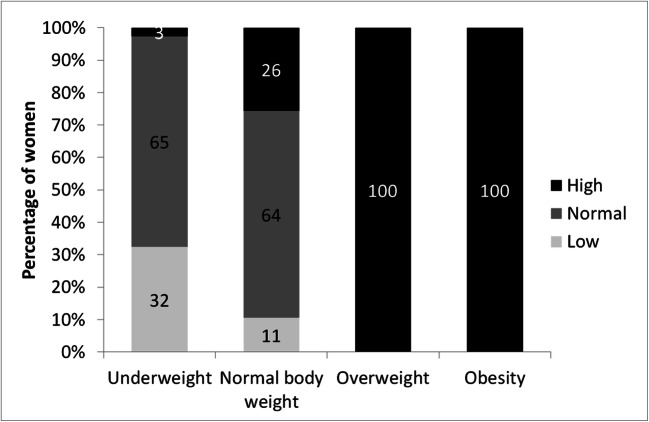
Results: In the BMI categories of overweight and obese, only women with excessive BFM were measured with BIA. The BMI category of normal body weight, apart from women with normal body composition, includes people with both deficient and excess body components, e.g., body fat or lean body mass. The BMI category of underweight includes women with different body compositions as well as people with excessive fat content.
Conclusions: The BMI is useful to provide a warning of excessive fat content in overweight and obese women, whereas among normal weight and underweight women, it may mask various types of body composition defects.
Keywords: BMI; Bioelectrical impedance analysis (BIA); Body composition.
© 2020. The Author(s).
Conflict of interest statement
The authors declare that they have no conflict of interest.
Figures
References
-
- U.S. Department of Health and Human Services and U.S. Department of Agriculture. 2015–2020 2015 Dietary Guidelines for Americans 8th Edition. https://health.gov/dietaryguidelines/2015/guidelines/. Accessed 3 Jan 2020
-
- Rzońca E, Bień A, Iwanowicz-Palus G. Eating disorders – an ongoing problem. J Educ Health Sport. 2016;6(12):267–273. doi: 10.5281/zenodo.198734. - DOI
-
- Bolanowski M, Zadrożna-Śliwka B, Zatońska K. Body composition studies — methods and possible application in hormonal disorders. Endocrinol Obes. 2005;1(1):20–25.
-
- World Health Organisation (2016) Obesity and overweight. Geneva: WHO Media Center
MeSH terms
Grants and funding
LinkOut - more resources
Full Text Sources
Medical
