


Burden, predictors and short-term outcomes of peripartum cardiomyopathy in a black African cohort
- PMID: 33085703
- PMCID: PMC7577461
- DOI: 10.1371/journal.pone.0240837
Burden, predictors and short-term outcomes of peripartum cardiomyopathy in a black African cohort
Abstract
Background: Peripartum cardiomyopathy (PPCM) is an idiopathic cardiomyopathy presenting with acute heart failure during the peripartum period. It is common in patients of African ancestry. Currently, there is paucity of data on the burden, predictors and outcomes of PPCM in Uganda. This study aimed to investigate the prevalence, predictors and six-month outcomes of PPCM in an adult cohort attending a tertiary specialised cardiology centre in Kampala, Uganda.
Methods: This study consecutively enrolled 236 women presenting with features of acute heart failure in the peripartum period. Clinical evaluation and echocardiography were performed on all the enrolled women. PCCM was defined according to recommendations of the Heart Failure Association of the European Society of Cardiology Working Group on PPCM. Poor outcome at six months of follow-up was defined as presence of any of the following: death of a mother or her baby, New York Heart Association (NYHA) functional class III-IV or failure to achieve complete recovery of left ventricular function (left ventricular ejection fraction ≤55%).
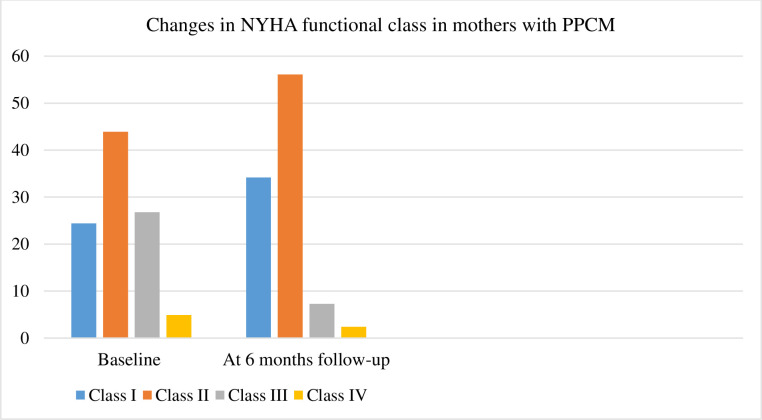
Results: The median age, BMI and parity of the study participants was 31.5 (25.5-38.0) years, 28.3 (26.4-29.7) and 3 (2-4) respectively. The prevalence of PPCM was 17.4% (n = 41/236). Multiple pregnancy was the only predictor of PPCM in this study population (OR 4.3 95% CI 1.16-16.05, p = 0.029). Poor outcome at six-months was observed in about 54% of the patients with PPCM (n = 4, 9.8% in NYHA functional class III-IV and n = 22, 53.7% with LVEF <55%). No maternal or foetal mortality was documented.
Conclusion: PPCM is relatively common in Uganda and is associated with multiple pregnancy. Poor outcomes especially absence of complete recovery of left ventricular function are also common. Large studies to further investigate long-term maternal and foetal outcomes in Uganda are justified.
Conflict of interest statement
The authors have declared that no competing interests exist.
Figures
References
-
- Bauersachs J, König T, van der Meer P, Petrie MC, Hilfiker-Kleiner D, Mbakwem A, et al. Pathophysiology, diagnosis and management of peripartum cardiomyopathy: a position statement from the Heart Failure Association of the European Society of Cardiology Study Group on peripartum cardiomyopathy. Eur J Heart Fail. 2019;21(7):827–43. Epub 06/27. 10.1002/ejhf.1493 . - DOI - PubMed
Publication types
MeSH terms
Grants and funding
LinkOut - more resources
Full Text Sources
Medical
