


A phase II study of dose-dense temozolomide and lapatinib for recurrent low-grade and anaplastic supratentorial, infratentorial, and spinal cord ependymoma
- PMID: 33085768
- PMCID: PMC7992893
- DOI: 10.1093/neuonc/noaa240
A phase II study of dose-dense temozolomide and lapatinib for recurrent low-grade and anaplastic supratentorial, infratentorial, and spinal cord ependymoma
Abstract
Background: No standard medical treatment exists for adult patients with recurrent ependymoma, and prospective clinical trials in this population have not succeeded because of its rarity and challenges in accruing patients. The Collaborative Ependymoma Research Network conducted a prospective phase II clinical trial of dose-dense temozolomide (TMZ) and lapatinib, targeting the unmethylated O6-methylguanine-DNA methyltransferase (MGMT) promoter status and increased expression of ErbB2 (human epidermal growth factor receptor 2) and ErbB1 (epidermal growth factor receptor) in ependymomas.
Methods: Patients age 18 or older with histologically proven and progressive ependymoma or anaplastic ependymoma were eligible and received dose-dense TMZ and daily lapatinib. The primary outcome measure was median progression-free survival (PFS). Landmark 6- and 12-month PFS and objective response were measured. Serial assessments of symptom burden using the MD Anderson Symptom Inventory Brain Tumor (MDASI-BT)/MDASI-Spine Tumor modules were collected.
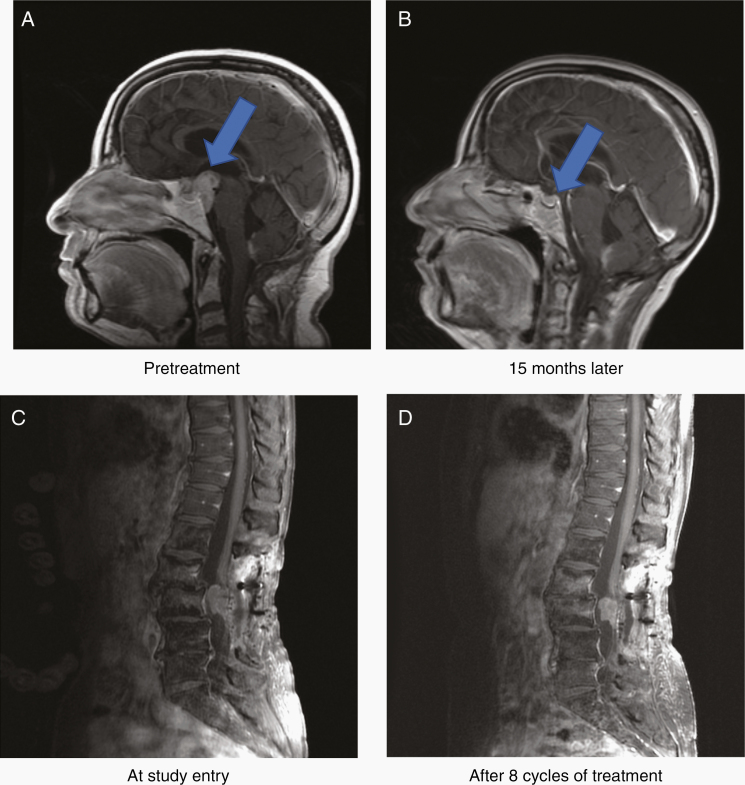
Results: The 50 patients enrolled had a median age of 43.5 years, median Karnofsky performance status of 90, and a median of 2 prior relapses. Twenty patients had grade III, 16 grade II, and 8 grade I ependymoma. Half had spinal cord tumors; 15 had a supratentorial tumor, 8 infratentorial, and 2 had disseminated disease. Treatment was well tolerated. The median PFS was 7.8 months (95% CI: 5.5,12.2); the 6- and 12-month PFS rates were 55% and 38%, with 2 complete and 6 partial responses. Measures of symptom burden showed reduction in moderate-severe pain and other disease-related symptoms in most patients.
Conclusions: This treatment, with demonstrated clinical activity with objective responses and prolonged disease control associated with disease-related symptom improvements, is an option as a salvage regimen for adult patients with recurrent ependymoma.
Keywords: combination chemotherapy; ependymoma; lapatinib; progression-free survival; temozolomide.
Published by Oxford University Press on behalf of the Society for Neuro-Oncology 2020.
References
-
- Louis DN, Perry A, Reifenberger G, et al. The 2016 World Health Organization classification of tumors of the central nervous system: a summary. Acta Neuropathol. 2016;131(6):803–820. - PubMed
Publication types
MeSH terms
Substances
Grants and funding
LinkOut - more resources
Full Text Sources
Medical
Research Materials
Miscellaneous
