


The Quality, Readability, Completeness, and Accuracy of PTSD Websites for Firefighters
- PMID: 33086772
- PMCID: PMC7593916
- DOI: 10.3390/ijerph17207629
The Quality, Readability, Completeness, and Accuracy of PTSD Websites for Firefighters
Abstract
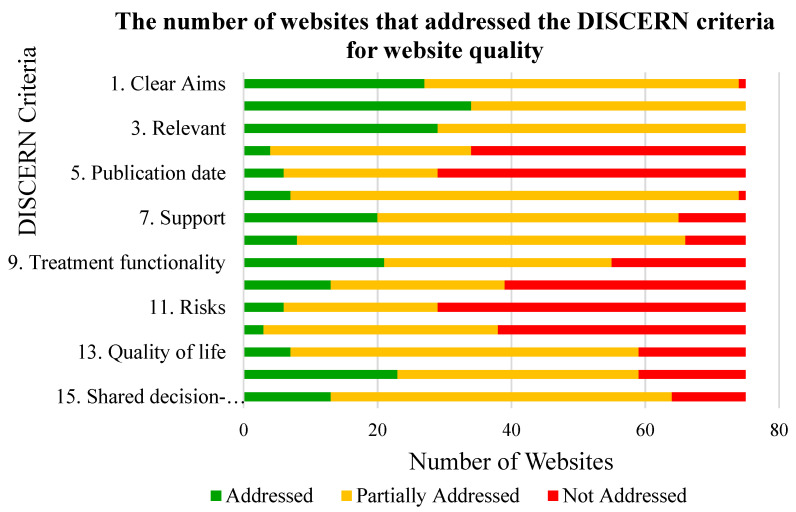
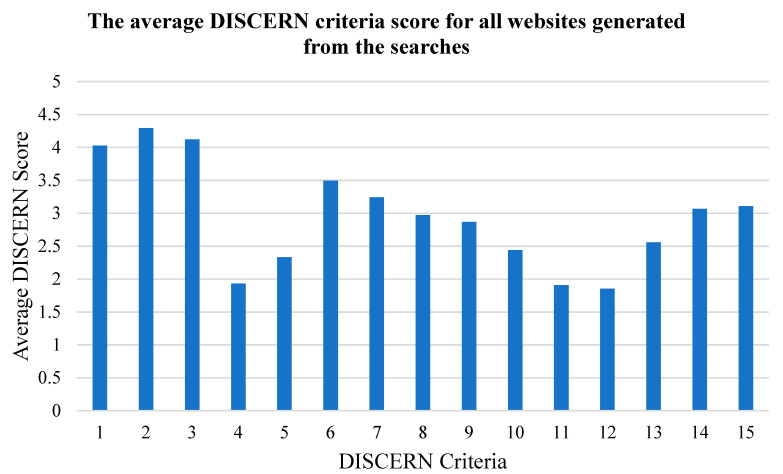
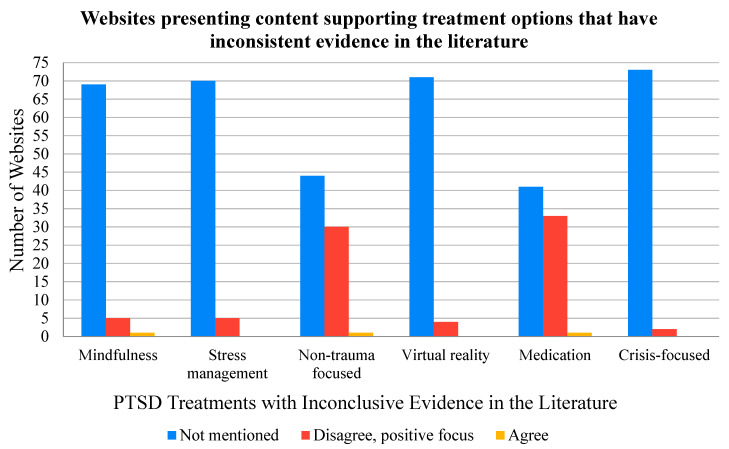
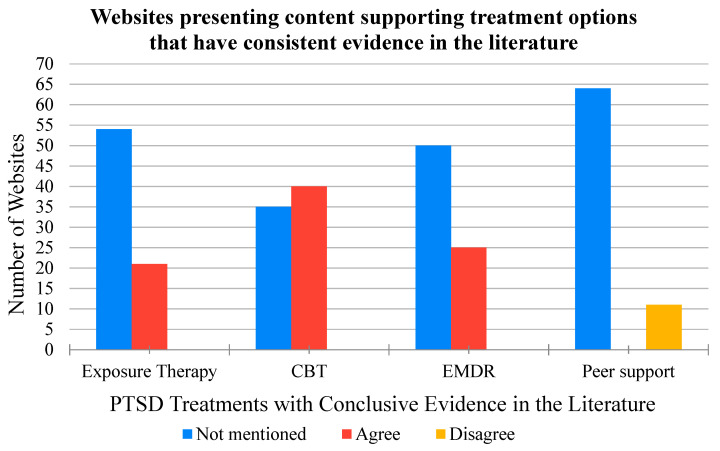
Firefighters appear at an increased risk for post-traumatic stress disorder (PTSD). Because of PTSD-related stigma, firefighters may search for information online. The current study evaluated the quality, readability, and completeness of PTSD online resources, and to determine how the online treatment recommendations align with current evidence. Google.ca (Canada) searches were performed using four phrases: 'firefighter PTSD', 'firefighter operational stress', 'PTSD symptoms', and 'PTSD treatment'. The 75 websites identified were assessed using quality criteria for consumer health information (DISCERN), readability and health literacy statistics, content analysis, and a comparison of treatments mentioned to the current best evidence. The average DISCERN score was 43.8 out of 75 (indicating 'fair' quality), with 9 'poor' websites (16-30), 31 'fair' websites (31-45), 26 "good" websites (46-60), and nine excellent websites (61-75). The average grade level required to understand the health-related content was 10.6. The most mentioned content was PTSD symptoms (48/75 websites) and PTSD treatments (60/75 websites). The most frequently mentioned treatments were medications (41/75 websites) and cognitive behavioural therapy (40/75 websites). Cognitive behavioural therapy is supported by strong evidence, but evidence for medications appears inconsistent in current systematic reviews. Online PTSD resources exist for firefighters, but the information is challenging to read and lacks evidence-based treatment recommendations.
Keywords: firefighters; first responders; health resources; internet; mental health; operational stress injury; posttraumatic stress disorder; public safety personnel; readability; website.
Conflict of interest statement
The authors declare no conflict of interest.
Figures
References
-
- CIPSRT Glossary of Terms: A Shared Understanding of the Common Terms Used to Describe Psychological Trauma (Version 2.0) [(accessed on 20 August 2020)]; Available online: https://www.cipsrt-icrtsp.ca/en/resources/glossary-of-terms.
-
- Del Ben K.S., Scotti J.R., Chen Y.-C., Fortson B.L. Prevalence of posttraumatic stress disorder symptoms in firefighters. Work Stress. 2006;20:37–48. doi: 10.1080/02678370600679512. - DOI
-
- Carleton R.N., Afifi T.O., Taillieu T., Turner S., Krakauer R., Anderson G.S., MacPhee R.S., Ricciardelli R., Cramm H.A., Groll D., et al. Exposures to potentially traumatic events among public safety personnel in Canada. Can. J. Behav. Sci. Rev. Can. Sci. Comport. 2019;51:37–52. doi: 10.1037/cbs0000115. - DOI
Publication types
MeSH terms
Grants and funding
LinkOut - more resources
Full Text Sources
Medical
