


Potential Consequences of the Red Blood Cell Storage Lesion on Cardiac Electrophysiology
- PMID: 33086931
- PMCID: PMC7763412
- DOI: 10.1161/JAHA.120.017748
Potential Consequences of the Red Blood Cell Storage Lesion on Cardiac Electrophysiology
Abstract
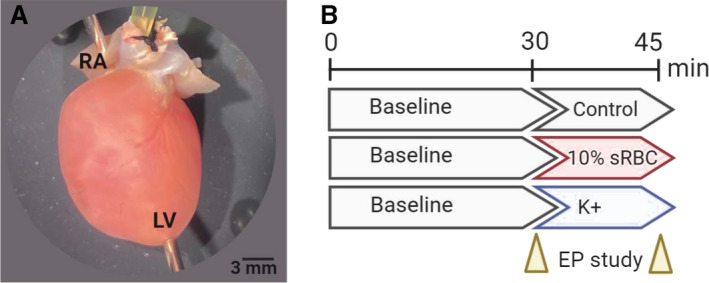
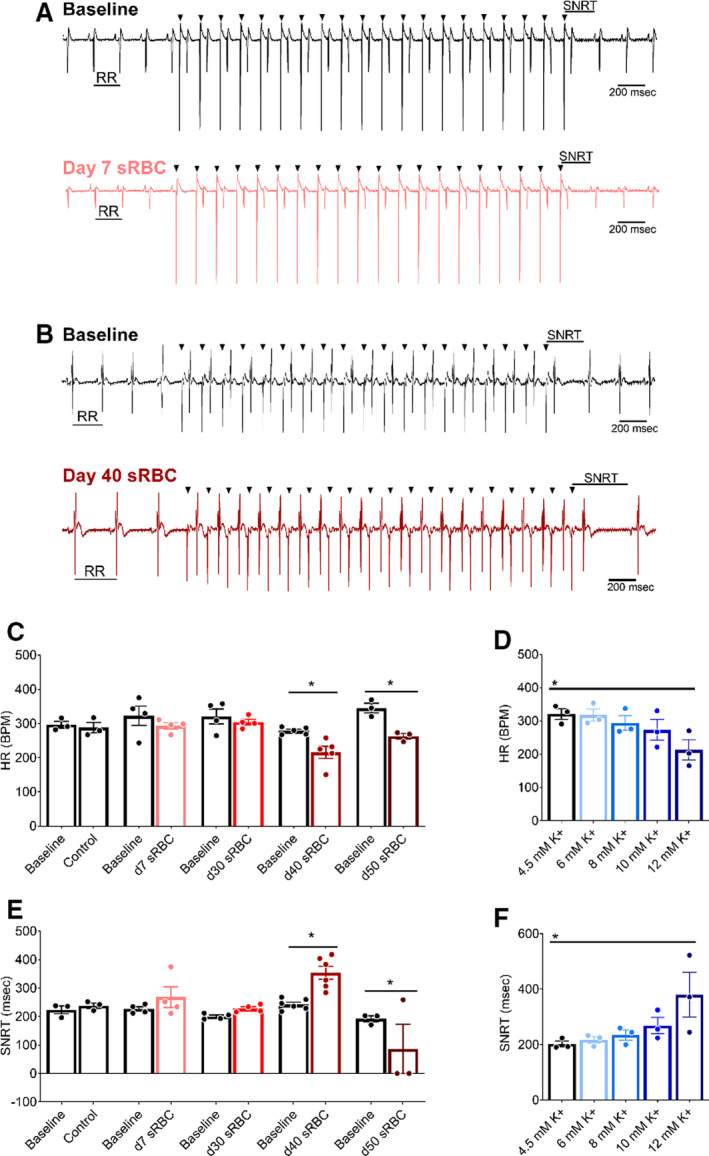
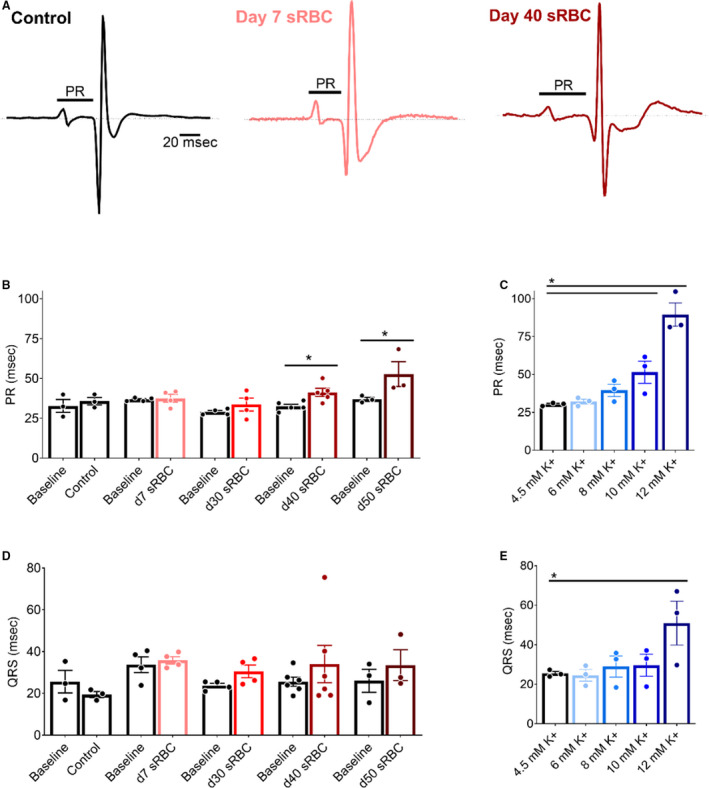
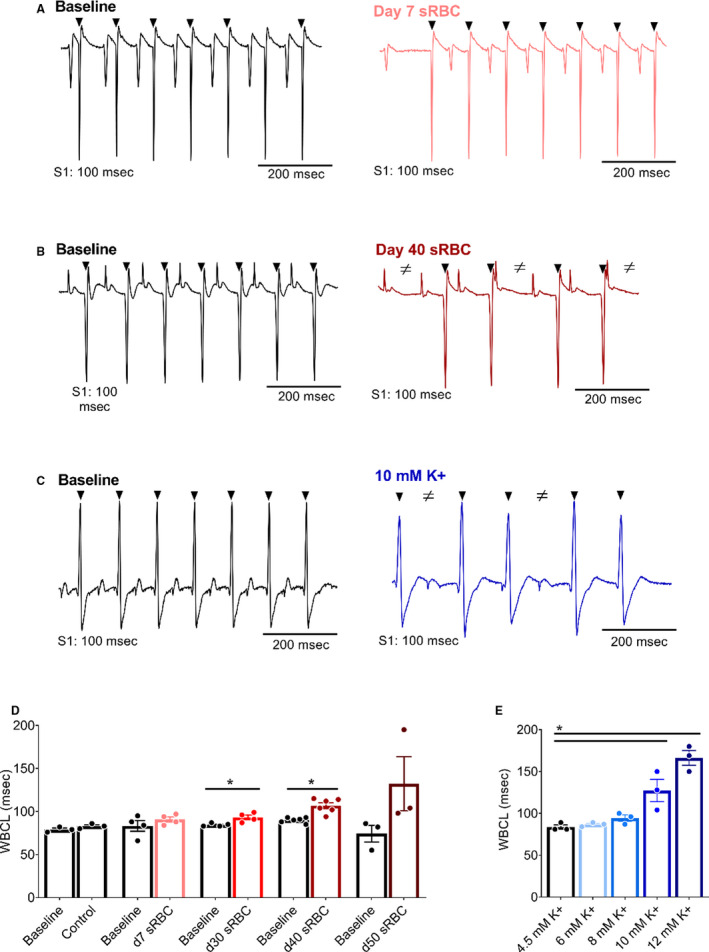
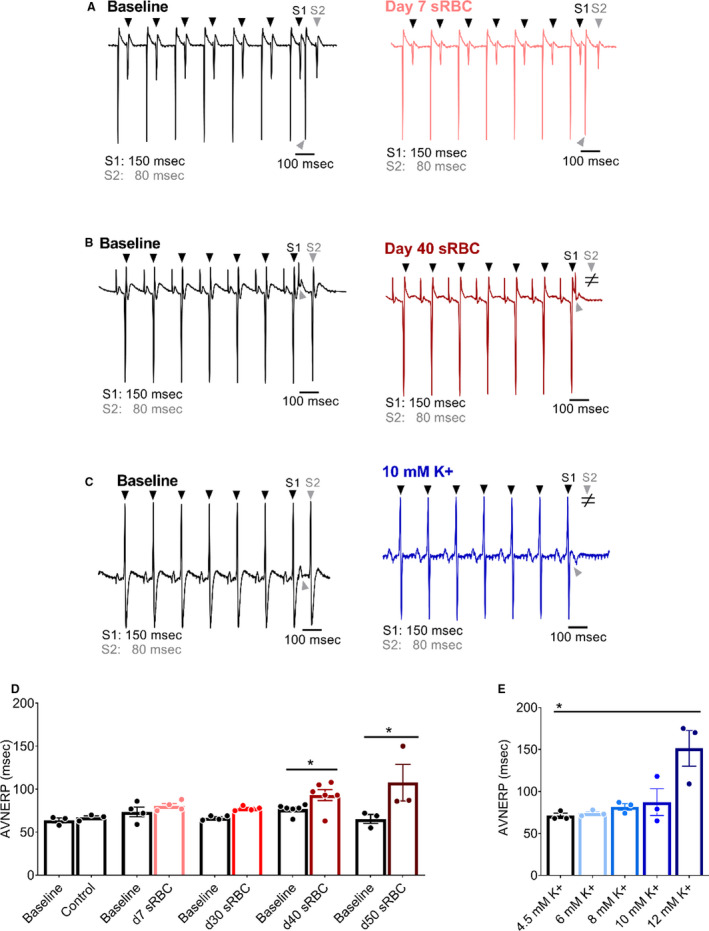
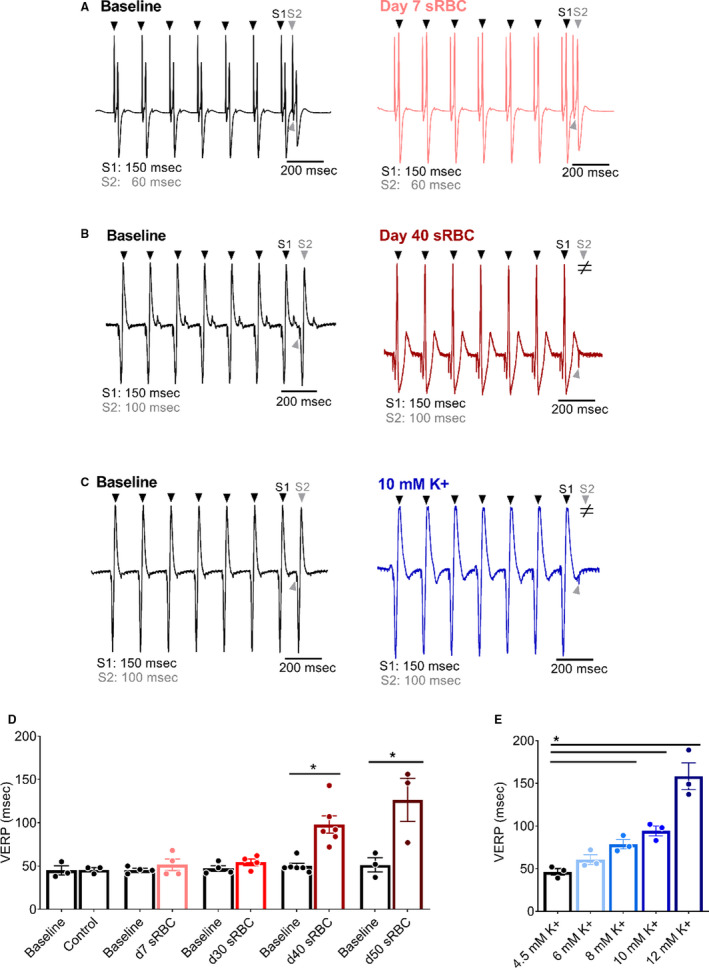
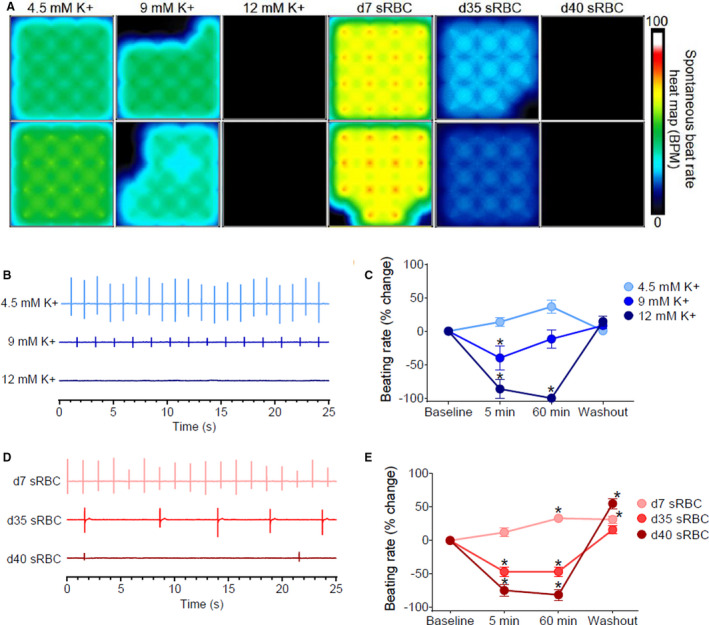
Background The red blood cell (RBC) storage lesion is a series of morphological, functional, and metabolic changes that RBCs undergo following collection, processing, and refrigerated storage for clinical use. Since the biochemical attributes of the RBC unit shifts with time, transfusion of older blood products may contribute to cardiac complications, including hyperkalemia and cardiac arrest. We measured the direct effect of storage age on cardiac electrophysiology and compared it with hyperkalemia, a prominent biomarker of storage lesion severity. Methods and Results Donor RBCs were processed using standard blood-banking techniques. The supernatant was collected from RBC units, 7 to 50 days after donor collection, for evaluation using Langendorff-heart preparations (rat) or human induced pluripotent stem cell-derived cardiomyocytes. Cardiac parameters remained stable following exposure to "fresh" supernatant from red blood cell units (day 7: 5.8±0.2 mM K+), but older blood products (day 40: 9.3±0.3 mM K+) caused bradycardia (baseline: 279±5 versus day 40: 216±18 beats per minute), delayed sinus node recovery (baseline: 243±8 versus day 40: 354±23 ms), and increased the effective refractory period of the atrioventricular node (baseline: 77±2 versus day 40: 93±7 ms) and ventricle (baseline: 50±3 versus day 40: 98±10 ms) in perfused hearts. Beating rate was also slowed in human induced pluripotent stem cell-derived cardiomyocytes after exposure to older supernatant from red blood cell units (-75±9%, day 40 versus control). Similar effects on automaticity and electrical conduction were observed with hyperkalemia (10-12 mM K+). Conclusions This is the first study to demonstrate that "older" blood products directly impact cardiac electrophysiology, using experimental models. These effects are likely caused by biochemical alterations in the supernatant from red blood cell units that occur over time, including, but not limited to hyperkalemia. Patients receiving large volume and/or rapid transfusions may be sensitive to these effects.
Keywords: cardiac electrophysiology; hyperkalemia; red blood cell storage lesion.
Conflict of interest statement
None.
Figures
References
-
- Jonas RA. Comprehensive Surgical Management of Congenital Heart Disease. London: Hodder Education Group; 2004.
-
- Speiss BD. Transfusion and outcome in heart surgery. Ann Thorac Surg. 2002;74:986–987. - PubMed
Publication types
MeSH terms
Grants and funding
LinkOut - more resources
Full Text Sources
Other Literature Sources
Medical
