


Role of Curcuminoids and Tricalcium Phosphate Ceramic in Rat Spinal Fusion
- PMID: 33086948
- PMCID: PMC7699001
- DOI: 10.1089/ten.TEC.2020.0217
Role of Curcuminoids and Tricalcium Phosphate Ceramic in Rat Spinal Fusion
Abstract
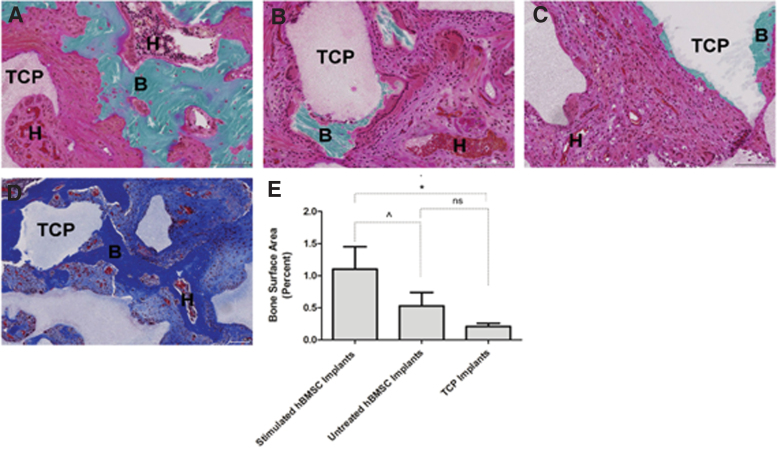
Despite considerable research effort, there is a significant need for safe agents that stimulate bone formation. Treatment of large or complex bone defects remains a challenge. Implantation of small molecule-induced human bone marrow-derived mesenchymal stromal cells (hBMSCs) on an appropriate tricalcium phosphate (TCP) scaffold offers a robust system for noninvasive therapy for spinal fusion. To show the efficacy of this approach, we identified a small molecule curcuminoid that when combined with TCP ceramic in the presence of hBMSCs selectively induced growth of bone cells: after 8- or 25-day incubations, alkaline phosphatase was elevated. Treatment of hBMSCs with curcuminoid 1 and TCP ceramic increased osteogenic target gene expression (i.e., Runx2, BMP2, Osteopontin, and Osteocalcin) over time. In the presence of curcuminoid 1 and TCP ceramic, osteogenesis of hBMSCs, including proliferation, differentiation, and mineralization, was observed. No evidence of chondrogenic or adipogenic potential using this protocol was observed. Transplantation of curcuminoid 1-treated hBMSC/TCP mixtures into the spine of immunodeficient rats showed that it achieved spinal fusion and provided greater stability of the spinal column than untreated hBMSC-TCP implants or TCP alone implants. On the basis of histological analysis, greater bone formation was associated with curcuminoid 1-treated hBMSC implants manifested as contiguous growth plates with extensive hematopoietic territories. Stimulation of hBMSCs by administration of small molecule curcuminoid 1 in the presence of TCP ceramic afforded an effective noninvasive strategy that increased spinal fusion repair and provided greater stability of the spinal column after 8 weeks in immunodeficient rats. Impact statement Bone defects only slowly regenerate themselves in humans. Current procedures to restore spinal defects are not always effective. Some have side effects. In this article, a new method to produce bone growth within 8 weeks in rats is presented. In the presence of tricalcium phosphate ceramic, curcuminoid-1 small molecule-stimulated human bone marrow-derived mesenchymal stromal cells showed robust bone cell growth in vitro. Transplantation of this mixture into the spine showed efficient spinal fusion in rats. The approach presented herein provides an efficient biocompatible scaffold for delivery of a potentially clinically useful system that could be applicable in patients.
Keywords: bone growth; bone marrow-derived mesenchymal stem cells; curcumins; tricalcium phosphate ceramic.
Conflict of interest statement
No competing financial interests exist.
Figures


References
-
- Betz R.R. Limitations of autograft and allograft: new synthetic solutions. Orthopedics 25, s561, 2002 - PubMed
-
- Pape H.C., Evans A., and Kobbe P.. Autologous bone graft: properties and techniques. J Orthop Trauma 24, S35, 2010 - PubMed
-
- Holtzclaw D., Toscano N., Eisenlohr L., and Callan D.. The safety of bone allografts used in dentistry: a review. J Am Dent Assoc 139, 1192, 2008 - PubMed
Publication types
MeSH terms
Substances
LinkOut - more resources
Full Text Sources
Research Materials
