Review
. 2020 Oct 21;12(1):156.
doi: 10.1186/s13148-020-00946-x.

The epigenetic implication in coronavirus infection and therapy

Affiliations
Review

The epigenetic implication in coronavirus infection and therapy

Sandra Atlante et al. Clin Epigenetics. .

Abstract

Epigenetics is a relatively new field of science that studies the genetic and non-genetic aspects related to heritable phenotypic changes, frequently caused by environmental and metabolic factors. In the host, the epigenetic machinery can regulate gene expression through a series of reversible epigenetic modifications, such as histone methylation and acetylation, DNA/RNA methylation, chromatin remodeling, and non-coding RNAs. The coronavirus disease 19 (COVID-19) is a highly transmittable and pathogenic viral infection. The Severe Acute Respiratory Syndrome Coronavirus 2 (SARS-CoV-2), which emerged in Wuhan, China, and spread worldwide, causes it. COVID-19 severity and consequences largely depend on patient age and health status. In this review, we will summarize and comparatively analyze how viruses regulate the host epigenome. Mainly, we will be focusing on highly pathogenic respiratory RNA virus infections such as coronaviruses. In this context, epigenetic alterations might play an essential role in the onset of coronavirus disease complications. Although many therapeutic approaches are under study, more research is urgently needed to identify effective vaccine or safer chemotherapeutic drugs, including epigenetic drugs, to cope with this viral outbreak and to develop pre- and post-exposure prophylaxis against COVID-19.

Keywords: Aging; Chronic disease; Coronaviruses; Epigenetics; Metabolism; Nucleic acids.


Conflict of interest statement

The authors declare that they have no competing interests.

Figures
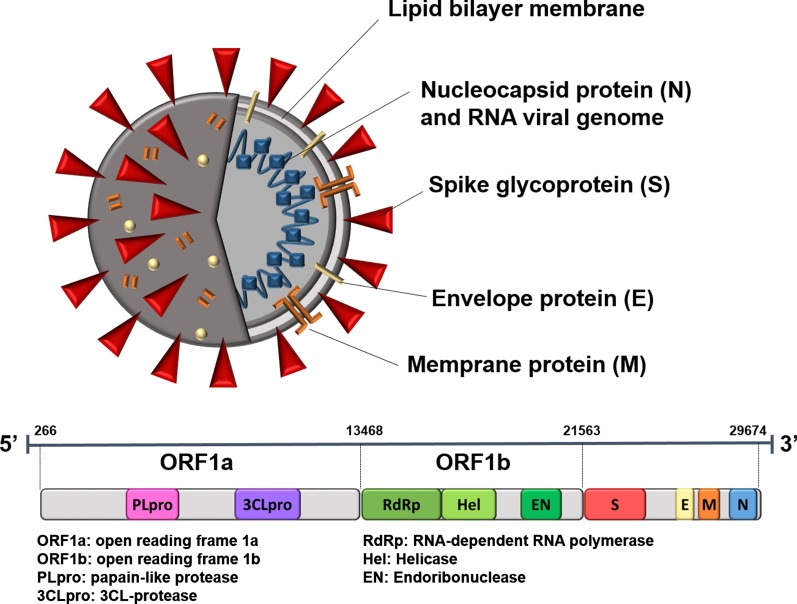
Fig. 1
Fig. 1
Schematic representation of SARS-CoV-2 structure. The single-stranded RNA viral genomic assembly of 29,674 nucleotide base pair encodes open reading frame 1a, open reading frame 1b, Spike glycoprotein, Envelope, Membrane, and Nucleocapsid proteins. ORF1a gene encodes papain-like protease and 3CL protease, ORF1b gene encodes an RNA-dependent RNA polymerase, a helicase, and an endoribonuclease
Fig. 2
Fig. 2
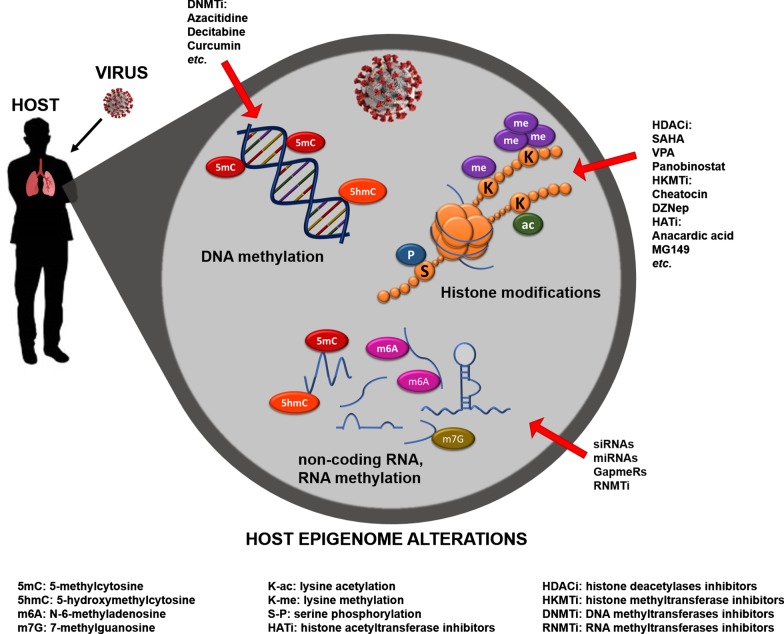
Coronavirus-dependent host epigenome alterations and potential interventions. Viruses, like those from the Coronaviridae family, can alter the host epigenome, negatively affecting the host immune response and successfully spreading the infection. The immune response is extensively regulated by specific epigenetic marks, such as chromatin remodeling, histone modification, DNA, and RNA methylation. The epigenetic machinery is responsible not only for the host response priming and memory, but also for ensuring its functional regulation. Age-related alterations to the host epigenome might affect the adaptive immune response, hindering viral defenses. Epigenomics represent a powerful tool to explore how to prevent, attenuate, or reverse the viral infection therapeutically. The enzymes responsible for the epigenetic alterations might represent potential targets for new antiviral drugs

References

    1. Zhou P, Yang X-L, Wang XG, Hu B, Zhang L, Zhang W, et al. A pneumonia outbreak associated with a new coronavirus of probable bat origin. Nature. 2020;579:270–273. doi: 10.1038/s41586-020-2012-7. - DOI - PMC - PubMed
    1. Whitworth J. COVID-19: a fast evolving pandemic. Trans R Soc Trop Med Hyg. 2020;114(4):241–248. doi: 10.1093/trstmh/traa025. - DOI - PMC - PubMed
    1. Rampal L, Liew BS. Coronavirus disease (COVID-19) spreads situation reports. WHO. 2020;75:95–97. - PubMed
    1. Qing E, Gallagher T. SARS coronavirus redux. Trends Immunol. 2020;41:271–273. doi: 10.1016/j.it.2020.02.007. - DOI - PMC - PubMed
    1. Zhu N, Zhang D, Wang W, Li X, Yang B, Song J, et al. A novel coronavirus from patients with pneumonia in China, 2019. N Engl J Med. 2020;382:727–733. doi: 10.1056/NEJMoa2001017. - DOI - PMC - PubMed

Publication types

MeSH terms

LinkOut - more resources