Bacterial versus non-bacterial infections: a methodology to support use-case-driven product development of diagnostics
- PMID: 33087393
- PMCID: PMC7580043
- DOI: 10.1136/bmjgh-2020-003141
Bacterial versus non-bacterial infections: a methodology to support use-case-driven product development of diagnostics
Abstract
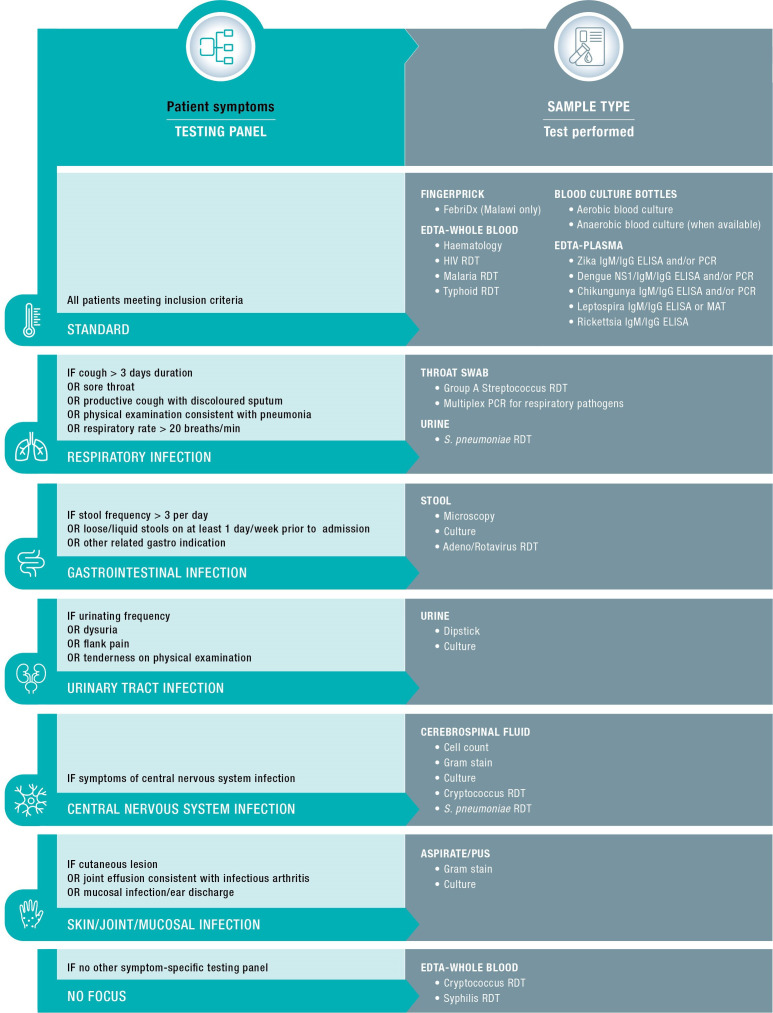
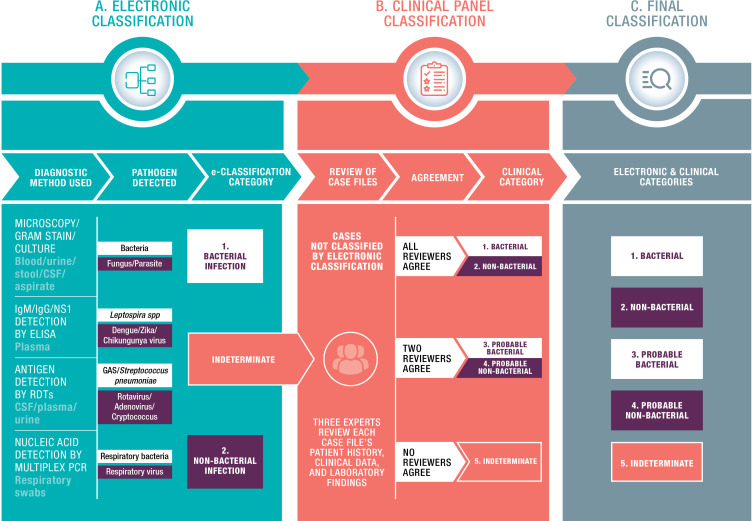
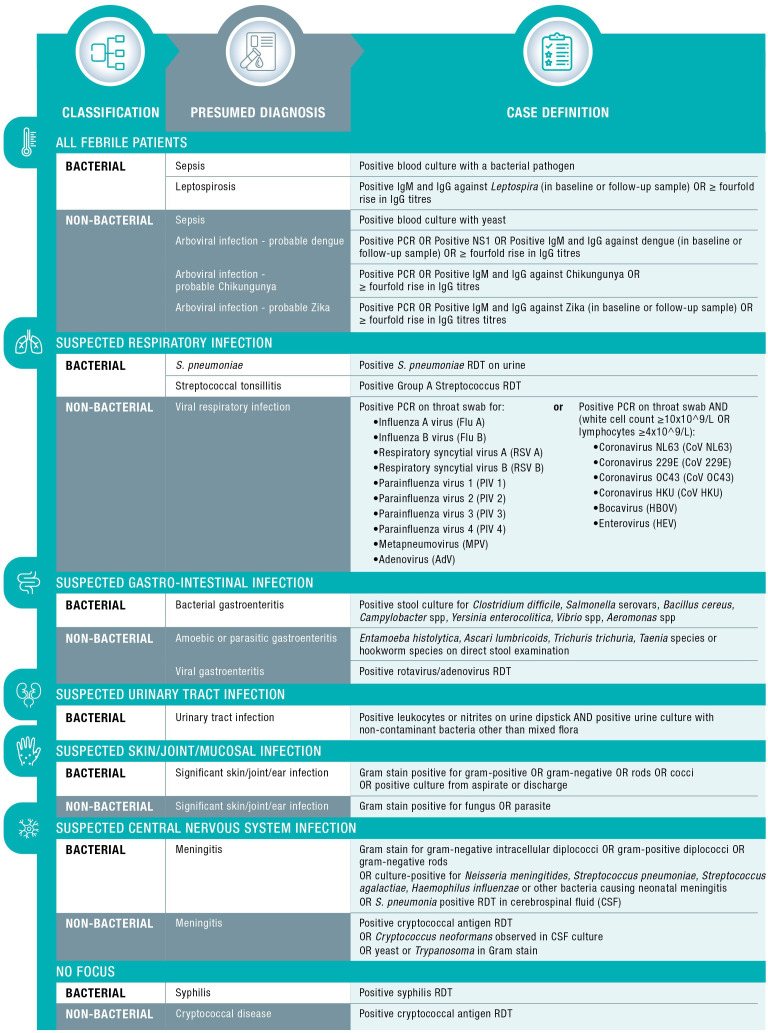
Acute febrile illness (AFI) is one of the most common reasons for seeking medical care in low-income and middle-income countries. Bacterial infections account for a relatively small proportion of AFIs; however, in the absence of a simple diagnostic test to guide clinical decisions, healthcare professionals often presume that a non-malarial febrile illness is bacterial in origin, potentially resulting in inappropriate antibiotic use. An accurate differential diagnostic tool for AFIs is thus essential, to both limit antibiotic use to bacterial infections and address the antimicrobial resistance crisis that is emerging globally, without resorting to multiple or complex pathogen-specific assays. The Biomarker for Fever-Diagnostic (BFF-Dx) study is one of the largest fever biomarker studies ever undertaken. We collected samples and classified disease aetiology in more than 1900 individuals, distributed among enrolment centres in three countries on two continents. Identical protocols were followed at each study site, and the same analyses were conducted in each setting, enabling like-with-like comparisons to be made among the large sample set generated. The BFF-Dx methodology can act as a model for other researchers, facilitating wider utility of the work in the future. The established sample collection is now accessible to researchers and companies and will facilitate the development of future fever-related diagnostic tests. Here, we outline the methodology used to determine the sample populations and to differentiate bacterial versus non-bacterial AFIs. Future publications will set out in more detail the study's demographics, the causes of fever identified and the performance of selected biomarkers.
Keywords: diagnostics and tools; public health.
© Author(s) (or their employer(s)) 2020. Re-use permitted under CC BY-NC. No commercial re-use. See rights and permissions. Published by BMJ.
Conflict of interest statement
Competing interests: None declared.
Figures
References
Publication types
MeSH terms
LinkOut - more resources
Full Text Sources
Medical