


Neonicotinoids disrupt circadian rhythms and sleep in honey bees
- PMID: 33087835
- PMCID: PMC7578099
- DOI: 10.1038/s41598-020-72041-3
Neonicotinoids disrupt circadian rhythms and sleep in honey bees
Abstract
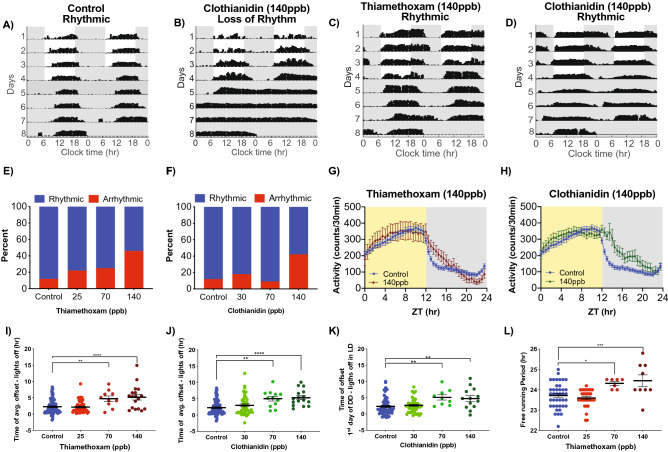
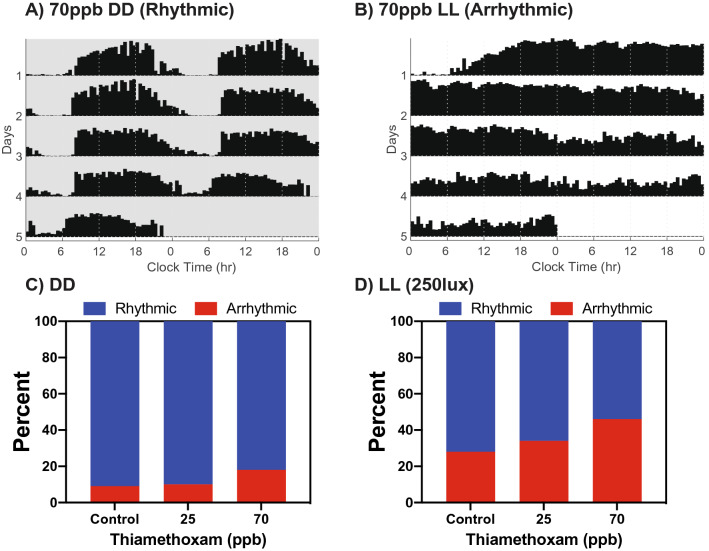
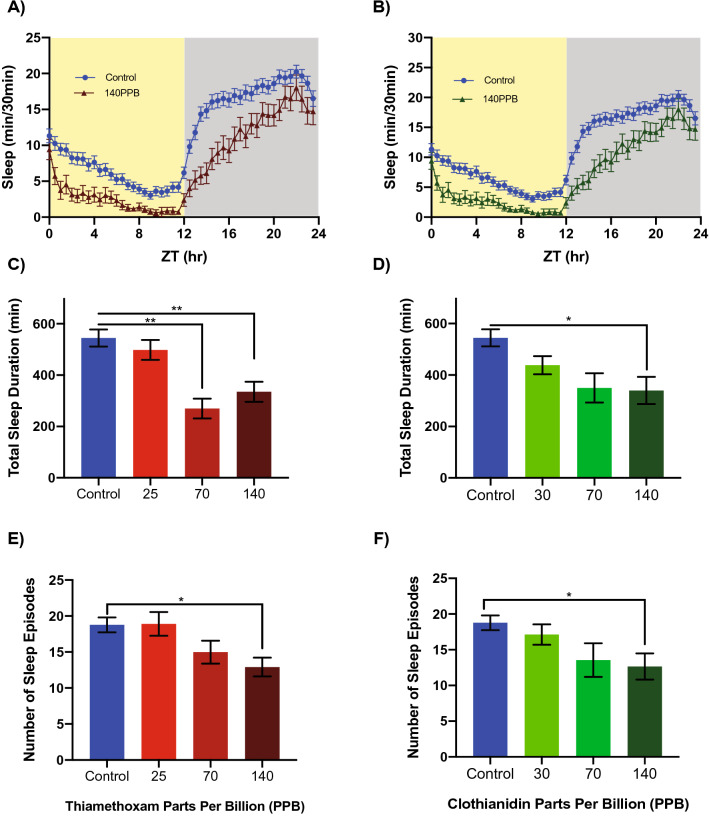
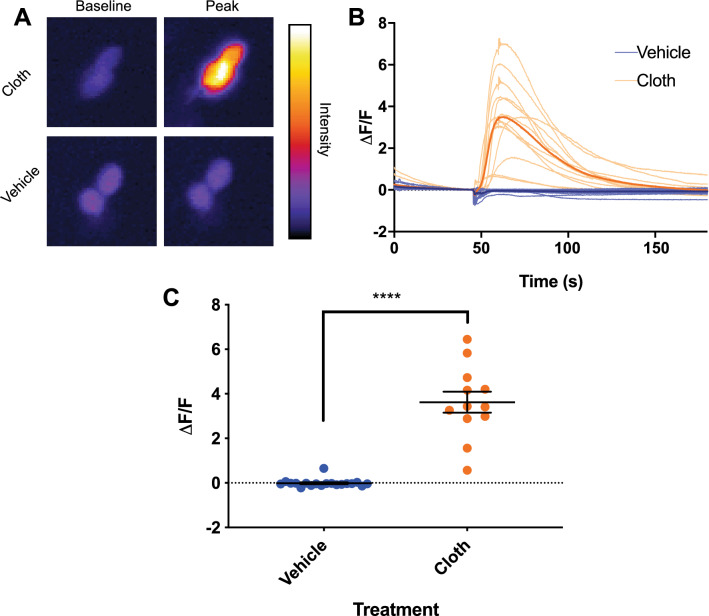
Honey bees are critical pollinators in ecosystems and agriculture, but their numbers have significantly declined. Declines in pollinator populations are thought to be due to multiple factors including habitat loss, climate change, increased vulnerability to disease and parasites, and pesticide use. Neonicotinoid pesticides are agonists of insect nicotinic cholinergic receptors, and sub-lethal exposures are linked to reduced honey bee hive survival. Honey bees are highly dependent on circadian clocks to regulate critical behaviors, such as foraging orientation and navigation, time-memory for food sources, sleep, and learning/memory processes. Because circadian clock neurons in insects receive light input through cholinergic signaling we tested for effects of neonicotinoids on honey bee circadian rhythms and sleep. Neonicotinoid ingestion by feeding over several days results in neonicotinoid accumulation in the bee brain, disrupts circadian rhythmicity in many individual bees, shifts the timing of behavioral circadian rhythms in bees that remain rhythmic, and impairs sleep. Neonicotinoids and light input act synergistically to disrupt bee circadian behavior, and neonicotinoids directly stimulate wake-promoting clock neurons in the fruit fly brain. Neonicotinoids disrupt honey bee circadian rhythms and sleep, likely by aberrant stimulation of clock neurons, to potentially impair honey bee navigation, time-memory, and social communication.
Conflict of interest statement
The authors declare no competing interests.
Figures
References
-
- Ferrier, P. M., Rucker, R. R., Thurman, W. N. & Burgett, M. Economic Effects and Responses to Changes in Honey Bee Health. www.ers.usda.gov (2018).
-
- Goulson D, Nicholls E, Botías C, Rotheray EL. Bee declines driven by combined Stress from parasites, pesticides, and lack of flowers. Science. 2015;347:1255957–1255957. - PubMed
-
- Tsvetkov N, et al. Chronic exposure to neonicotinoids reduces honey bee health near corn crops. Science. 2017;356:1395–1397. - PubMed
-
- Woodcock BA, et al. Country-specific effects of neonicotinoid pesticides on honey bees and wild bees. Science. 2017;356:1393–1395. - PubMed
-
- Moore D. Honey bee circadian clocks: behavioral control from individual workers to whole-colony rhythms. J. Insect Physiol. 2001;47:843–857.
Publication types
MeSH terms
Substances
Grants and funding
LinkOut - more resources
Full Text Sources
Medical
