


Self-organizing peer coach groups to increase daily physical activity in community dwelling older adults
- PMID: 33088676
- PMCID: PMC7567038
- DOI: 10.1016/j.pmedr.2020.101181
Self-organizing peer coach groups to increase daily physical activity in community dwelling older adults
Erratum in
-
Erratum regarding missing Declaration of Competing Interest statements in previously published articles.Prev Med Rep. 2020 Dec 13;20:101283. doi: 10.1016/j.pmedr.2020.101283. eCollection 2020 Dec. Prev Med Rep. 2020. PMID: 33354497 Free PMC article.
Abstract
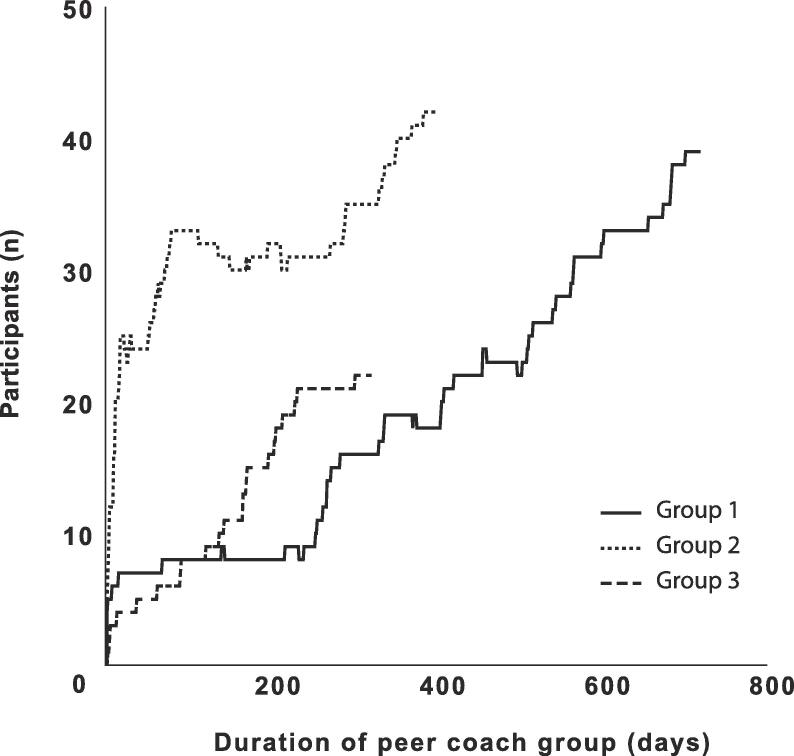
Many older adults do not reach the recommended level of physical activity, despite many professional-delivered physical activity interventions. Here we study the implementation of a novel physical activity intervention for older adults that is self-sustainable (no financial support) and self-organizing (participants act as organizers) due to peer coaching. We implemented three groups and evaluated process and effect using participatory observations, questionnaires, six-minute walk tests and body composition measures from October 2016 to September 2018. The intervention was implemented by staff without experience in physical activity interventions. Facilitators were a motivated initiator and a non-professional atmosphere for participants to take ownership. Barriers were the absence of motivated participants to take ownership and insufficient participants to ensure the presence of participants at every exercise session. The groups exercised outside five days a week and were self-organizing after 114, 216 and 263 days. The initial investments were 170€ for sport equipment and 81-187 h. The groups reached 118 members and a retention of 86.4% in two years. The groups continue to exist at the time of writing and are self-sustainable. Quality of life increased 0.4 on a ten-point scale (95%CI 0.1-0.7; p = 0.02) and six-minute walk test results improved with 33 m (95%CI 18-48; p < 0.01) annually. Self-organizing peer coach groups for physical activity are feasible, have positive effects on health and require only a small investment at the start. It is a sustainable and potentially scalable intervention that could be a promising method to help many older adults age healthier.
Keywords: Feasibility; Implementation; Older adults; Peer coaching; Physical activity; Replicability.
© 2020 The Author(s).
Figures
References
-
- Buman M.P., Giacobbi P.R., Jr, Dzierzewski J.M. Peer volunteers improve long-term maintenance of physical activity with older adults: a randomized controlled trial. J. Phys. Activity Health. 2011;8(s2):S257–S266. - PubMed
-
- De Ponte G., Mans L., Di Sisto M., Van de Pas R. Health workforce shortages and international mobility in the EU. Health Workers Health Workers. 2014
-
- Durlak J.A., DuPre E.P. Implementation matters: A review of research on the influence of implementation on program outcomes and the factors affecting implementation. Am. J. Commun. Psychol. 2008;41(3–4):327–350. - PubMed
LinkOut - more resources
Full Text Sources
