


The health belief model and colorectal cancer screening in the general population: A systematic review
- PMID: 33088680
- PMCID: PMC7567954
- DOI: 10.1016/j.pmedr.2020.101223
The health belief model and colorectal cancer screening in the general population: A systematic review
Abstract
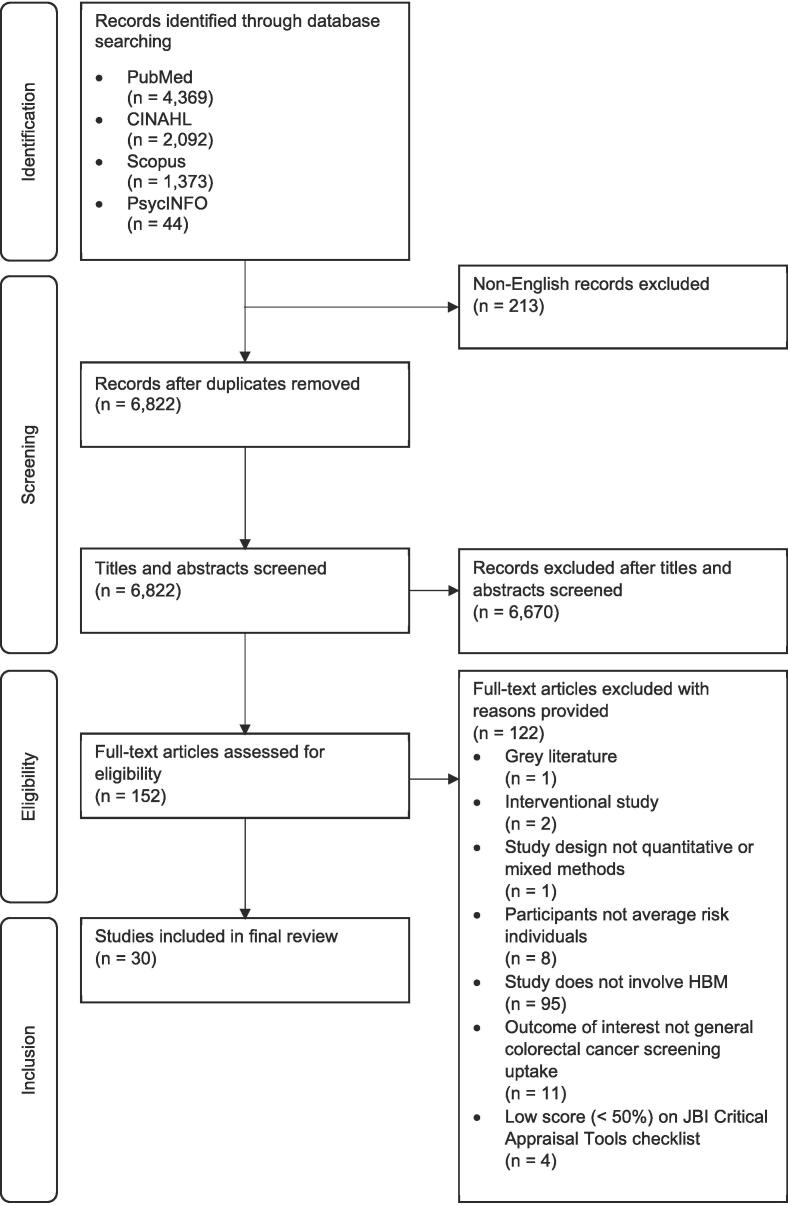
Colorectal cancer screening saves lives and is cost-effective. It allows early detection of the pathology, and enables earlier medical intervention. Despite clinical practice guidelines promoting screening for average risk individuals, uptake remains suboptimal in many populations. Few studies have examined how sociobehavioural factors influence screening uptake in the context of behaviour change theories such as the health belief model. This systematic review therefore examines how the health belief model's constructs are associated with colorectal cancer screening. Four databases were systematically searched from inception to September 2019. Quantitative observational studies that used the health belief model to examine colorectal screening history, intention or behaviour were included. A total of 30 studies met the criteria for review; all were of cross-sectional design. Perceived susceptibility, benefits and cues to action were directly associated with screening history or intention. Perceived barriers inversely associated with screening history or intention. The studies included also found other modifying factors including sociodemographic and cultural norms. Self-report of screening history, intention or behaviour, convenience sampling and lack of temporality among factors were common limitations across studies. The health belief model's associations with colorectal cancer screening uptake was consistent with preventive health behaviours in general. Future studies should examine how theory-based behavioural interventions can be tailored to account for the influence of socioecological factors.
Keywords: Barriers to screening; Cancer screening; Colorectal cancer; Health behaviour; Health belief model.
© 2020 The Author(s).
Conflict of interest statement
The authors declare that they have no known competing financial interests or personal relationships that could have appeared to influence the work reported in this paper.
Figures
References
-
- Azaiza F., Cohen M. Colorectal cancer screening, intentions, and predictors in Jewish and Arab Israelis: a population-based study. Health Educ. Behav. 2008;35(4):478–493. - PubMed
-
- Bae N., Park S., Lim S. Factors associated with adherence to fecal occult blood testing for colorectal cancer screening among adults in the Republic of Korea. Eur. J. Oncol. Nurs. 2014;18(1):72–77. - PubMed
-
- Ben Natan M., Abu Husayn A., Haj Muhamad R. Intention to undergo faecal occult blood testing in an ethnic minority. Int. J. Nurs. Pract. 2019;25(2):e12721. - PubMed
Publication types
LinkOut - more resources
Full Text Sources
Miscellaneous
