


3D Printed and Electrospun, Transparent, Hierarchical Polylactic Acid Mask Nanoporous Filter
- PMID: 33088993
- PMCID: PMC7557519
- DOI: 10.18063/ijb.v6i4.278
3D Printed and Electrospun, Transparent, Hierarchical Polylactic Acid Mask Nanoporous Filter
Erratum in
-
ERRATUM.Int J Bioprint. 2020 Sep 17;6(4):309. doi: 10.18063/ijb.v6i4.309. eCollection 2020. Int J Bioprint. 2020. PMID: 33102924 Free PMC article.
Abstract
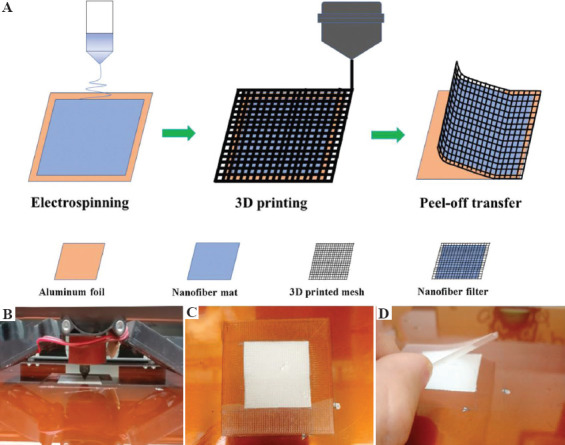
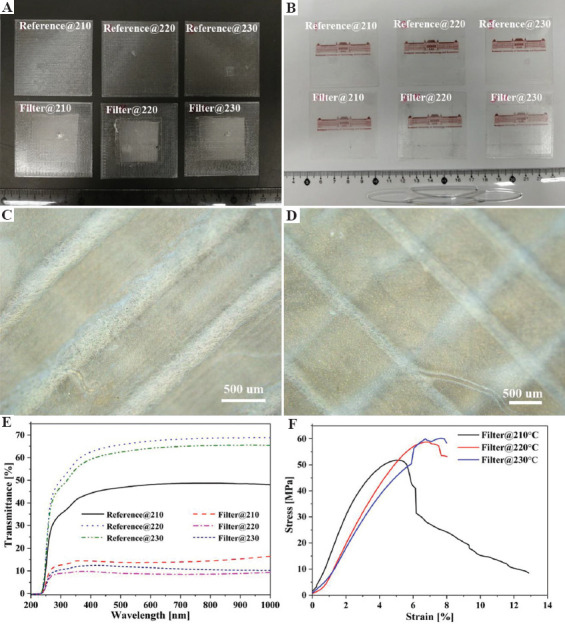
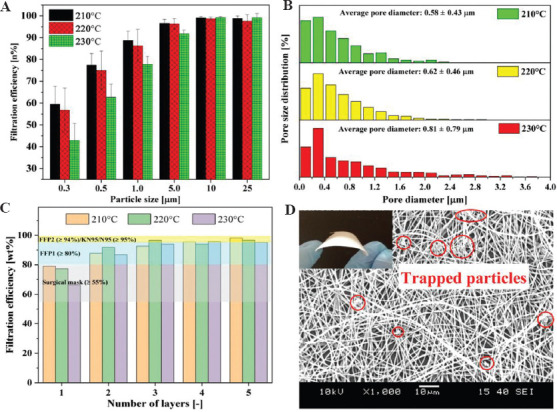
Face masks are becoming one of the most useful personal protective equipment with the outbreak of the coronavirus (CoV) pandemic. The entire world is experiencing shortage of disposable masks and melt-blown non-woven fabrics, which is the raw material of the mask filter. Recyclability of the discarded mask is also becoming a big challenge for the environment. Here, we introduce a facile method based on electrospinning and three-dimensional printing to make changeable and biodegradable mask filters. We printed polylactic acid (PLA) polymer struts on a PLA nanofiber web to fabricate a nanoporous filter with a hierarchical structure and transparent look. The transparent look overcomes the threatening appearance of the masks that can be a feasible way of reducing the social trauma caused by the current CoV disease-19 pandemic. In this study, we investigated the effects of nozzle temperature on the optical, mechanical, and morphological and filtration properties of the nanoporous filter.
Keywords: Coronavirus disease-19; Electrospinning; Mask nanoporous filter; Nanofibers; Three-dimensional printing.
Copyright: © 2020 He, et al.
Figures
References
-
- Balazy A, Toivola M, Adhikari A, et al. Do N95 Respirators Provide 95% Protection Level Against Airborne Viruses, and how Adequate are Surgical Masks? Am J Infect Control. 2006;34:51–7. DOI:10.1016/j.ajic.2005.08.018. - PubMed
-
- Ronkay FC. The Coronavirus and Plastics. Express Polym Lett. 2020;14:510–1. DOI:10.3144/expresspolymlett.2020.41.
-
- Wang SX, Yap CC, He J, et al. Electrospinning:A Facile Technique for Fabricating Functional Nanofibers for Environmental Applications. Nanotechnol Rev. 2016;5:51-73. DOI:10.1515/ntrev-2015-0065.
LinkOut - more resources
Full Text Sources