


A Novel Corn-Expressed Phytase Improves Daily Weight Gain, Protein Efficiency Ratio and Nutrients Digestibility and Alters Fecal Microbiota in Pigs Fed with Very Low Protein Diets
- PMID: 33092137
- PMCID: PMC7590218
- DOI: 10.3390/ani10101926
A Novel Corn-Expressed Phytase Improves Daily Weight Gain, Protein Efficiency Ratio and Nutrients Digestibility and Alters Fecal Microbiota in Pigs Fed with Very Low Protein Diets
Abstract
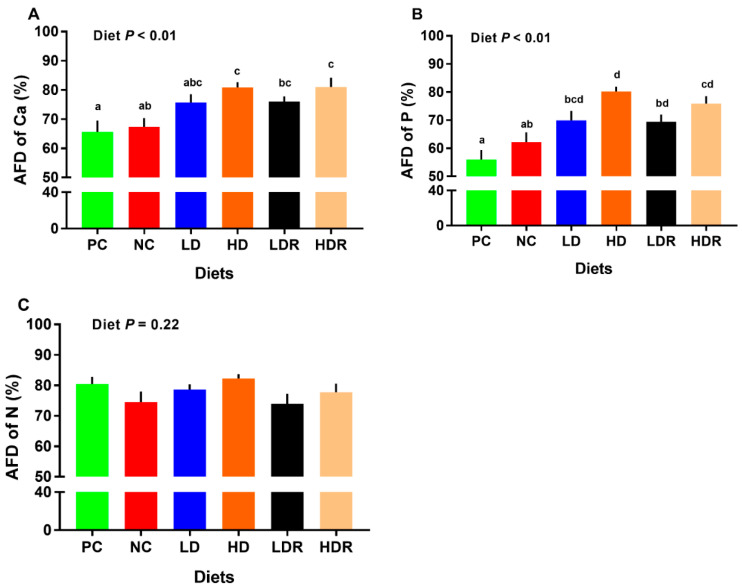
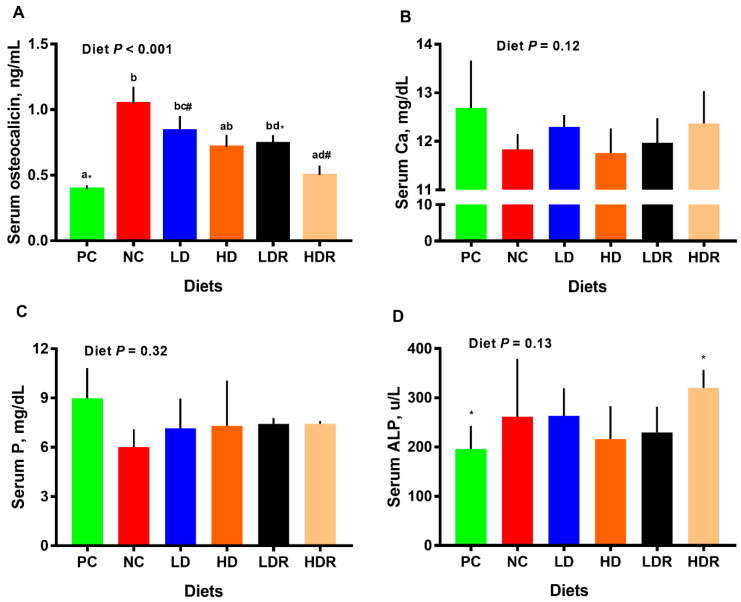
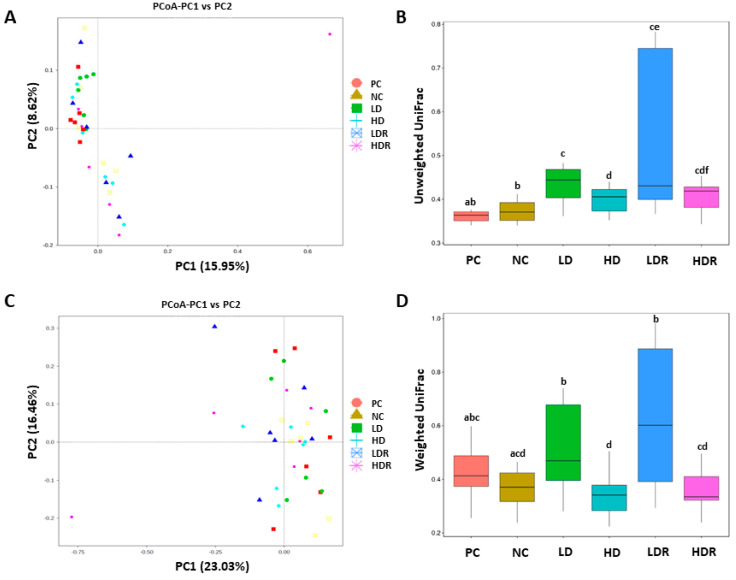
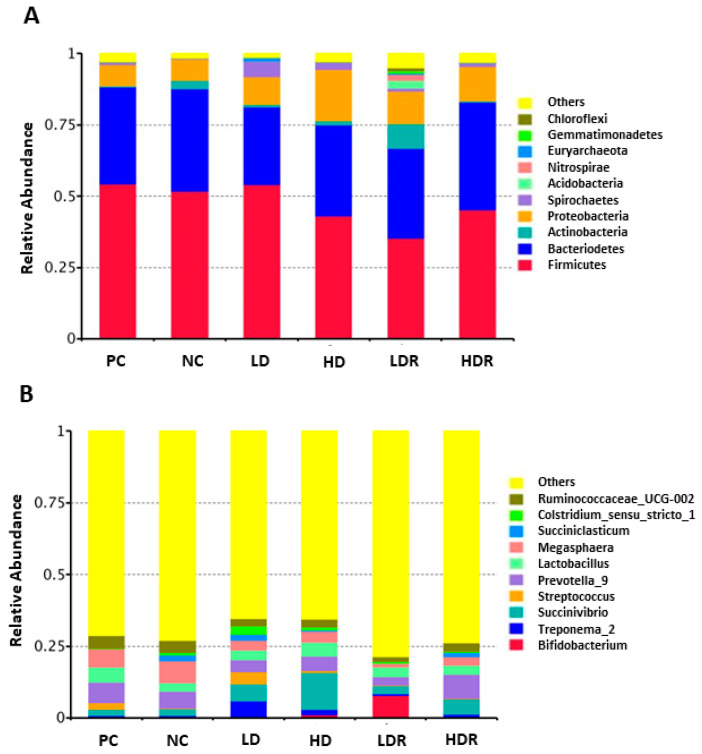
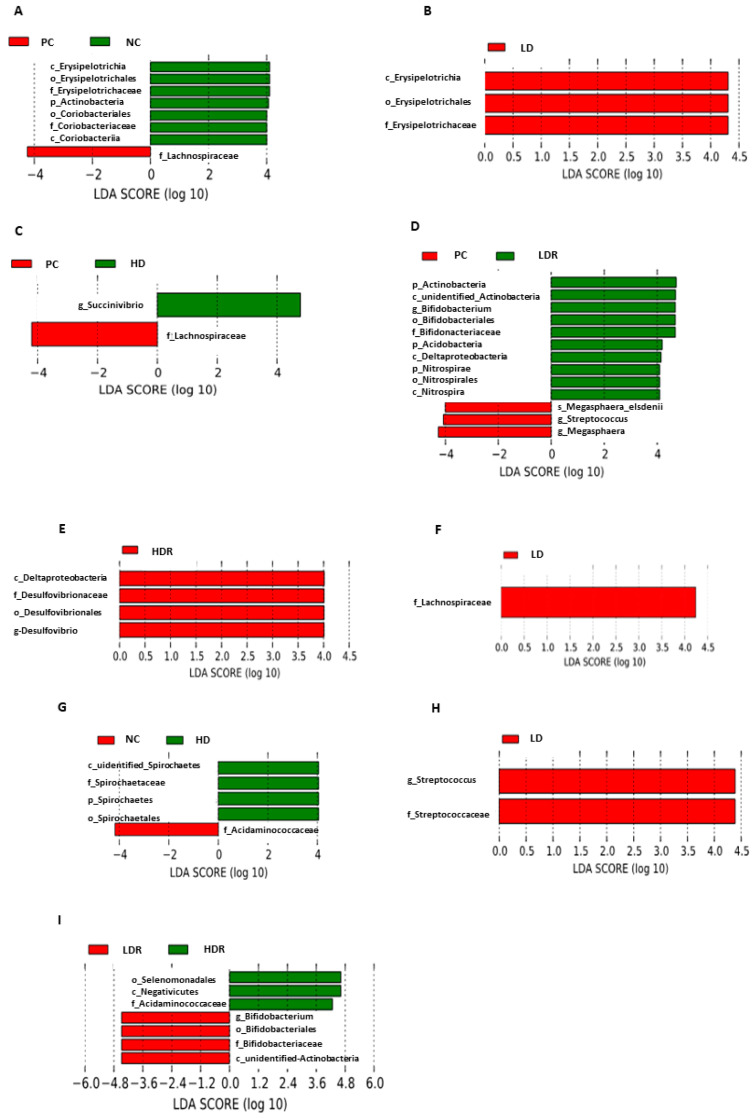
The objective of this study was to assess the effect of a novel corn-expressed phytase (CEP) on growth, nutrients digestibility, bone characteristics and fecal microbiota of pigs fed with very low-protein, -calcium (Ca) and -phosphorous (P) diets. Forty-eight barrows were subjected to 6 groups for 4 weeks: positive control-adequate protein (PC), negative control-reduced protein (NC), NC + low-dose CEP, i.e., 2000 FTU/kg (LD), NC + high-dose CEP, i.e., 4000 FTU/kg (HD), LD with 0.12% unit reduced Ca and 0.15% unit reduced available P (LDR), and HD with 0.12% unit reduced Ca and 0.15% unit reduced available P (HDR). Compared to NC, LD and HDR had a higher average daily gain (ADG) and gain:protein ratio (G:P), HD and HDR had greater apparent fecal digestibility of Ca and P and bone mineral density and LDR and HDR had lower serum osteocalcin. The feces of LD was enriched in Lachnospiraceae, while the HD had a higher abundance of Succinvibrio and LDR had a higher abundance of Bifidobacterium and Actinobacteria. In conclusion, supplementation of protein-restricted diets with a CEP decreased their negative effects on ADG and G:P ratio, increased the digestibility of Ca and P regardless of the levels of these minerals in the diet, improved bone characteristics and produced differential effects on fecal bacterial population.
Keywords: bone characteristics; corn-expressed phytase; fecal microbiota; growth; low calcium/phosphorous diets; low-protein diets; nutrients digestibility; pigs.
Conflict of interest statement
J.N.B. and M.B.L. are affiliated with Agrivida; however, Agrivida had no role in designing of the study, data collection, analysis or interpretation of collected data, writing the manuscript or decision to publish the results. All authors including J.N.B. and M.B.L. declare no potential conflict of interests.
Figures
References
-
- Selle P.H., Cowieson A.J., Ravindran V. Consequences of Calcium Interactions with Phytate and Phytase for Poultry and Pigs. Livest. Sci. 2009;124:126–141. doi: 10.1016/j.livsci.2009.01.006. - DOI
-
- Nyachoti C.M., Omogbenigun F.O., Rademacher M., Blank G. Performance Responses and Indicators of Gastrointestinal Health in Early-Weaned Pigs Fed Low-Protein Amino Acid-Supplemented Diets. J. Anim. Sci. 2006;84:125–134. - PubMed
-
- Heo J.-M., Kim J.-C., Hansen C.F., Mullan B.P., Hampson D.J., Pluske J.R. Effects of Feeding Low Protein Diets to Piglets on Plasma Urea Nitrogen, Faecal Ammonia Nitrogen, the Incidence of Diarrhoea and Performance after Weaning. Arch. Anim. Nutr. 2008;62:343–358. doi: 10.1080/17450390802327811. - DOI - PubMed
Grants and funding
LinkOut - more resources
Full Text Sources
Research Materials
