


The story of the lost twins: decoding the genetic identities of the Kumhar and Kurcha populations from the Indian subcontinent
- PMID: 33092524
- PMCID: PMC7583313
- DOI: 10.1186/s12863-020-00919-2
The story of the lost twins: decoding the genetic identities of the Kumhar and Kurcha populations from the Indian subcontinent
Abstract
Background: The population structure of the Indian subcontinent is a tapestry of extraordinary diversity characterized by the amalgamation of autochthonous and immigrant ancestries and rigid enforcement of sociocultural stratification. Here we investigated the genetic origin and population history of the Kumhars, a group of people who inhabit large parts of northern India. We compared 27 previously published Kumhar SNP genotype data sampled from Uttar Pradesh in north India to various modern day and ancient populations.
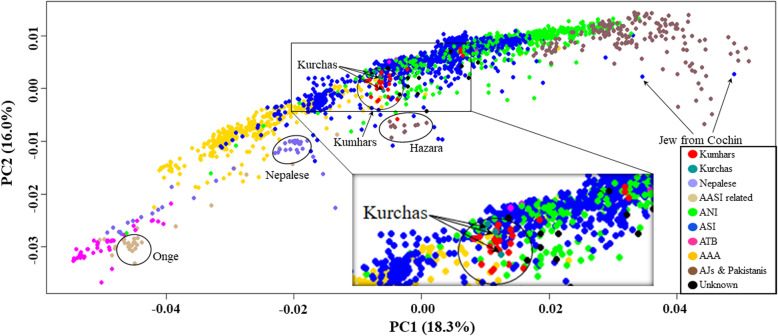
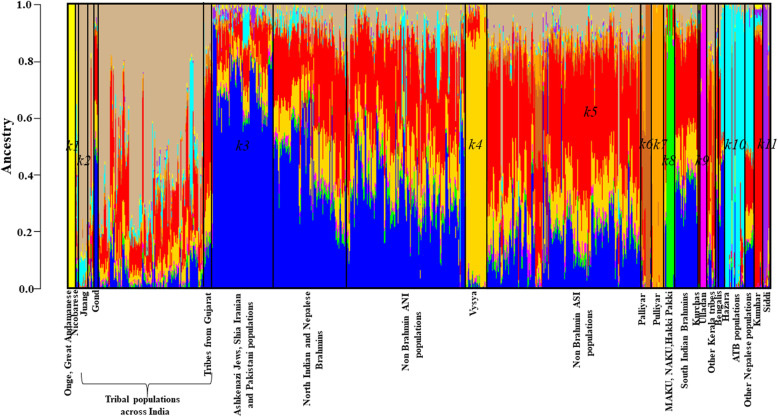
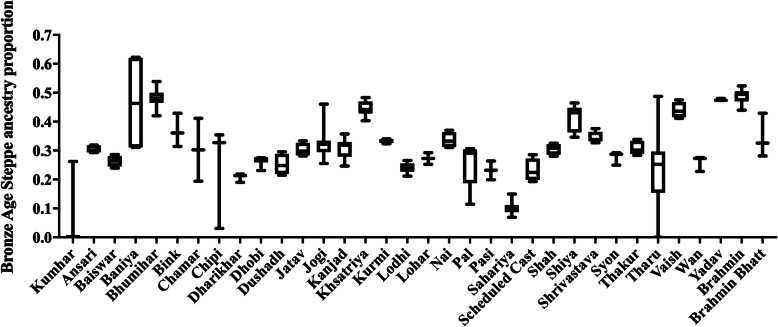
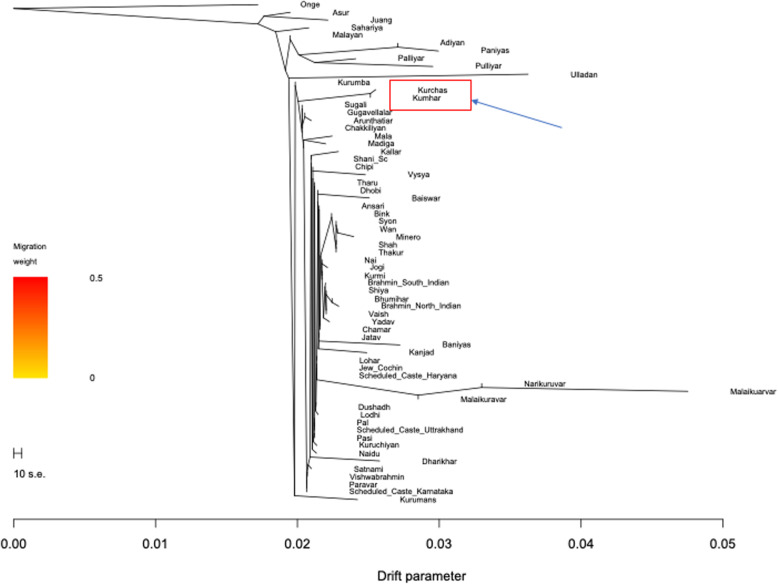
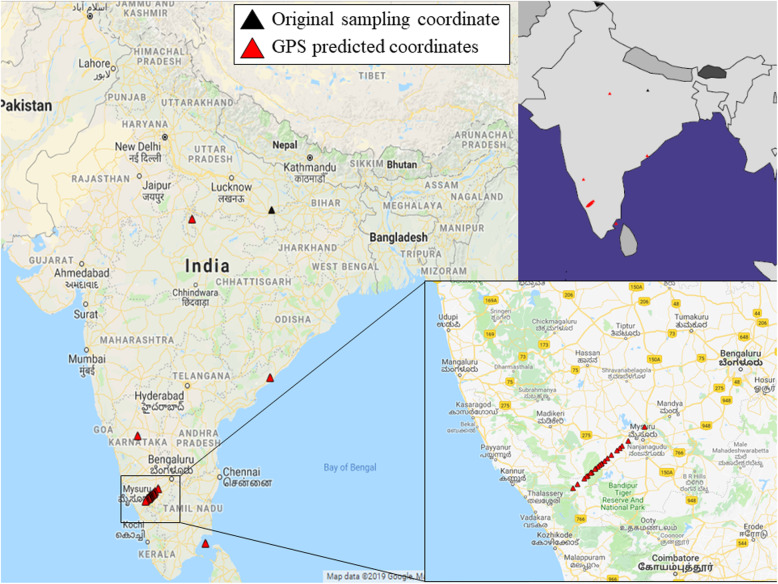
Results: Various approaches such as Principal Component Analysis (PCA), Admixture, TreeMix concurred that Kumhars have high ASI ancestry, minimal Steppe component and high genomic proximity to the Kurchas, a small and relatively little-known population found ~ 2500 km away in Kerala, south India. Given the same, biogeographical mapping using Geographic Population Structure (GPS) assigned most Kumhar samples in areas neighboring to those where Kurchas are found in south India.
Conclusions: We hypothesize that the significant genomic similarity between two apparently distinct modern-day Indian populations that inhabit well separated geographical areas with no known overlapping history or links, likely alludes to their common origin during or post the decline of the Indus Valley Civilization (estimated by ALDER). Thereafter, while they dispersed towards opposite ends of the Indian subcontinent, their genomic integrity and likeness remained preserved due to endogamous social practices. Our findings illuminate the genomic history of two Indian populations, allowing a glimpse into one or few of numerous of human migrations that likely occurred across the Indian subcontinent and contributed to shape its varied and vibrant evolutionary past.
Keywords: Indus Valley civilization; Kumhar; Kurchas; South Asian population history.
Conflict of interest statement
The authors declare that they have no competing interests.
Figures
References
-
- Kivisild T . In: Genomic Diversity: Applications in Human Population Genetics. Papiha SS, Deka R, Chakraborty R, editors. New York: Kluwer; 2001. pp. 135–152.
-
- Metspalu M, Kivisild T, Metspalu E, Parik J, Hudjashov G, Kaldma K, Serk P, Karmin M, Behar DM, Gilbert MT, et al. Most of the extant mtDNA boundaries in south and Southwest Asia were likely shaped during the initial settlement of Eurasia by anatomically modern humans. BMC Genet. 2004;5:26. doi: 10.1186/1471-2156-5-26. - DOI - PMC - PubMed
-
- Singh S, Singh A, Rajkumar R, Sampath Kumar K, Kadarkarai Samy S, Nizamuddin S, Singh A, Ahmed Sheikh S, Peddada V, Khanna V, et al. Dissecting the influence of Neolithic demic diffusion on Indian Y-chromosome pool through J2-M172 haplogroup. Sci Rep. 2016;6:19157. doi: 10.1038/srep19157. - DOI - PMC - PubMed
Publication types
MeSH terms
LinkOut - more resources
Full Text Sources
Miscellaneous
